





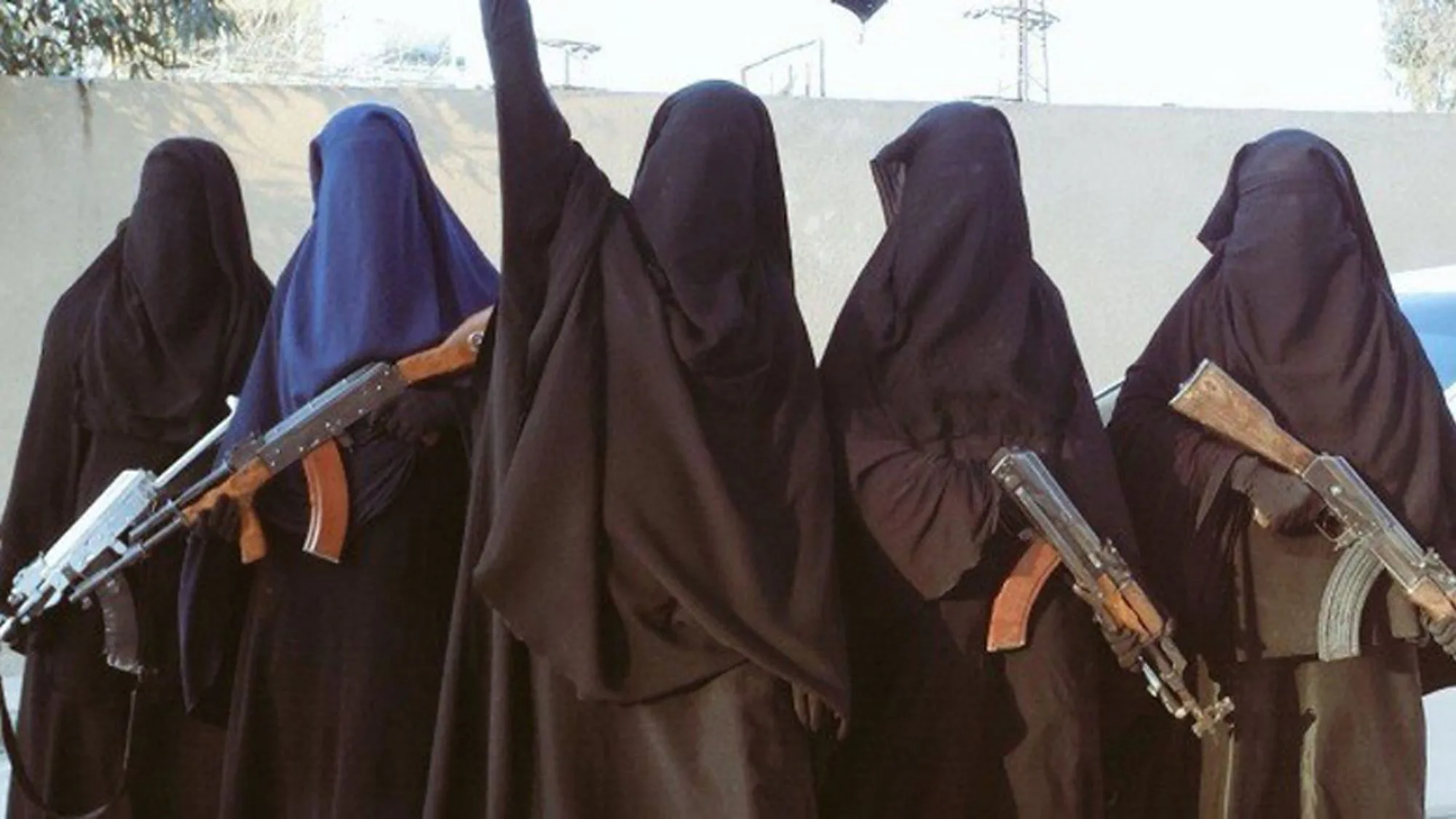
On July 30, the Gujarat Anti-Terrorist Squad (ATS) arrested a woman from Bengaluru for her involvement with Al-Qaeda in the Indian Subcontinent (AQIS), a proscribed terrorist organisation. The accused, identified as Shama Parveen, is apprehended in an ongoing investigation into an AQIS-linked network operating across India. According to ATS officials, Parveen was “highly radicalised” and played a key role in operating an online terror module.
Parveen’s arrest highlights a troubling trend: the growing infiltration of jihadist ideology among educated professionals in India.
Recent investigations, including this AQIS case and the Islamic State (ISIS) module busted in Maharashtra, reveal that individuals from privileged academic and professional backgrounds, such as software engineers, doctors, and corporate executives, are increasingly being radicalised and recruited into extremist networks. These developments point to the evolving face of terrorism in India, where modern tools like social media, encrypted messaging apps, and digital anonymity are being weaponised to propagate violent ideologies and recruit operatives from urban and educated circles.
Case-1: Gujarat ATS arrests Shama Parveen and co-accused
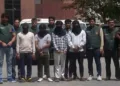
Parveen, described as “highly radicalised,” is a graduate degree holder and currently apprehended in an ongoing investigation into an AQIS-linked terror network. The other four accused, Md Faiq (Delhi), Md Fardeen (Ahmedabad), Sefullah Kureshi (Modasa), and Zeeshan Ali (Noida), were arrested earlier in connection with the same case.
Parveen, who had been residing in Bengaluru for three years with her brother, a software engineer, was running an online terror network. Data retrieved from her phone revealed communications with individuals in Pakistan, indicating cross-border coordination. The ATS, in collaboration with Bengaluru police, conducted a raid at Parveen’s residence in the Manorayanapalya locality, leading to her arrest. The accused have been charged under sections 13, 18, 38, and 39 of the Unlawful Activities (Prevention) Act (UAPA) and sections 113, 152, 196, and 61 of the Bharatiya Nyaya Sanhita (BNS) 2023.
Modus Operandi: Online radicalisation and propaganda
Investigations revealed that the five accused were part of an online group operating through Instagram accounts such as ‘sharyat-ya-shahadat,’ ‘f4rdeen_03,’ ‘mujahideen 3,’ and ‘seffulah_muja_hid313.’ These accounts were used to share provocative and violent content, including jihadi videos and messages promoting terrorism. The group aimed to propagate AQIS’s radical ideology under the banner of ‘Ghazwa-e-Hind,’ a concept advocating for an Islamic conquest of India. Their activities included inciting Indian Muslims to take up arms against the Indian government and promoting Sharia-based Islamic rule.
From one of the accused, Md Fardeen Shaikh, the ATS recovered literature linked to AQIS that called for jihad in response to India’s “Operation Sindoor.” Md Faiq was found to be in contact with a Pakistani Instagram user, coordinating anti-India propaganda. The use of social media platforms to disseminate extremist content highlights the sophisticated methods employed by terrorist groups to radicalise and recruit individuals, particularly those with technical and educational backgrounds.
Case-2: NIA crackdown on Maharashtra ISIS module
In 2024, the National Investigation Agency (NIA) filed a 4,000-page charge sheet against six ISIS terrorists, Tabish Siddiqui, Zulfikar Ali Barodawala, Sharjeel Shaikh, Aakif Nachan, Zubair Shaikh, and Dr. Adnanali Sarkar, arrested during a crackdown on an ISIS module operating in Pune and Thane, Maharashtra. The charge sheet, presented before NIA Special Judge AK Lahoti, detailed the activities of the accused based on statements from 16 witnesses.
Profile of the accused: Educated and employed
The accused in the Maharashtra ISIS module are notably well-educated and held high-paying jobs in corporate and tech sectors:
1. Zulfikar Ali Barodawala: A senior project manager at a multinational company, earning an annual package of Rs 31 lakh.
2. Zubair Shaikh: A senior associate specialising in Robotics Process Automation (RPA) at a tech-based company.
Sharjeel Shaikh: A retainer at an IT firm.
3. Dr. Adnanali Sarkar: A practising anaesthesiologist, arrested on July 27, 2023, after a raid at his residence in Kondhwa, Pune.
4. Tabish Siddiqui: A key figure who initiated contact with ISIS in 2015 and coordinated recruitment efforts.
5. Aakif Nachan: An IED expert who provided bomb-making training to other members.
The NIA described the accused as “technically sound,” leveraging their professional skills to further terrorist activities. This trend mirrors arrests in other cases, such as the Hizb-u-Tahrir (HuT) terror case in Madhya Pradesh, where the accused included a gym trainer, teacher, auto driver, tailor, computer technician, businessman, and software engineer.
What the chargesheet say?
The NIA charge sheet revealed that Tabish Siddiqui first connected with Barodawala in 2015. In 2016, Siddiqui contacted an ISIS email ID through the group’s magazine, receiving a response in 2017 that encouraged him to update his contact details for further communication. Between 2015 and 2018, Siddiqui and Barodawala held multiple meetings and took a “Bayath” (pledge of allegiance) to the ISIS Khalifa. Siddiqui visited Kupwara, Jammu and Kashmir, in 2018 to assess the region’s potential for establishing an ISIS presence, sharing updates with his handlers.
The accused used encrypted communication platforms like Telegram and WhatsApp, employing virtual numbers and Virtual Private Networks (VPNs) to evade detection. Siddiqui shared a “Do It Yourself (DIY)” PDF titled “efficiency pdf” with ISIS contacts, detailing methods to achieve efficient explosive intensity. He also prepared content for ISIS publications, including Urdu translations and material on “Istishadi Operation” (suicide operations), targeting vulnerable Muslim youth.
Violent conspiracies and terrorist activities
The NIA uncovered evidence of multiple meetings held between 2021 and 2022 in Chhoti Masjid, Padgha-Borivali, Thane, where the accused planned to recruit Muslim youth for ISIS and propagate its violent ideology. They aimed to carry out terrorist activities across India, including aerial blasts using drones and mock bomb blasts in the forests of Pune, Kolhapur, and Satara. The group lived in tents during these exercises, learning techniques for aerial attacks and IED production.
Documents recovered from Dr. Adnanali Sarkar revealed efforts to recruit poor and vulnerable youth into ISIS. Photographs of the Jewish Community Center (Chabad House) in Mumbai, a target of the 2008 26/11 attacks, were found among the accused, prompting heightened security measures by the Mumbai Police. The group also raised funds and trained recruits in making IEDs and small arms, further demonstrating their technical expertise.
Key figures and connections
The Maharashtra ISIS module case expanded with the arrest of Shahnawaz, a B.Tech graduate in mining from Nagpur’s NIT, in October 2023 by the Delhi Police. Shahnawaz, whose wife Basanti Patel (a Hindu convert to Islam named Mariyam) remains at large, was linked to Barodawala, the alleged mastermind and financier of the module. Barodawala provided training and funds to other members, including Mohammad Imran (a graphic designer) and Mohammad Yunus. Aakif Nachan, the IED expert, trained Imran and Yunus in bomb-making techniques in 2022, hiding them in his Kondhwa flat.
The NIA placed a Rs 5 lakh reward on Imran’s head in a related case in Chittorgarh, Rajasthan. The accused face charges under the UAPA, reflecting the severity of their actions and the threat posed by their network.
Case-3: Educated professionals and radicalisation Hizb-u-Tahrir (HuT) case
The Madhya Pradesh ATS’s arrests in the Hizb-u-Tahrir case further highlight the involvement of educated professionals in terrorism. Among the ten arrested, professions included a gym trainer, teacher, auto driver, tailor, computer technician, businessman, and software engineer.
A notable figure, Mohammad Salim (formerly Saurabh Raj Vaidya, a Jain who converted to Islam in 2010), was a professor in Hyderabad. Salim radicalised his wife, Mansi Agarwal, who converted to Islam and became Rahila Khatun. He was charged with delivering inflammatory speeches and attempting to radicalise others.
Other converts, such as Abdur Rehman (formerly Devi Narayan Panda) and Mohammad Abbas Ali (formerly Benu Kumar), also joined the HuT network after converting to Islam. Five of the eleven accused had married Hindu women, two of whom had recently converted to Islam. These conversions, often linked to “Love Jihad,” were used to indoctrinate partners and recruit youth into extremist networks. The ATS seized radical literature, anti-national material, and electronic devices, underscoring HuT’s strategy of embedding operatives in mainstream society to spread its ideology.
Case-4: Islamic State-Khorasan Province (ISKP) and Kerala
The Islamic State-Khorasan Province (ISKP) has also targeted educated professionals, particularly in Kerala. In 2022, ISKP’s mouthpiece, Voice of Khurasan, published an obituary for Najeeb Al-Hindi, a 23-year-old M.Tech student from Kerala who died in a presumed suicide attack in Afghanistan. Described as an engineering graduate, Najeeb travelled to Afghanistan to join ISKP, where he was married to a Pakistani jihadi woman at the insistence of his peers. ISKP praised his dedication to jihad, equating him to historical Islamic figures.
Kerala has emerged as a significant hub for ISIS recruitment, with the United Nations’ 2020 terrorism report estimating 180-200 members in the ISIL Indian offshoot (Hind Wilayah). The NIA’s 2020 charge sheet linked the murder of Special Sub-Inspector Wilson to ISIS activities in Kerala, where modules have been active since 2014. These modules encourage religious conversions and recruit professionals, including engineers and doctors, to join ISIS in Afghanistan and Syria.
In 2016, four couples from Kerala, Nimisha Fathima, Sonia Sebastian (Ayisha), Merrin Jacob (Mariyam), and Raffaela, joined ISKP in Afghanistan. All were educated, with Sebastian being an engineering graduate. Their husbands were killed in combat, and the women surrendered to Afghan authorities in 2019, expressing a desire to return to India. The NIA noted that these individuals held secret classes promoting ISIS and jihad, targeting non-Muslim women for conversion and recruitment.
Factors driving radicalisation among professionals
1. Kerala’s former Director General of Police (DGP), Loknath Behera, highlighted in 2021 that the state’s high literacy rate contributes to its vulnerability to radicalisation. ISIS targets educated individuals, such as engineers and doctors, for their technical expertise and ability to blend into mainstream society. Behera noted that Kerala’s ATS has been proactive in monitoring vulnerable individuals, providing counselling, and tracking potential recruits, reducing the number of individuals joining ISIS in recent years.
2. The use of social media platforms like Instagram, Telegram, and WhatsApp has revolutionised terrorist recruitment. Encrypted communication and VPNs allow operatives to coordinate covertly, as seen in both the AQIS and ISIS cases. Online propaganda, including magazines like Voice of Hind and Voice of Khurasan, plays a critical role in self-radicalisation, particularly among tech-savvy professionals who can access and disseminate extremist content discreetly.
3. The pattern of religious conversions, particularly in the HuT and ISKP cases, reveals a strategy of ideological indoctrination through personal relationships. Converts like Mohammad Salim and the Kerala couples used marriage and religious conversion to expand terrorist networks, targeting vulnerable youth and non-Muslims for recruitment.
4. The involvement of professionals with stable careers suggests that radicalisation is not solely driven by economic deprivation. Instead, factors such as ideological appeal, a sense of purpose, and exposure to extremist narratives play significant roles. The promise of establishing a Sharia-based state or achieving martyrdom resonates with some educated individuals, particularly when amplified by online echo chambers.
Implications for national security
The involvement of educated professionals in jihadist activities poses a multifaceted threat to India’s security:
1. The technical expertise of the accused enables them to plan complex attacks, such as aerial drone strikes and IED production, increasing the potential for high-impact terrorism.
2. Professionals in corporate, medical, and academic sectors can operate covertly, using their social standing to recruit others without arousing suspicion.
3. Connections with Pakistan-based operatives (AQIS case) and international terrorist groups like ISIS and ISKP highlight the global nature of the threat, necessitating international cooperation.
4. The focus on recruiting poor youth and converting non-Muslims underscores the need for community-based counter-radicalisation programs.
The involvement of educated professionals in jihadist activities, as seen in the AQIS and ISIS cases, reflects a dangerous evolution in India’s terrorism landscape. These individuals leverage their skills, networks, and social standing to propagate extremist ideologies, recruit vulnerable youth, and plan sophisticated attacks. The cases of Shama Parveen, Tabish Siddiqui, Dr. Adnanali Sarkar, and others underscore the need for robust counter-terrorism measures, including enhanced intelligence, online monitoring, and community-based de-radicalisation programs.
Addressing this trend requires a multi-pronged approach that combines agencies, societal engagement, and international cooperation to safeguard India’s security and prevent the further spread of extremist ideologies.












Comments