





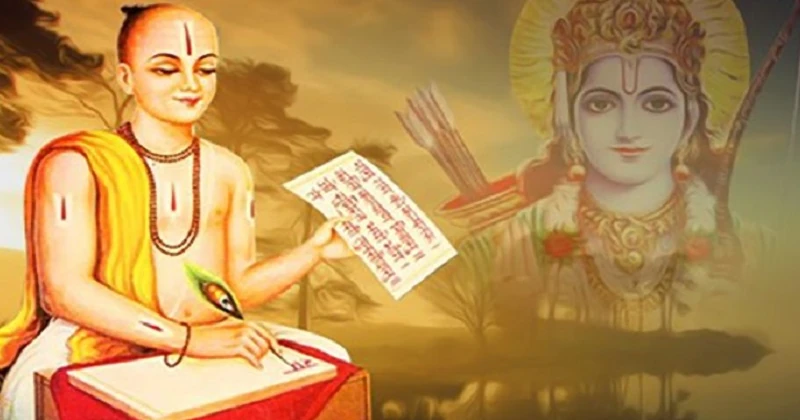
On July 31, the nation marks Goswami Tulsidas Jayanti, devotees across India and beyond pay homage to the revered poet-Sant whose legacy transcends centuries. Observed annually on Shravan Shukla Saptami (as per Vikram Samvat), the occasion commemorates the birth of Tulsidas (1497–1623 CE), whose works continue to inspire unwavering devotion and foster social unity.
Renowned for his magnum opus, the Ramcharitmanas, Tulsidas revolutionised devotional literature by choosing to write in Awadhi, the vernacular language of the common people. At a time when religious texts were confined to Sanskrit and elite scholars, Tulsidas’s deliberate choice empowered millions with spiritual access to Bhagwan Ram’s divine narrative. His corpus of twelve major works, including Dohavali, Kavit Ramayan, and Vinay Patrika, remains a cornerstone of Bhakti literature.
Born as Rambola in Uttar Pradesh’s Banda district, Tulsidas was raised in Kashi by his spiritual mentor Baba Narharidas. After years of rigorous training in Vedic scriptures, philosophy, and astronomy, Tulsidas renounced worldly attachments and dedicated his life to Ram bhakti. His extensive travels across India deepened his understanding of the social and spiritual challenges facing Hindu society, inspiring his return to Kashi to begin a literary and devotional renaissance.
In Ramcharitmanas, Tulsidas presents a vivid vision of Ramrajya—an ideal state marked by peace, prosperity, and moral righteousness. The epic celebrates social harmony through characters who transcend caste, tribe, and creed. Figures like Shabari, a Bhil woman; Nishadraj, a tribal king; and Vibhishan, Ravana’s brother, are portrayed as noble and devoted, underscoring the Sant-poet’s commitment to inclusion and social upliftment.
Tulsidas’s portrayal of Ram as an ideal son, brother, husband, and ruler has left an indelible impact on Indian family values. The ideals reflected in Ramcharitmanas and his globally recited Hanuman Chalisa have shaped moral and cultural norms not only in India but among diasporic communities in Mauritius, Trinidad, Fiji, and beyond.
Tulsidas’s spiritual influence extended beyond literature into acts of quiet resistance during the Mughal era. Despite invitations from Emperor Akbar and offers of a mansabdari (imperial rank) from Raja Todarmal, Tulsidas refused to align with royal courts. His legendary verse:
“हम चाकर रघुवीर के पट्यौ लिख्यौ दरबार,
तुलसी अब का होहिंगे नर के मनसबदार।”
(We are servants of Raghuvir, our covenant written in His court. Tulsidas, how can we now be mansabdars of mere mortals?)
This powerful declaration highlighted his exclusive devotion to Bhagwan Ram and his rejection of temporal authority in favor of eternal dharma. Even Emperor Jahangir’s attempts to reward him with gold were declined.
In a time of widespread religious and cultural persecution under Islamic rule, Tulsidas’s poetry instilled hope, resilience, and faith among the masses. His verses echoed the eternal promise of divine justice: that when evil rises and dharma declines, the Bhagwan incarnates to protect the virtuous and destroy adharma.
Historians have acknowledged the extraordinary influence of Tulsidas. British historian Vincent A. Smith wrote in Akbar the Great Moghul that Tulsidas was “the greatest man of his age in India,” whose spiritual conquest far surpassed imperial military victories. Linguist George Grierson asserted that Ramcharitmanas was “better known than the Bible is in England” across North India.
As India observes Tulsidas Jayanti, his legacy remains deeply etched in the cultural and spiritual consciousness of the nation. His message of devotion, social justice, and divine sovereignty continues to inspire millions, offering moral clarity in a complex world. From humble beginnings in Banda to becoming the voice of Ram for generations, Goswami Tulsidas remains a timeless beacon of Bharatiya dharma and unity.














Comments