





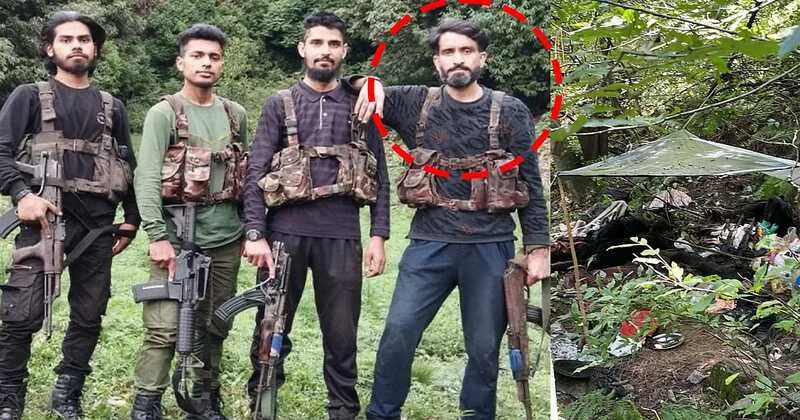
A meticulously planned counter-terror operation, codenamed Operation Mahadev, culminated yesterday in the elimination of three heavily armed Pakistani terrorists, including Sulaiman Shah, a key figure behind the recent Pahalgam terror attack. The joint mission, executed by the Indian Army, Jammu and Kashmir Police, and the Central Reserve Police Force (CRPF), was the result of nearly two weeks of electronic surveillance, intelligence gathering, and strategic field maneuvers.
Security forces had been tracking Shah and his group for over 14 days following concrete intelligence on their movements. The terrorists, identified as Pakistani nationals affiliated with Lashkar-e-Taiba (LeT), were under surveillance since the beginning of the month. Their communications were through encrypted Chinese-made ultra-high frequency radios, which do not transmit signals in conventional bands and are difficult to monitor directly. However, electronic mapping techniques allowed agencies to trace their movement patterns and narrow down their location.
The breakthrough came when intelligence operatives intercepted encrypted transmissions linked to a location in the Dachigam forest region. This led to the identification of Bhikharwadi near the Mahadev hills of Lidwas as the group’s hideout. The operation was then aptly named Operation Mahadev, after the terrain where the terrorists were cornered.
According to security officials, these intercepts were instrumental in mapping the group’s movement across the area. The use of advanced communication systems and guerrilla warfare tactics indicated the group’s preparation for a high-impact attack. The final confrontation began yesterday morning in the Lidwas area near Dachigam National Park, Harwan, Srinagar.
Senior Superintendent of Police, Srinagar, G.V. Sundeep Chakraborty confirmed that all three terrorists killed in the operation were Pakistani nationals and trained in forest combat. The slain militants included Hashim Musa, directly involved in the Pahalgam attack, and Sulaiman Shah, its mastermind.
From the site of the encounter, security forces recovered a significant cache of arms: one AK-47 rifle, a US-made M-4 carbine, 17 rifle-fired grenades, and several magazines filled with ammunition. Officials believe the quantity and nature of these weapons confirm plans for a major follow-up assault.
Earlier this month, a combined alert from intelligence agencies had warned of terrorist movement in the Mulnar region. The sustained surveillance and signal interception efforts that followed enabled the pinpointing of the group’s final location.
Officials emphasized that today’s successful strike was not a spontaneous encounter but the culmination of detailed preparations involving direct and electronic surveillance, technical intelligence, and coordinated ground action. The mission stands as a significant achievement in India’s counter-terror strategy, not only eliminating high-value targets but also disrupting a potentially larger plot in the making.














Comments