





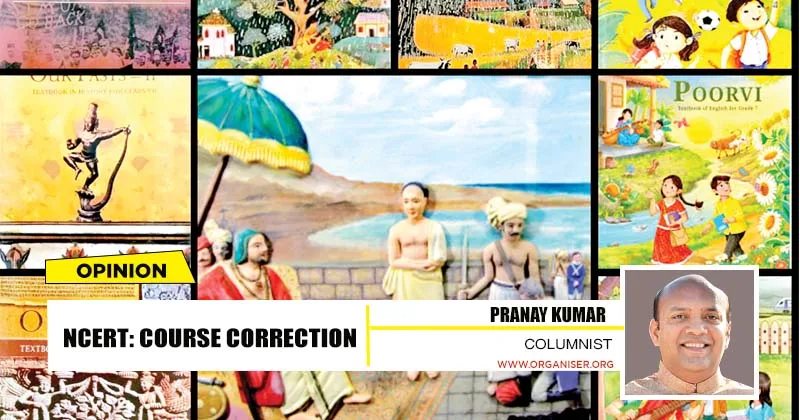
The National Council of Educational Research and Training (NCERT) has recently made several changes to the Class 8 Social Science textbook Exploring Society, India and Beyond. These changes are in alignment with the National Education Policy–2020 and the National Curriculum Framework for School Education (NCF-SE). The core objective of this new initiative is to foster in students an integrated, holistic, and multidisciplinary understanding of Bharat’s social development by combining themes from history, geography, economic life, and governance.
This textbook appears to be a concrete and positive step towards the long-standing demand for a more balanced approach to historiography. It provides a detailed account of medieval Indian history from the 13th to the 17th century, covering the rise and fall of the Delhi Sultanate, contemporary resistance, political instability of the period, military campaigns, the Vijayanagara Empire, the Mughals and their resistance, as well as the emergence of the Marathas and Sikhs. The analysis is rooted in historical evidence and sources.Notably, the chapters on the Sultanate and Mughal periods include several documented examples of attacks on temples and centres of learning, instances of plunder, and religious fanaticism. For instance, during the Delhi Sultanate era, there were assaults on Buddhist, Jain, and Hindu temples; villages and towns were looted; idols were desecrated and broken; and places of worship were defiled. The textbook also references historical records of invasions carried out by Malik Kafur, the chief commander of Alauddin Khalji, on significant religious sites such as Srirangam, Madurai, Chidambaram, and Rameshwaram.
Critique of Past Historiography
It is unfortunate that school history textbooks were written and taught in such a way that, on the one hand, students could memorise the entire genealogy of the Delhi Sultanate and the Mughals, yet on the other hand, they lacked even basic knowledge about Bharatiya dynasties and knowledge system. The question arises: Why did the parties, organisations, and so-called intellectuals—who constantly speak of Bharat’s diversity and pluralistic sanskriti—confine the history of medieval and modern Bharat in textbooks to the Delhi Sultanate, the Mughal dynasty, the East India Company, British rulers, governors, generals, and, under the name of the freedom struggle, a handful of leaders and families? The history of the nation includes and relates to its land, rivers, mountains, forests, groves—and more than all these, the common people and their struggles, their cultural perspectives and values, their victories and defeats, and their shared experiences of pride and humiliation, joy and sorrow.
Historical Understanding of Society
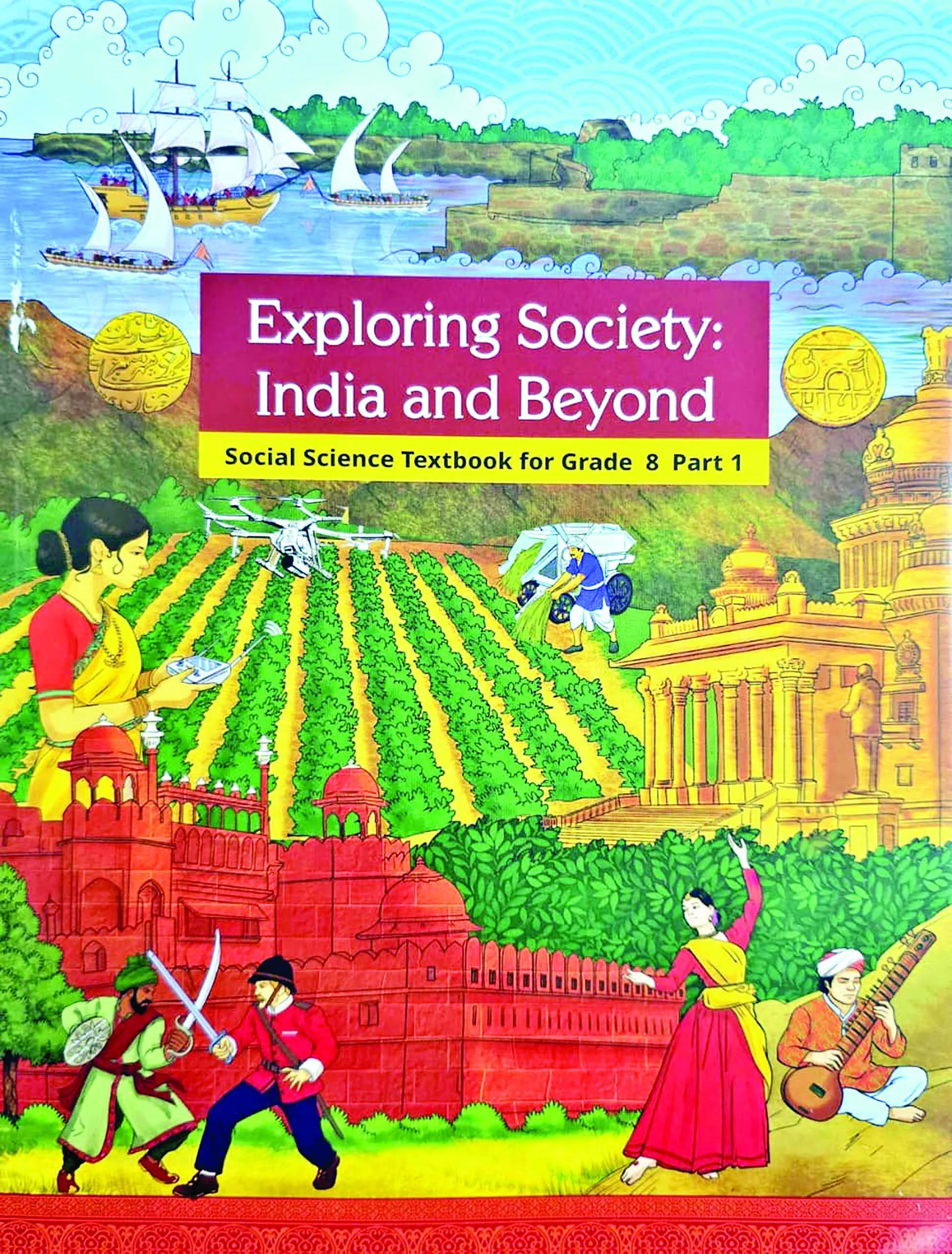
- In this book, difficult periods in Indian history—such as conflict, division, and inequality—have been addressed thoughtfully. The focus is on understanding how history affects people and how remembering it with sensitivity helps build a better future.
- It examines how the political map of the Indian subcontinent was reshaped during this period, while also highlighting the diverse contributions of various rulers. It explores the contribution and participation in the reshaping of the map by rulers including Rajputs, Vijayanagara, Ahoms, Sikhs and Mughals
However, far from addressing the thoughts, concerns, and sentiments of the masses, previous textbooks often neglected even the prominent and powerful Bharatiya kingdoms and dynasties—such as Magadha, Maurya, Gupta, Chola, Chalukya, Pala, Pratihara, Pallava, Paramara, Vakataka, Vijayanagara, Karkota, Kalinga, Kakatiya, Maitraka, the Wodeyars of Mysore, the Ahoms of Assam, the Nagas, the Sikhs, the Rashtrakutas, the Shungas, and the Satavahanas. Many of these ruled for centuries, during which there was an extraordinary flourishing of art, literature, and sanskriti. Planned cities were built, long and wide roads were constructed to facilitate travel, trade and cultural relations were established with countries across the world, and renowned centers of learning were set up. From the perspective of architecture and artistic excellence, one after another magnificent forts, monasteries, temples, pillars, etc were built. Shouldn’t the younger generation be made aware of these sanskritik heritages?
Re-evaluating Mughal Rulers
A pertinent question arises—why should the history of the Delhi Sultanate and the Mughals be taught in school textbooks with a selective perspective? Is it not true that Babur, during the battles of Khanwa, Chanderi, Ghaghra, and many other invasions and wars, committed horrific massacres and widespread plunder? His brutal savagery and the construction of towers of Hindu skulls after battles are detailed extensively in his autobiography, the Baburnama. Can there be any doubt that the so-called greatness of Akbar has been glorified in our textbooks to such an extent that it feels incomplete or inappropriate not to attach the adjective “the Great” to his name? Yet the reality is that during the siege of Chittor Fort in 1568 CE, he ordered a massacre of around 30,000 Hindus—including women, innocent children, and helpless farmers. Does Akbar’s own proclamation, the Fatehnama-e-Chittor dated March 9, 1568, not testify to these facts?
Indianising English Education
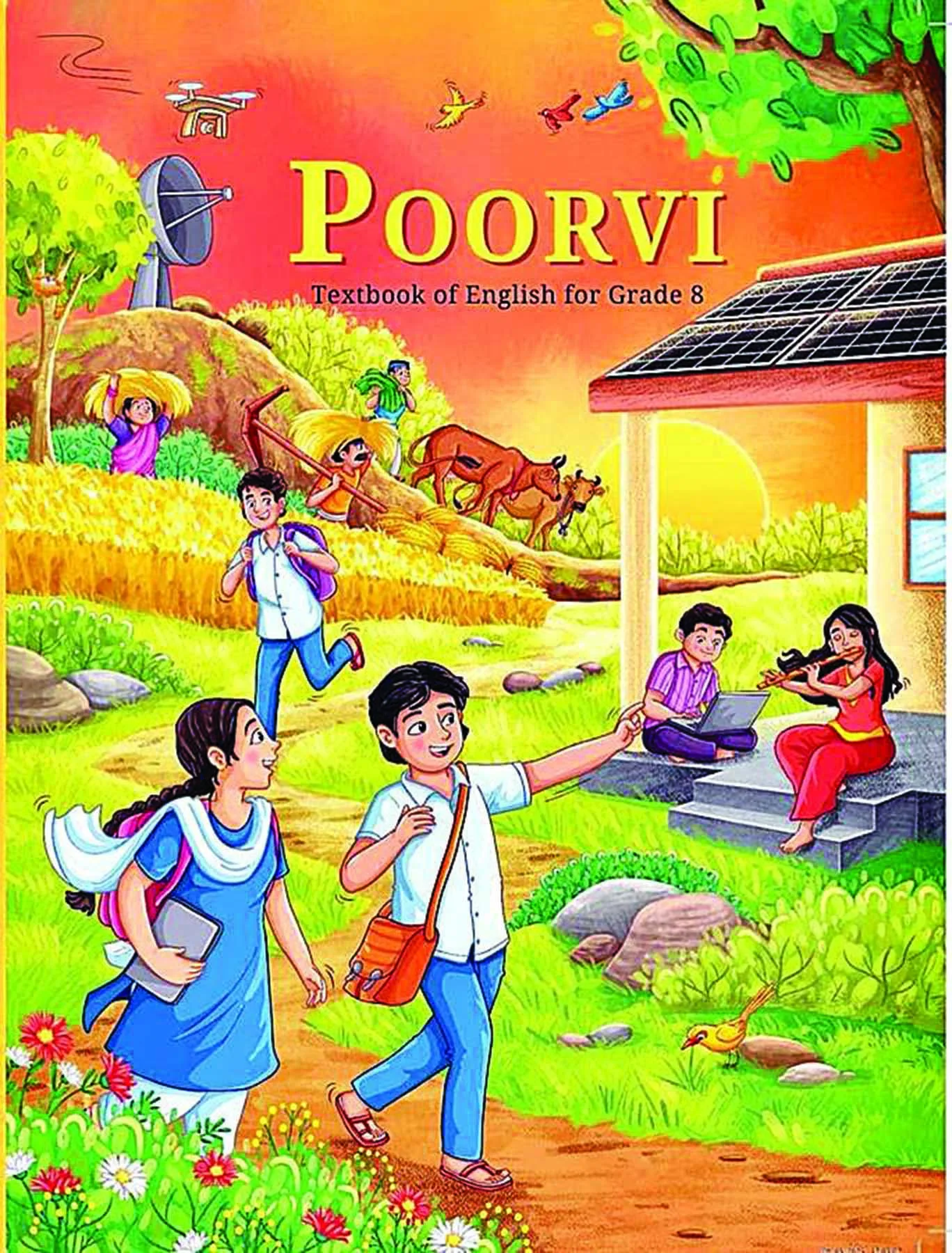
- The textbook integrates modern learning tools like QR-coded audio for listening passages. These features support digital literacy while catering to different learning styles, enhancing accessibility and self-paced engagement.
- Indian Knowledge Systems and cultural heritage are purposefully woven into the curriculum. The textbook includes content on traditional wisdom, local customs, and national symbols, helping foster cultural pride and a rooted sense of identity among learners.
Akbar wrote, “It is by Allah’s power that He entrusted the destruction of the infidels to a jihadi like me (Akbar), a devout follower of the faith. Allah made us mujahideen and handed over the rule of a vast land like Hindustan to us. By Allah’s command, we devoted our precious time and full strength to war and jihad. With Allah’s grace, we are conquering forts and cities under the control of the infidels. We have raised the banner of Islam everywhere. With the sword, we wiped out the darkness and sins of the idol worshippers. We destroyed temples in Chittor and other parts of India. We attacked Chittor fort with full might. The battle continued for three days and nights. Finally, on the night of 25 Shaban, 975 Hijri (23 February 1568), we entered the fort and, following Allah’s command to ‘kill all infidels,’ we slaughtered them and took their women and children captive.” – Akbar (Ramadan, 975 Hijri).
Aurangzeb’s Policies and Atrocities
It is a widely accepted fact that Aurangzeb sought to transform Hindustan from Dar-ul-Harb (land of infidels) to Dar-ul-Islam (land of Islam) by the sword. In his view, every Hindu was nothing more than a kafir (infidel), whose bloodshed, destruction of temples, and merciless crushing of faith he considered his “sacred religious duty.” On April 12, 1669, he issued an order imposing the jizya tax on Hindus. Renowned global historian Mark Jason Gilbert, in his book South Asia in World History, writes that the head of a Hindu household had to appear before Muslim officials or clerics in a humiliating posture to pay the jizya tax. To escape this humiliation and torture, many Hindus were compelled to convert to Islam.
Learning through Music

- The title ‘Santoor’ replaces earlier titles like ‘Marigold’ to reflect a stronger Indian identity and cultural rootedness. Named after a traditional Bharatiya musical instrument, Santoor evokes a sense of harmony, rhythm, and indigenous aesthetic, aligning with NEP 2020’s vision of education rooted in the Indian context.
- The textbook strengthens all four language skills—listening, speaking, reading, and writing—through structured sections like ‘Let us speak’, ‘Let us write’, ‘Let us listen’, and ‘Let us do’. These encourage expression, comprehension, and confidence-building in everyday communication.
In 1668, Aurangzeb issued a royal decree banning Hindu festivals, and demolition of temples, educational centres, and sacred sites. Thousands of temples were destroyed, including the Vishwanath temple in Kashi, the Shri Krishna Janmabhoomi temple in Mathura, and the Somnath temple in Patan. In 1688, he banned Hindus from riding in palanquins, on elephants, or horses, and declared the possession of weapons by Hindus a criminal offense. The authentic and detailed account of the barbaric and brutal atrocities committed by Aurangzeb against Hindus can be found in the book Maasir-i-Alamgiri, written by his own court chronicler, Muhammad Saqi Mustaid Khan. In Chapter 12, pages 51 and 55 of this book, it is written, “On the 17th day of Zilqada 1079 Hijri (April 9, 1669), the protector of the faith, Emperor Aurangzeb, learned that in Thatta, Multan, and Banaras (Kashi), infidel Brahmins were educating children in their ashrams using their false religious texts. Hindu children—and even the children of Muslims—were coming from far and wide to receive this accursed knowledge. Therefore, the protector of the faith, Emperor Aurangzeb, issued a royal decree to the governors of these provinces to completely destroy the infidels’ ashrams and temples. He also gave strict orders to put an end to all education involving idol worship. On the 15th of Rabi-ul-Akhir (September 2, 1669), Emperor Aurangzeb was informed that, as per his orders, the officials had destroyed the Vishwanath Temple of Kashi.”
Scientific and National
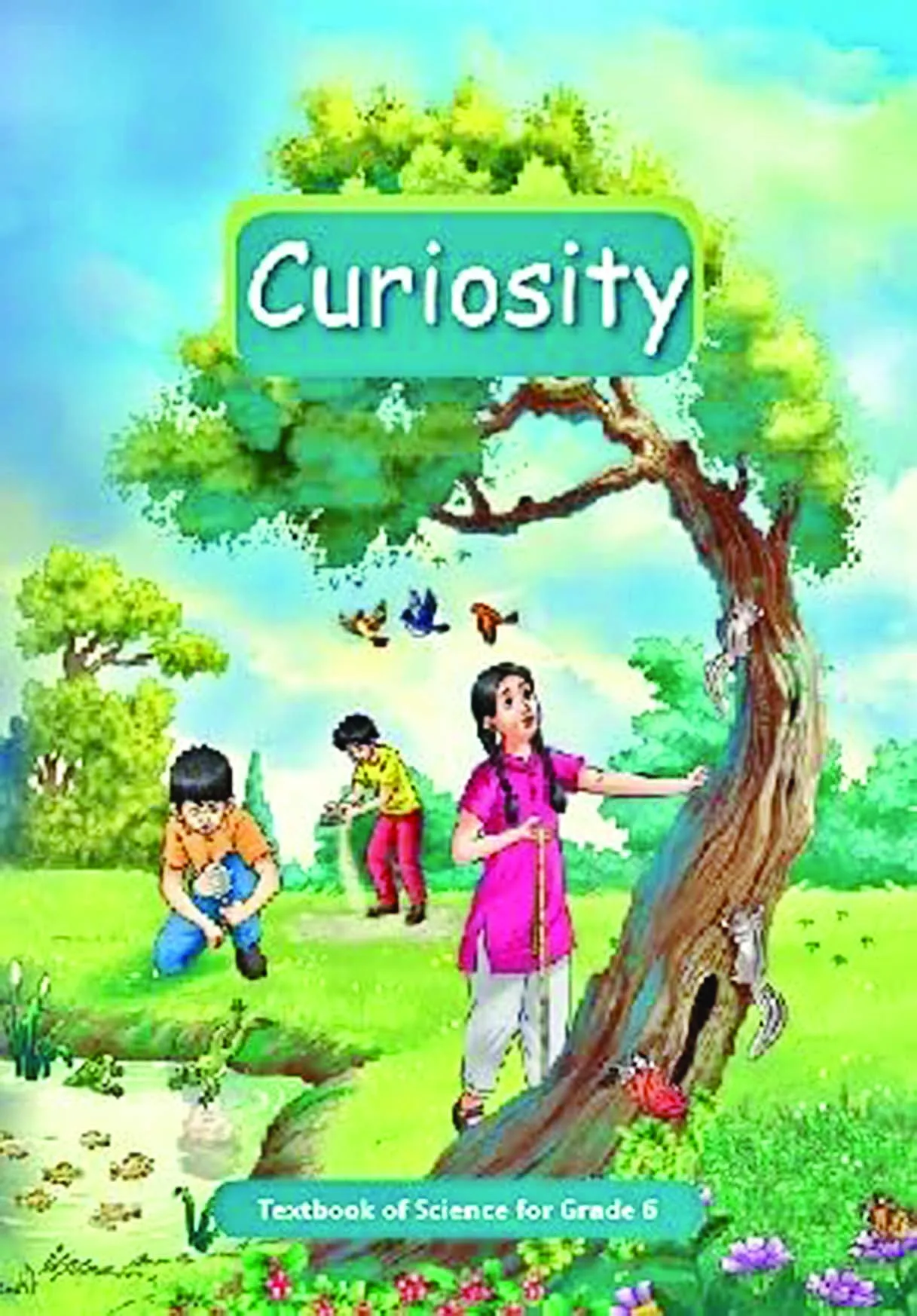
- Curiosity’ adopts an interactive layout, rich visuals, real-life contexts, student-centred pedagogy and are inquiry-driven.
- Some examples taken from India’s rich tradition of knowledge:
- It mentions that “Long before modern vaccines, India had a traditional method called variolation to protect against smallpox.”
- The textbook points out that Acharya Kanad, an ancient Indian philosopher, first spoke about the idea of a Parmanu (atom). He believed that matter is made up of tiny, eternal particles called Parmanu. This idea was written in his work called ‘Vaisheshika Sutras.’
- Further more, a chapter, ‘Light: Mirrors and Lenses’ mentions that “More than 800 years ago, during the time of the great Indian mathematician Bhāskara II, astronomers used shallow bowls of water to observe the stars and planets. By carefully looking at their reflected images through tubes placed at appropriate angles, they could measure the positions of stars and planets in the sky. Even though the laws of reflection are not mentioned in literature, their instruments and methods indicate that they might have understood it
in practice!”
Now, is there even a need to separately mention that the cruel and tyrannical Aurangzeb brutally executed Guru Tegh Bahadur and his disciples Bhai Mati Das, Sati Das, and Dayal Das? Or that, on his orders, the young sons (Sahibzade) of Guru Gobind Singh Ji were mercilessly killed? Or that he had his own brothers Dara Shikoh and Murad murdered and imprisoned his own father Shah Jahan in a dark dungeon? The real question to be asked is: What compulsion did NCERT have that it felt the need to glorify such a cruel and inhumane ruler? Can you even imagine a road, building, or square being named after Osama bin Laden in the United States, or after Adolf Hitler in England or Israel?
Impact on Bharatiya Society and Knowledge Systems
Prior to Islamic period, Bharatiya knowledge traditions upheld a varna system based on deeds (karma), not birth. Leftist intellectuals with venomous ideologies often argue that Hindu kings too destroyed temples and monasteries. But can they present even one temple’s name or example as proof? In contrast, Dr B R Ambedkar clearly wrote in his essay, The Decline and Fall of Buddhism in India, “There can be no doubt that the fall of Buddhism in India was due to the invasions of the Muslims. Islam came as the enemy of the ‘But’. The word ‘But’, as everyone knows, is an Arabic word and means an idol. The word ‘But’ is the Arabic corruption of ‘Buddha’. Thus, to the Muslim theologians, idol worship and Buddhism were one and the same. The destruction of idols was tantamount to the destruction of Buddhism.” Is this statement by Dr Ambedkar not sufficient proof that Leftist historians and intellectuals fabricate the narrative that Hindu kings destroyed Hindu temples and Buddhist monasteries—solely to shield Islamic invaders from criticism?
Influence on Education & Historical Narratives
It is deeply ironic that whenever efforts have been made to make curricula and textbooks era-appropriate and Bharat-centric, Leftist intellectuals and pseudo-secularists have labeled them as attempts to “saffronise education,” thus needlessly creating controversy. Yet for decades, there has been a legitimate demand that social science books be freed from a one-sided, Western-Marxist lens and instead made objective, evidence-based, and aligned with national values. This new textbook has been prepared in the light of the National Education Policy–2020, and before its formulation, suggestions were sought from millions of parents, students, educators, and intellectuals, followed by years of deliberation.
Exploring patterns
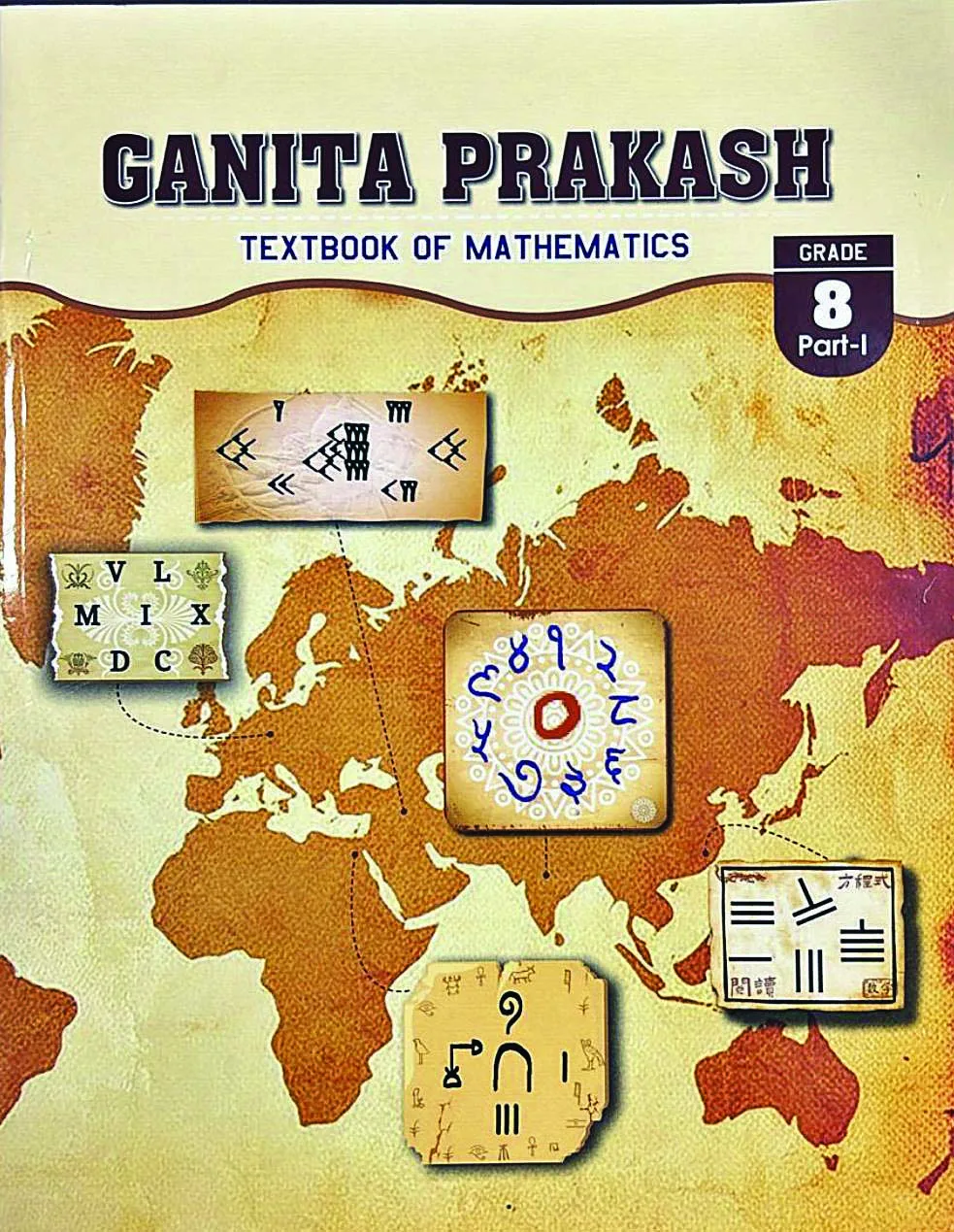
- In Math, exploring patterns is a key aspect. The textbook provides several opportunities to observe and extend patterns, describe them and use them to solve problems.
- There is a mention of the famous story of Ramanujan and the special number 1729
In contrast, when the Congress came to power in 2004, it immediately formed the Zoya Hasan Committee to begin altering textbooks, and by 2006, all books had been changed without any public consultation. Leftist interference in historical writing is nothing new. As early as 1977, Romila Thapar’s Medieval India, Bipan Chandra’s Modern India, and R S Sharma’s Ancient India were accused of serious distortion of facts. These allegations were so substantial and widespread that in July 1978, R S Sharma’s book had to be removed from the CBSE syllabus. In 1982, NCERT even issued a directive stating that the medieval period could not be depicted as a Hindu-Muslim conflict. In 1989, the West Bengal government issued guidelines prohibiting criticism of Muslim rulers, mention of temple destruction, or forced conversions in textbooks.
Traditional Skills Meet AI
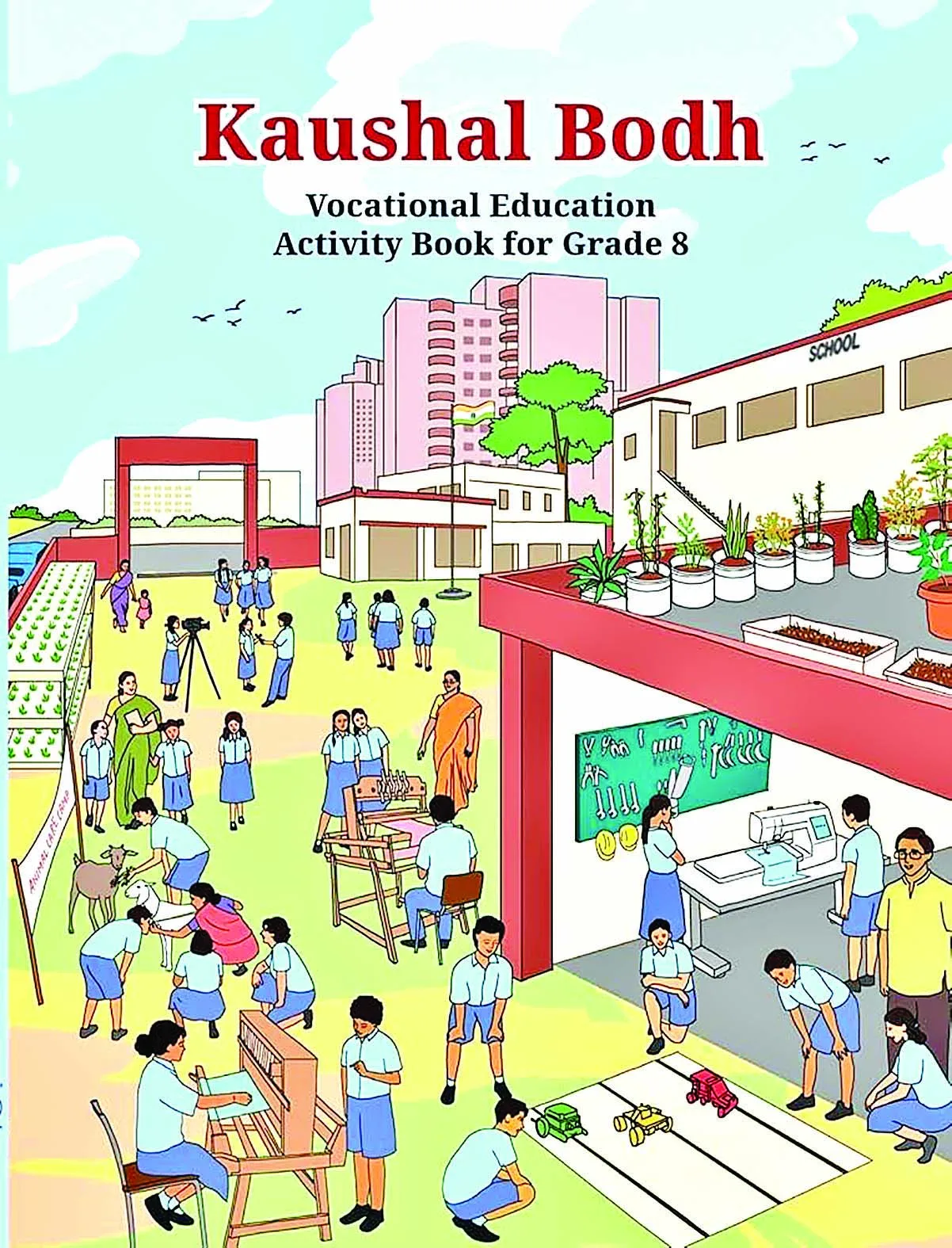
- Vocational education activity books have been created for grades 6, 7, and 8 for the first time in the country. Various projects have the student spending a few weeks experimenting with hydroponics, learning how to care for farm animals, or designing a campaign to raise awareness about water conservation.
- Artificial Intelligence has been integrated in the textbook to encourage learners to responsibly use all tools at their disposal to satisfy their curiosity and interests. Specific projects such as ‘Creating an AI Assistant’ in Grade 7, and ‘Home Automation’ in Grade 8 introduce the learner to the working principles behind modern technologies and encourage them to experiment with it.
The Nehru-Gandhi regime ensured that future generations were denied the opportunity to learn true history. The ideology responsible for Partition was never confronted; instead, it was subtly encouraged. Why, despite the bloodshed, plunder, arson, forced conversions, and massacres associated with invasions driven by the kufr-kafir doctrine, is Islam still portrayed in textbooks as a religion of peace and brotherhood? Why is it that only Ashoka and Akbar are adorned with the epithet “Great” in such books? Why are dozens of mighty and valiant Hindu-Sanatani rulers — whose empires were far more expansive and whose achievements inspired future kings to adopt their titles — denied similar honorifics?
Sporting Discipline
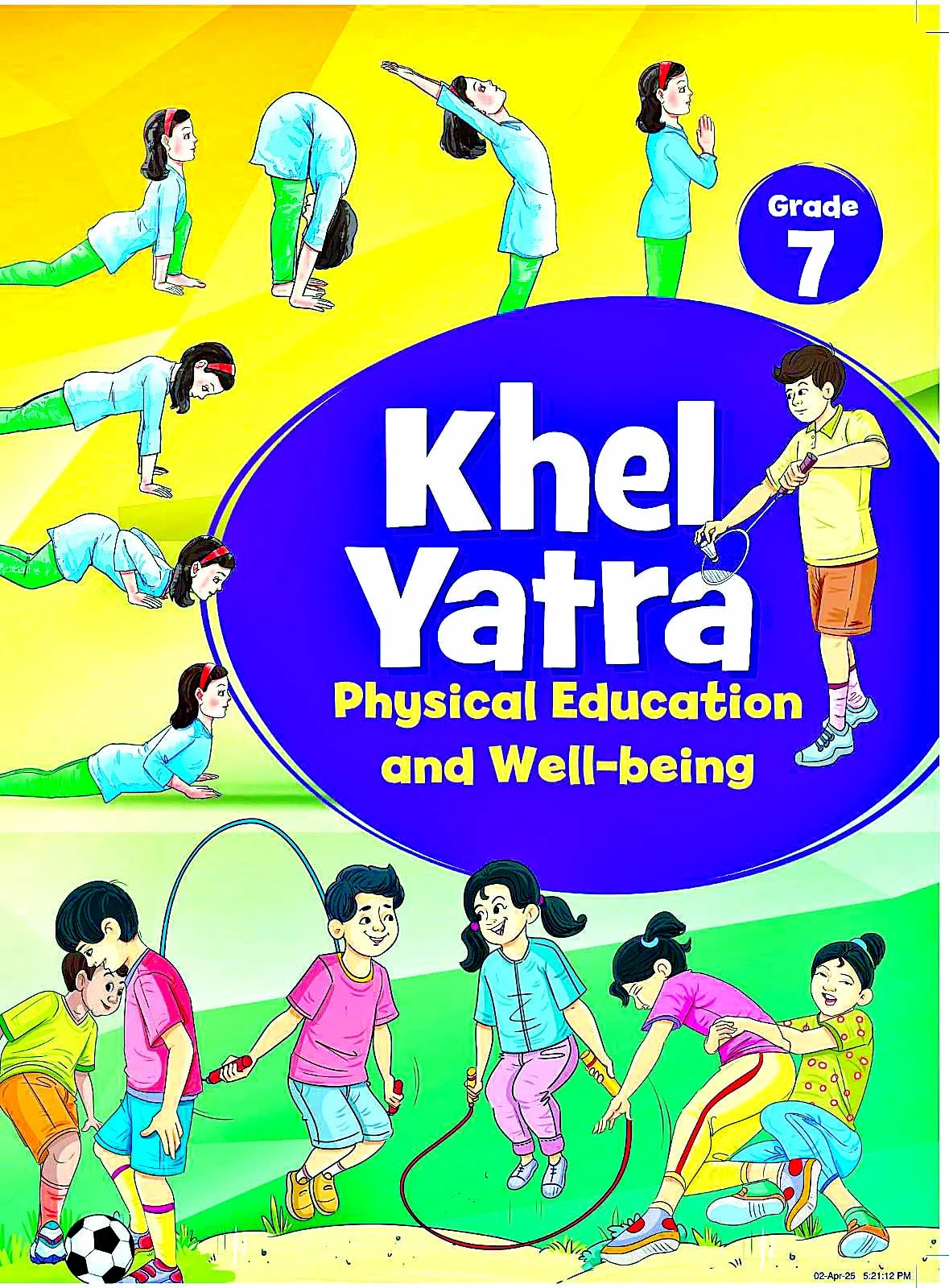
- This book is the first to be written for Grade 8, and it sets a new national standard for physical education in middle schools.
- Aśhtānga Yoga principles, such as important āsanas, mudrās, and breathing techniques, are incorporated into the curriculum. From a young age, students learn self-discipline, focus, and emotional control.
As a staunch Islamist, Maulana Azad ensured the glorification of Muslim rulers in history books. The destruction of temples, forced conversions, and imposition of jizya tax by rulers like Aurangzeb, Alauddin Khilji, and Mahmud Ghazni were either justified or ignored. Meanwhile, Nurul Hasan institutionalised Marxist control over education. He facilitated the rewriting of textbooks by Leftist historians like Romila Thapar, Irfan Habib, and Bipan Chandra to align with a Communist-Islamist narrative. His objective was clear — to downplay Hindu achievements, portray Islamic invaders as progressive rulers, and frame Bharatiya history through a Euro-centric Marxist ecosystem. To bolster this ideological framework, Leftist intellectuals and historians were appointed en masse to key institutions such as the Indian Council of Historical Research (ICHR), NCERT, and central universities. These institutions then systematically propagated narratives that portrayed Hindus as oppressors while glorifying the Mughals and colonial powers as progressive. Under this narrative, the Mughal period was even referred to as the “Golden Age” of Bharatiya history. Hinduism was reduced solely to caste-based discrimination, while its vast contributions to scientific thought, astronomy, Ayurveda, art, philosophy, linguistics, and grammar were deliberately ignored.
Inculcating Familial Worldview
- The World Around Us (TWAU) prepares students for Science, Social Science and Environmental Science in an integrated manner at the Preparatory Stage, and they discover that all subjects are interconnected and contribute to each other’s seamless progression
- Through continuous exploration, students discover the value of ‘Unity in diversity of vibrant India’ and also the basic examples and principles of ‘Vasudhaiva Kutubakam’. The textbook also instils in students’ environmental awareness and harmonious living
- It presents the geographical journey of Godavari River. The chapter also gives the information about Brahmagiri Hills of Western Ghats at Trimbakeshwar, Kawal Tiger Reserve, Coringa Wildlife Sanctury, Indrawati etc
Towards a Truthful and Inclusive History
In light of all these facts, it is clear that Indian education is now progressing beyond the devious politics of narrative control and moving towards truth and moral clarity. The revised textbook does not promote hatred or division. On the contrary, it gives students an opportunity to reflect on how ambition, ideology, and power have historically shaped the decisions of rulers. This NCERT book is not merely a rewriting of history; it is a reorganisation — a restructuring. The time has come to understand the true legacy of the Mughals, free from romanticised tales and ideological bias, and to acquaint students with a history rooted in self-awareness and national identity.












Comments