





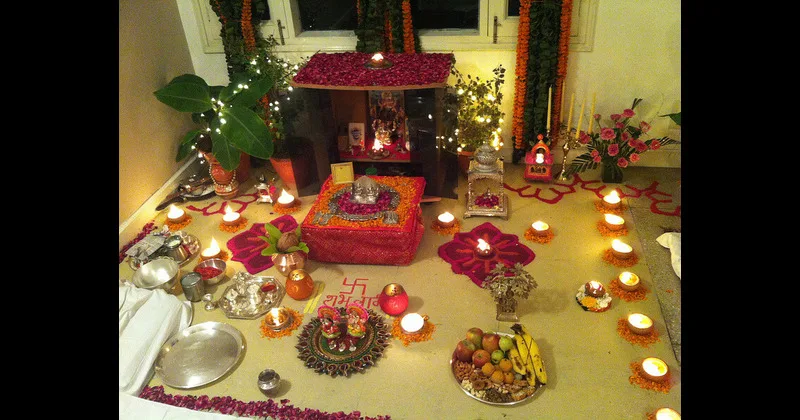
For thousands of years, Sanatani homes were more than just places to live, they were temples in disguise. Long before technology entered our lives, spirituality was built into the very design and rhythm of Indian households. From the Tulsi plant in the courtyard to the diya lit at dusk, from sacred sounds of bells to the mandir tucked in a corner, every element had meaning, energy and connection with Dharma and Science.
These were not just cultural habits; they were intentional acts rooted in Hindu Scriptures like the Vedas, Puranas, Agamas and Grihya Sutras. They were designed to align daily life with the cosmos, protect the home from negativity and keep the soul centred.
But today, these ancient home rituals are quietly disappearing, not because of foreign rule, but due to modern lifestyle shifts, secular skepticism and the growing trend to favor Western ideas over indigenous wisdom. In our effort to become pseudo-modern, we have turned homes into smart spaces – but stripped them of sacredness.
The Temple at Home: Sacred Acts Rooted in Shastra
Let us all explore how these sacred traditions, backed by both Shastras and modern science, are not outdated, but essential. And why protecting the temple within your home may be more important today than ever before.
Your Home is Not Just Space – It is Sacred Ground: A Sanatani home is not just for living, it is a space where Dharma resides.
Atharva Veda (9.6.15) describes the home as Griha Devataalayam – a temple of household gods. It was not just a shelter but a place where Dharma was practised daily. Modern architecture focuses on glass and steel, but ancient Vastu Shastra emphasised energy flow and cosmic alignment.
The Mandir is Your Spine: The home alter is not furniture, it is the axis of spiritual continuity
As per the Bhagavad Gita (Chapter 9.22), Lord Krishna says, “To those who are constantly devoted, I carry what they lack and preserve what they have.” A mandir at home was the focal point of that devotion, connecting generations in a sacred thread.
Agama Shastra lays rules for building and maintaining a Griha Mandir.
Tulsi is not a plant – She is a Guardian Devi: Tulsi is revered for spiritual and environmental purity
Scriptures such as the Padma Purana glorify Tulsi as the earthly manifestation of Devi Lakshmi. Modern science now confirms Tulsi’s powerful anti-bacterial, anti-viral and air-purifying properties.
Skandapurana PadmapuranaUttarakhanda (V.2, 4, 8, 13) says, “Every home with a Tulasi plant is a place of pilgrimage and no disease, messenger of Yama (the God of Death), can enter it.”
Rangoli was not decoration – It was Defence: Rangoli patterns were sacred yantras to ward off negativity
As per Vastu Shastra and Shilp Shastra, sacred floor patterns at the home’s entrance are not mere a decoration, they are energetic shields that guard against negativity. These geometric designs known as mandalas or alpanas, are believed to attract prosperity and ward off durdrishti (evil eye).
In the Manasara Shilp Shastra, Chapter 12 (Vastu Laksana), it is stated, “Bhūmiparikarmaṇaṁ śubhāya, māndalikaṁ nityam aṅgane likhet” which means, One must draw auspicious mandala patterns daily at the threshold to purify the space and welcome divinity.
Modern quantum physics and sacred geometry have begun validating this wisdom, showing that symmetrical patterns and fractals can influence the vibrational field of a space, exactly what these ancient rangolis were designed to do.
Bell is a Weapon Against Chaos: The temple bell purifies space through sacred sound
Agama Shastra, particularly the Kamika Agama (Chapter or Puja Vidhi), prescribes the ringing of a bell (ghanta) at the beginning of every ritual to clear the space of inauspiciousness and invoke divine presence. It states,
“Ghanta nadaṁ karomyādau devatāhāvana lakṣaṇam
Sarvaśatru nivṛttyartham śubhaṁ jñātvā pradīpyate”
“The ringing of the bell is the invocation of the divine, the removal of negative energies and the beginning of all that is auspicious.”
The sound of the bell is said to resemble ‘OM’, the primordial vibration believed to be the sound of the universe. The Skanda Purana also notes:
“Ghanta śabdaṁ tu yaḥ śṛṇoti, tasya pāpaṁ vināśyati” — “He who hears the sound of the bell is freed from sins.”
Kitchen was Sacred – Not just a food station: Cooking was worship; food was medicine and offering
Ayurveda teaches that food (Ahara) is a medicine and one of the three pillars of life (Traya Upastambha) and what we eat, how we cook and the consciousness behind it directly influence body, mind and soul. Cooking while chanting mantras, maintaining cleanliness and offering the first portion to the divine (god) was a form of energetic infusion of gratitude.
Bhagavad Gita (3.13) beautifully declares:
“yajñaśiṣṭāśinaḥ santo mucyante sarvakilbiṣaiḥ
bhuñjate te tvaghaṃ pāpā ye pacantyātmakāraṇāt”
“यज्ञशिष्टाशिनः सन्तो मुच्यन्ते सर्वकिल्बिषैः
भुञ्जते ते त्वघं पापा ये पचन्त्यात्मकारणात्”
“The devotees of the Lord are released from all kinds of sins because they eat food which is offered first for sacrifice. Others, who prepare food for personal sense enjoyment, verily eat only sin.”
Main door was Threshold of Energy: Decorated entrances were spiritual shields
As per the Vastu Purusha Mandala, the doorway is aligned with specific deities and directions, channeling divine energies when honoured with symbols like the Swastik, Toran and Mango Leaves.
These elements are not decorative, they are spiritual seals of protection and invitations to auspicious vibrations.
Vishwakarna Prakasha (Chapter 4, Verse 46-52), states:
“Dvāraṁ yatra praveśāya sthāpyate tat samāhitaṁ
Dvārapālaḥ sadā rakṣet sarvaśatrum nivāraṇam”
“The door is the point of sacred entry; placing protective symbols ensures it is guarded from all hostile forces.”
Brhat Samhita by Barahamihira (Chapter 53, Verse 64):
“Śākhā-mālāṁ pralambya dvāri lagnāṁ śubhapradām
Mārga-doṣaṁ nihantīti gṛha-praveśa-śāstra-jñāḥ”
“Hanging sacred garlands or mango leaf strings on the door removes directional defects and brings prosperity.”
Shoes Outside Wasn’t Hygiene – It was Honour
Wearing shoes inside not only brings physical dirt but also carries the chaotic energy of the outside world – disrupting the spiritual vibrations within.
Manu Smriti (Chapter 4, Verse 208) mentions:
“Na pādukābhyāṁ kaṣṭhābhyāṁ nārīṣu paridāpayet
Nāgniṁ nābhyavahāryāṇi na cātmānaṁ kathaṁcana”
“Do not approach sacred objects, fire or meals while wearing footwear or holding wooden items.”
Parasa Smriti (Verse 6.23) states:
“Ucchiṣṭo nāvagacchet saṁskṛtaṁ puṇyakarma ca
Na pādukābhyāṁ praveśo ‘sti yatra devā upasthitāḥ”
“One must not enter sanctified spaces or where divine presence resides, while wearing shoes or in an impure state.”
Diya is not just Light – It’s Your Home’s Breath
Diya is more than a decorative lamp – it is Agni, the sacred flame that witnesses every offering, purifies energy and illuminates both the outer and inner worlds.
Rig Veda (1.97.1) mentions:
“Agniḥ pūrvébhir ṛṣibhir īḍyo nūtanair uta | sa devān eha vakṣati”
“Agni, praised by the ancient and the present sages, carries the offering to the gods.”
Shatapatha Brahmana (1.1.22) states:
“Agni is light, light is immoral. He who lights the Agni leads himself to light and thus to immortality.”
Speaks of inner light (jyoti) as the symbol of self-realisation and truth, linking the external flame of the diya with internal awakening.
Aarti was not Singing – It was Home’s Heartbeat
Aarti is a multisensory ritual where light, sound, movement and fragrance come together to reset the home’s energy and anchor the heart in devotion. It was emotional tuning, not entertainment.
Narada Bhakti Sutra (Sutra 67) mentions:
“Lokānām anumodanam”— “Bhakti includes participation in collective devotional acts, like singing and offering light with others, bringing joy to the community and the divine.”
Pancaratra Agama (Jayakhya Sutra – Chapter 18, Verses 50-56) describes Aarti (Nirajana) as a core part of Upachara Puja, involving – Fire (Deepa), Fragrance (Dhupa), Sound (Ghanta and Kirtan) and Circular Motion (Pradakshina – like movement of flame). This emphasises that Aarti is a sacred offering of the elements – not performance.
Sacred Objects were not clutter – They were codes
Everyday ritual items like Rudraksha, Shankh, Kalash and Raksha Sutra were not ornamental clutter. They were coded instruments of cosmic alignment, each linked with Pancha Mahabhutas – the five primordial elements.
Shiv Purana – Rudraksha (Vidyeshwara Samhita, Chapter 25, verse 3-8):
“रुद्राक्षं शिववक्त्राज्ञं पावनं पापनाशनम्।
त्रैलोक्ये यद् विशुद्धं तन्नमाम्यहमद्भुतम्॥”
Rudraksha is born from Shiva’s tears. It destroys sin, purifies energy and brings spiritual merit.
Raksha Sutra – Atharva Veda (19.62.1):
“येन बद्धो बलि राजा दानवेन्द्रो महाबलः।
तेन त्वाम् प्रतिबध्नामि रक्षे मा चल मा चल॥”
I tie this thread with the same force that bound mighty Bali. May this protect you – never falter.
Shankh – Skanda Purana (Chapter 94, Verse 24):
“शङ्खस्य मध्ये तिष्ठन्ति देवाः सर्वे सभासदः।
तेषां दर्शनमात्रेण पापं नश्यति तत्त्रिकम्॥”
All gods reside in the belly of the conch; blowing it purifies the space and dispels negativity.
Kalash – Taittiriya Samhita (1.1.9.1):
It describes the Purna-Kalasha as representing abundance, purity and feminine cosmic energy (Adi Shakti).
Dharma Begins at Home, Not School: Children learn Dharma by observing daily routines at home, not in classrooms
In the Mahabharata – Santi Parva (Chapter 60, Verse 7), it is said:
“Dharmasya mūlaṁ kulaṁ smṛtam” – The foundation of Dharma is said to be the family.
Taittiriya Upanishad (1.11.2), the famous injunction:
“Acharya devo bhava” – referring first to the mother and father as the primary gurus.
Children imbibed the values like respect, cleanliness and compassion through observation and participation – long before formal schooling.
Festivals were not events – They were Soul Resets: They are spiritual, emotional and energetic resets that realigned the home with nature’s cycles.
Devi Bhagavata Purana – Book 7, Chapter 37 details Navratri worship, fasting, and home altar preparations to invoke Shakti and dispel tamas (inertia).
Karttika Mahatmya (Chapter 4-6) explains the ritual cleaning, oil lamp lighting and vrata during Diwali, symbolising inner and outer purification.
Regions Leading the Revival: South India, Gujarat and the Northeast
While urban centres elsewhere race toward modernity at the cost of cultural memory, states like Tamil Nadu, Andhra Pradesh, Gujarat and regions in the Northeast continue to embody Sanatana Dharma in daily home life – proving that tradition and progress are not opposites, but allies.
South India: From lighting a deepam (diya) at dusk to chanting the Vishnu Sahasranama or performing simple pujas at the home shrine, daily life in Tamil Nadu, Kerala, Karnataka and Andhra Pradesh still orbits around Agama Shastra-based rituals.
-Kolams (scared floor patterns) are drawn each morning to honour Lakshmi and maintain vibrational harmony
-In many homes, Nitya Puja (daily worship) is performed before meals and work begin, keeping Dharma at the heart of routine
-Pongal, for example, is not just a harvest celebration – it includes purifying the home, boiling milk in an earthen pot as a ritual of gratitude and worshiping Surya (the Sun).
Gujarat: In Gujarat, even in modern cities like Ahmedabad or Surat, one still finds:
-Tulsi-sthalis (sacred basil altars) in courtyards
-Vastu-aligned entrances with Swastik and red kumkum
-Daily offerings to cows (gau seva) before eating – During Navratri, homes turn into temples with daily Garba rituals and Durga saptashati readings – merging music, dance and devotion
-Gujaratis have found a way to blend technology with tradition, maintaining Dharma with apartments and tech-driven lifestyles
Northeast India
Despite being ethnically diverse, regions like Assam, Arunachal Pradesh and Manipur uphold dharmic living through:
-Nature worship, including honouring rivers, trees and animals as sacred
-Ancestor rituals performed at home altars
-Community kitchen and festivals like Bihu, which center around food rituals, cleanliness and cosmic gratitude.
-Tribal and Vaishnavite practices often coexist, reflecting a lived Sanatana ethos rooted in simplicity, reverence and sustainability
These regions stand as living proof that Dharma isn’t a museum piece—it’s a living tradition. It adapts, but never abandons.
They remind us that true modernity lies in knowing your roots deeply enough to evolve with strength, not by erasure.
Reclaim the Temple Within Before It’s Too Late
The downfall of a civilisation doesn’t begin when temples are destroyed – it begins when homes stop being sacred. For generations, Hindu households upheld Dharma through everyday acts: lighting of a diya, feeding a cow, chanting mantras, offering food to the divine. These were not rituals – they were the rhythms of a conscious life.
Today, we abandon them not because they failed, but because we forgot. We wait for Western science to validate Tulsi’s healing or mantras’ resonance, while dismissing them as outdated. In chasing modernity, we risk losing the very practices that once anchored us in clarity, balance and peace.
This is not just about the culture. It is about protecting your inner ecosystem – your mind, energy and purpose. Lighting a diya, ringing a bell, or drawing a rangoli are not superstitions – they are soul technologies.
In a world overwhelmed by anxiety and noise, the most radical act is to return home – to your roots.
Light that lamp, sing that aarti, water that Tulsi, not as a tradition, but as a transformation. Because the temple outside can fall, but the temple within – only you can protect it.










Comments