





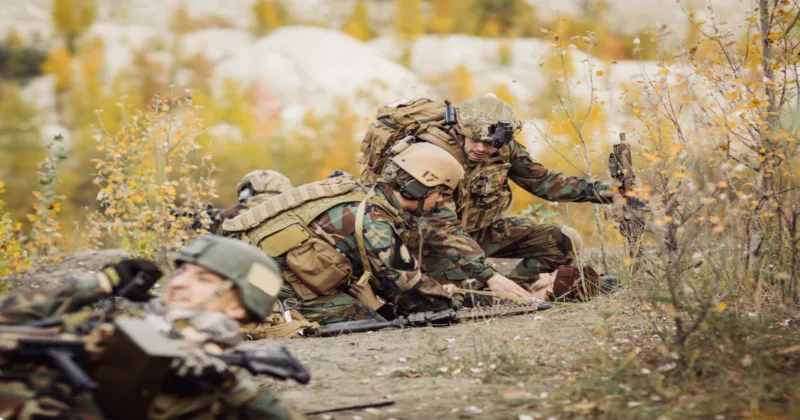
The world is in tremendous turmoil. Ideological confusion, fascist movements and fissiparous tendencies mark the social landscape. Some nations with ethnocentric mindset and hegemonic designs seem to be constantly in a squabbling mode. Rules and norms for the good of all and for maintaining order and harmony are flagrantly violated. There is little respect for different points of view, either political or economic. Nations embroiled in protracted wars present a distressing reality and nations at the threshold of wars are in stark evidence. With ever diminishing concern for maintaining the purity and wholesomeness of our shared environment and ecosphere, the world appears to be moving towards catastrophic conditions which are surely going to witness death and destruction on a colossal scale, probably unprecedented in human history.
Are we all heading towards a self-invited disaster that threatens the very existence or survival of the generation next? We probably are.
Russian President Putin talks aloud of danger to his country’s security from NATO forces supporting Ukraine. NATO countries of Eastern and Western Europe are scared of Russia eyeing their territory and its invasive designs. There is mutual fear, suspicion and insecurity perception. Countries of Western and even Eastern Europe have fought with each other fiercely during the medieval times. The First World War, which lasted from 1914 to 1918, was caused by a complex interplay of factors that included militarism, imperialism, politico-military alliances and jingoism. The League of Nations was constituted after the cessation of the First World War to tone down the nations with expansionist tendencies and help create an atmosphere of peaceful co-existence and reconciliation with differences. But this could not be achieved and things only worsened with time. The main causes of World War II include the lingering issues from World War I, particularly the Treaty of Versailles that left an unfinished agenda for Germany with the consequent rise of fascism and Nazism, and the failure of appeasement policies by key members of the Allied power group—Britain and France. Thus, essentially, core reasons for Second World War are the same as in the First World War—hegemonic tendencies, territorial greed and ethnocentrism.
Whereas the First World War ended through the joint efforts of the Allied group culminating in the Treaty of Versailles, the Second World War ended due to surrender of key warring participant of Axis Powers group–Japan after it was devastated by the fallout of the nuclear bombs dropped by the US over Hiroshima and Nagasaki. Thus, the reasons for cessation of the two big wars on the global stage were vastly different and contrasting. United Nations Organisation was formed post the Second World War towards the same end objective as the earlier League of Nations.
The League of Nations failed to prevent the Second World War. The United Nations Organisation, now 80 years after its establishment seems to be meeting the fate of the failed League of Nations. It failed to prevent multiple short term armed conflicts between nations over 72 years after its inception. But since the outbreak of the Russia-Ukraine War in February 2022, which appears to be not ending anytime soon, the eruption of Israel-Hamas war in 2024 and Israel-Iran War in 2025 have strongly underscored the perception about obsolescence of the UHO. The UNO is not only ineffective as a conflict preventing and conflict resolving multilateral body, it has become outmoded in a rapidly changing world. This is most glaringly borne out by the recent pronouncements by Indian PM Modi that the UN has outlived its utility and needs to be drastically reformed to carve out an entirely new multilateral body alive and responsive to the needs of the twenty first century. As PM Modi said, “You can’t run 21st century software on 20th century typewriter”.
The above account of geopolitical history of the last 100 plus years only tells about war and peace aspects. On the business, economy and trade fronts too, we have witnessed only self- serving policies pursued by nations across the globe. Nations have also made groups or coalitions for fulfilling common agendas. But all this has not helped the cause of the global family– a concept that comes straight from the cultural ethos of India which talks of Vasudhaiva Kutumbakam meaning that the entire world is one family and we are bound by fraternal ties. This concept talks of geopolitical actions that promote the interests of all and harm none.
We are heading towards disaster because the mutual mistrust and suspicion is only increasing by the day, not waning. With nuclear weapons in thousands in possession of some countries, the ominous signals of impending disaster are becoming more pronounced by the day. These nuclear weapons are sufficient to destroy our world many times over. The world population and particularly its political leaders need to quickly realise that abiding by the divine code of eternal human dharma is the only solution to the present crisis. And this solution rests on faith—faith in the existence of a supernatural Creator who is all powerful and all-knowing and who regulates activities in the entire universe, not just this small planet earth. His inviolable law of divine retribution of human karmas is always operative. We have to pay for our vicious actions sooner or later–make no bones about it. Therefore, we must take guidance from eternal dharma and retrieve the fast worsening situation. For trust to be created and peace to be established, our thinking needs to drastically change. The above ideological strand of regarding the world as one family needs to be seriously embraced by global political elite to quell the brewing storm of death and devastation that is staring us in the face.











Comments