





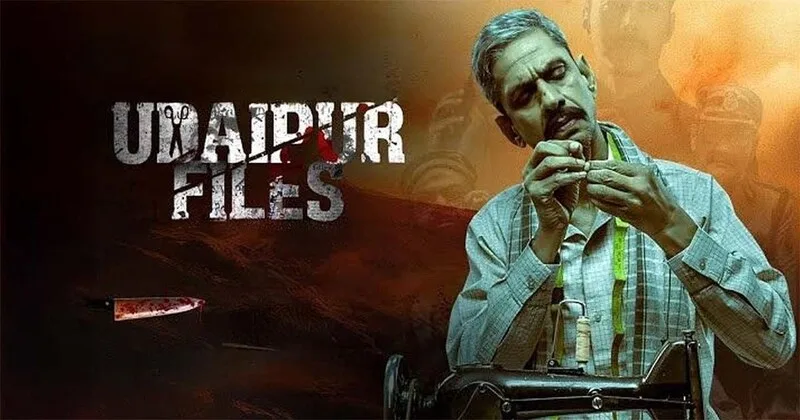
Today, the film “The Udaipur Files”, based on a true incident, is fighting for its right to be released, right in the Supreme Court of India. The case, Mohammad Javed vs. Union of India and Jani Firefox Media vs. Maulana Arshad Madani, was heard again on July 24, 2025, by a bench comprising Justice Surya Kant and Justice Joymalya Bagchi. Those opposing the film claim it promotes communalism and insist it should never be released. Top lawyers have been roped in to stop the film’s release, alleging in court that it is “provocative.”
One is often left astonished by those who advocate for freedom of expression yet oppose this very right when it comes to a film like this. Is freedom of expression meant to apply only to India’s majority Hindu community? If we claim India is a secular nation, is the responsibility of upholding that secularism solely on the shoulders of Hindus, or should it be taken seriously by everyone?
A Brutal Incident Rooted in Jihadi Ideology- Can this truth be denied?
In this case, even after the Central Board of Film Certification (CBFC) approved the film’s release and all controversial scenes were removed, why is the Supreme Court still being asked to stop it from being screened? The argument is that it may incite communal tensions between Hindus and Muslims. But can we deny the fact that on June 28, 2022, in Udaipur, tailor Kanhaiya Lal Teli was brutally beheaded by two Islamist radicals-Riyaz Attari and Ghaus Mohammad? Another extremist even filmed the act and shared it on social media. The perpetrators claimed the murder was revenge for a social media post by Kanhaiya Lal supporting former BJP spokesperson Nupur Sharma. The incident drew global condemnation of this violent Islamist ideology.
Director Bharat S Shrinet aims to raise awareness about this radical mindset through The Udaipur Files. And yet, Mohammad Javed, Maulana Arshad Madani, and a few others are determined to prevent this film from ever being released. This is despite the Solicitor General, Tushar Mehta, informing the Supreme Court that the film underwent 55 cuts, had all provocative content removed, disclaimers added, and presents a well-balanced narrative.
Terrorism is a global issue
Everyone should heed the words of Tushar Mehta: “Terrorism is a global issue. There is nothing in the film that endangers foreign relations or hurts the sentiments of any community. The storyline is balanced, features positive characters, and clearly states that it is a fictional tale inspired by true events.”
The court has been informed in detail about the certification process followed by CBFC, including inputs from the Ministry of External Affairs. Thirteen minutes of footage have been removed. The language used in the film is neutral. Senior advocate Gaurav Bhatia, appearing for the filmmakers, also presented these facts during the hearing. All six major changes recommended before the film’s release have already been implemented. Yet surprisingly, lawyers representing Mohammad Javed and Maulana Arshad Madani still oppose the film’s release in theatres.
Allegations of provoking communal tension
Senior advocates Kapil Sibal (on behalf of Jamiat Ulema-e-Hind) and Menaka Guruswamy (representing Mohammad Javed) argue that the film mimics the chargesheet and incites communal sentiment under the guise of free speech. This argument is incomprehensible, especially because the film seeks to awaken society. The horrifying incident forced millions of Indians to reflect on how religious hatred can be prevented in a healthy democracy like India. Most importantly, those opposing the film in court should try to understand the pain of Kanhaiya Lal’s family.
No justice after three years
Kanhaiya Lal’s son, Yash, expresses deep frustration: “The petition to stop the film was filed just three or four days ago, and it’s already being heard. But the petition I filed nearly three years ago, seeking justice for my father’s murder, remains unresolved. There were over 150 witnesses in the case, and 15–16 have not even appeared in court. No fast-track court was set up. Despite ample evidence, not one of the accused has been punished.”
Yash adds, “When someone tries to show the truth through a film, the entire system seems to rise against it. Organisations like Jamiat Ulema-e-Hind and leaders like Maulana Madani demand a ban, and in just three days, the film gets stayed. How efficient that is! But the same urgency is not shown in punishing murderers. This makes us question the system. My father was brutally murdered, and justice has yet to be delivered. When a film is made to awaken the nation about communalism and jihadist ideology, it is being suppressed. Why? What kind of mindset is this? The truth of how terrorists conspired to murder my father is out in the open, yet some organisations seem to side with these anti-national elements. What sympathy do they have for terrorists?”
The Truth: Kanhaiya Lal was murdered due to Islamist Jihad
Vinod Bansal, national spokesperson for the Vishva Hindu Parishad, points out, “The NIA filed a chargesheet within six months against Kanhaiya Lal’s murderers. But tragically, these enemies of humanity haven’t been given the death sentence even after three years. On the other hand, a stay order on the film The Udaipur Files was issued in just three hours-without even watching the film-and the copy of that order wasn’t made available to the concerned parties for 21 hours. What does that tell you? What’s wrong with the film? Did the murder not happen?”
He further questions, “Will Kanhaiya Lal’s son ever get justice? Will he be able to grow his hair back or walk with dignity on his bare feet? Will the murderers ever be hanged? Will Kanhaiya Lal’s ashes ever be immersed with the peace they deserve?”
Jihadi mindset and extremist ideology must be eradicated
It’s not just Kanhaiya Lal’s grieving family or organisations like the VHP raising concerns. Millions of citizens across India want to eliminate jihadist thinking, religious extremism, racism, and anti-national activities of every kind.
This film truly has the power to awaken the Indian masses and inspire deep reflection and discussion on serious issues. It would be wise for those opposing the film to instead stand for strengthening India’s democratic values and support the film’s timely release in theatres.















Comments