





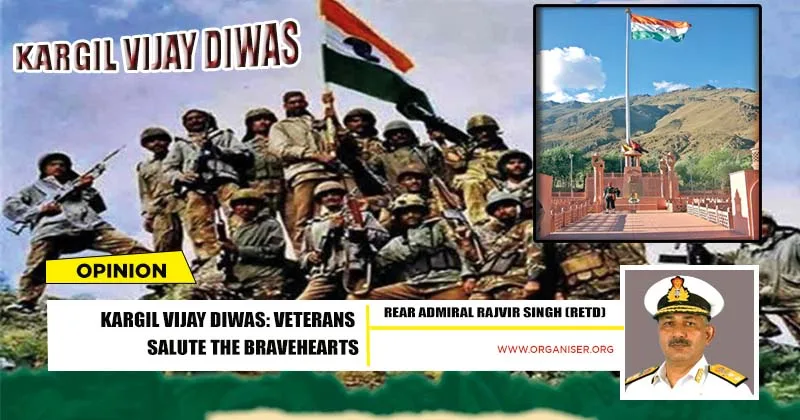
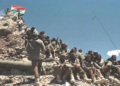
This year, we are celebrating 26th anniversary of our armed forces’ win over Pakistan when 84 days long Kargil war was finally won by Bharat on July 26, 1999. Kargil Vijay Diwas is celebrated to honour the sacrifices, courage and valour of our great soldiers who have given their ultimate for protecting the sovereignty of our Bharat Mata. Akhil Bharatiya Poorva Sainik Seva Parishad (ABPSSP), an All-India organisation of Ex-Servicemen (ESM), aims to channelise the ESM’s ingrained discipline, collective positive energy, dedication and devotion to duty for the nation building. The organisation under the Chairmanship of Lieutenant General VK Chaturvedi, PVSM, AVSM, SM (Retd) endeavours to utilise ESM as a resource for national integration, unity, harmony, and internal security. The organisation, conducts an annual Kargil Yatra from Srinagar to Kargil. Every year, a delegation of Ex Servicemen visit Kargil to pay homage to the brave sons of Bharat who gave their supreme sacrifice for defending the territory of our motherland.
War Memorial & Pandrethan Temple
This year, the visit planned by the ABPSSP was conducted from July 1 to July 7. A delegation of 48 men and women from all the three services; Army, Navy and Air Force led by this author reached Srinagar on July 1. Next morning on July 2, we paid tribute to the Martyrs at War Memorial Srinagar, maintained by 15 Rashtriya Rifles. The large number of names engraved on War Memorial remind one the numbers of people who have sacrificed their lives in saving Kashmir from the nefarious designs of Pakistan.Adjacent to the War Memorial, there is 8th century Pandrethan temple. Pandrethan has been identified as the original site of the capital city of Srinagar, founded by Ashoka. During the 6th century CE, the capital was shifted a few kilometres northwest, resulting in the area being called Puranadhisthana, meaning ‘old capital’ in Sanskrit, with Srinagar being used as a name for the new capital. The temple is dedicated to Bhagwan Shiva. It is believed that a great fire destroyed the city of Pandrethan in 960 CE. It hosts several excavated sculptures dating back to the 2nd century; they include two large monolithic rock Shivalingams, seven Gandhara-style sculptures and huge rock carving of the feet of a monolithic statue. Recently, the Chinar Corps was accorded recognition by the National Monuments Authority (NMA) for preserving and rejuvenating the Pandrethan temple. In 2021, the Chinar Corps restored excavated sculptures and created a themed heritage park to display them. The ABPSSP members visited the temple and offered Puja there.
Subsequently, we visited ‘Ibadat-e-Shahadat’, the army museum at Srinagar. A group of 25 ESM of Union Territory of Jammu and Kashmir had also joined us, and it was a pleasure to interact with them. The museum is repository of ancient and modern history of Kashmir. Having gone through the history of Kashmir, one realises that many wrongs have been done by many people, which is the reason for the state witnessing a lot of upheaval, which no other state in the country has undergone.
The Marvellous Sonamarg Tunnel
On July 3, we travelled by road from Srinagar to Drass. On the way, we passed through 6.5 kilometre long Sonamarg Tunnel connecting Gagangir and Sonamarg. The tunnel was dedicated to the nation by the Honourable Prime Minister of Bharat on January 13 this year. The tunnel bypasses a Z-shaped stretch of road, which used to be avalanche-prone and get blocked during the winter months due to heavy snowfall. It takes only 15 minutes to travel the 6.5 km long tunnel compared to hours over the previous zig-zag road. Situated at an altitude of over 8,650 feet above sea level, it has enhanced all-weather connectivity between Srinagar and Sonamarg enroute to Leh, bypassing landslide and avalanche routes and ensuring safer and uninterrupted access to the strategically critical Ladakh region. It will also promote tourism by transforming Sonamarg into a year-round destination, boosting winter tourism, adventure sports, and local livelihoods. We crossed Zojila pass in afternoon and witnessed Zojila Tunnel, another Bharatiya engineers’ marvel in the Himalayas which is progressing very well. Set for completion by 2028, Zojila tunnel will reduce the route length and ensure seamless National Highway-1 connectivity between Srinagar Valley and Ladakh. This enhanced connectivity will boost defence logistics, drive economic growth and socio-cultural integration across Jammu & Kashmir and Ladakh. In night, we stayed in Batra Transit Camp (BTC) Drass.
Kargil War Memorial
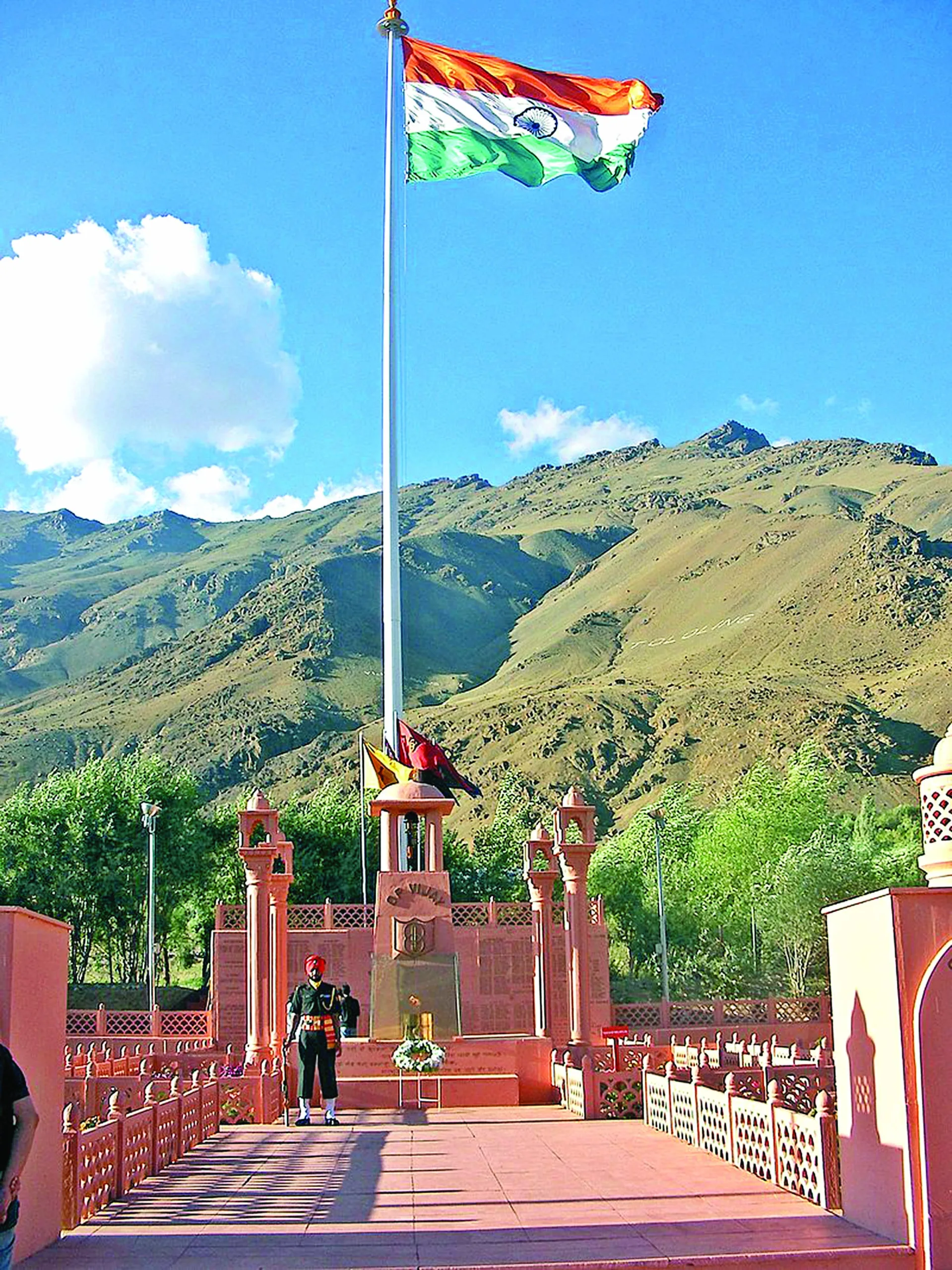
Next day on July 4, we visited Kargil War Memorial, built in the honour of the war heroes who gave their supreme sacrifice in defending our motherland. The Kargil War Memorial stands at the foothill of the Tololing Mountain. Visible from the site are the Tololing Heights, Tiger Hill, and Point 4875 (Batra Top), where fighting took place during the conflict. To step onto the grounds of this memorial is to embark on a journey of reverence and reflection. The monument features a striking sculpture where soldiers stand tall, unfurling the tricolour flag in a symbol of unwavering patriotism. It is a vivid portrayal of their indomitable spirit and resounding victory. The central feature of the memorial is a pink sandstone wall bearing a brass plate engraved with names of all 545 martyrs who died during Operation Vijay. When you wander amidst the rows of tombstones, the echoes of their sacrifice reverberate through your being. It’s a sight that stirs one’s heart, filling it with gratitude towards the Bravehearts. From the Amar Jawan Jyoti to the Wall of Heroes, every corner of the memorial tells a story of courage, indomitable spirit and sacrifice.
The memorial features the Captain Manoj Pandey gallery, which commemorates the young officer who was posthumously awarded the Param Vir Chakra, the highest military award, for leadership during the war. The briefing on the Memorial given by a jawan of was astoundingly inspiring for the visitors. After hearing his narration on the War Memorial, I could not restrict myself and immediately at the end of the briefing congratulated him for his flawless oratory and knowledge of the mission. This incident was reflective of yet an example of how the Indian Armed Forces personnel belonging to different states, languages and culture, unite to make Bharat, a great nation. At the memorial, visitors can see major sequence of events which transpired during the course of the war. A documentary movie is also shown, which explains the entire war, and the events leading up to it, in detail. The visit here was definitely an emotional and awe-inspiring experience. From Drass we moved to Kargil, and there we paid homage to the fallen heroes who laid their lives in different wars in the Kargil Sector.
Large Hearted Bharat
On July 5, we travelled back from Drass to Srinagar. Don’t know if it was a coincidence or God’s wish, that we got the news of a Pakistani soldier, who was refused a grave during the 1999 Kargil War was now being showered with glory in the Islamic Republic of Pakistan. Pakistan’s Army Chief, Field Marshal Asim Munir, along with the entire military brass, on July 5 paid tribute to Kargil martyr, Captain Karnal Sher Khan on his 26th death anniversary. While Pakistan initially disowned Captain Sher Khan, and refused to take his body from Indian soil, it was an Indian Army officer whose letter, tucked in the Pakistani soldier’s pocket, revealed his heroics in the war.
The Army has been instrumental in creating a safe environment for tourists, which has encouraged the growth of homestays, guesthouses, and local eateries
Badalta Jammu-Kashmir
Having travelled by road from Srinagar to Kargil and back, you witness lots of infrastructure development coming up in both the Union Territories of Jammu-Kashmir and Ladakh. For decades, the special status granted to Jammu and Kashmir kept it isolated from several national reforms, limiting private investments and economic growth. Today, investors are looking at Kashmir with renewed interest, leading to developments in tourism, real estate, and industrial projects. Streets once marred by shutdowns and protests, now witness bustling markets and extended business hours. Today, the Valley, once plagued by stone-pelting incidents and strikes, witnesses an extraordinary shift—organised stone-pelting has completely stopped, and markets thrive without fear of sudden shutdowns. The transformation of Jammu and Kashmir is evident not just in numbers, but in the way that people are reclaiming their lives, aspirations, and dignity.
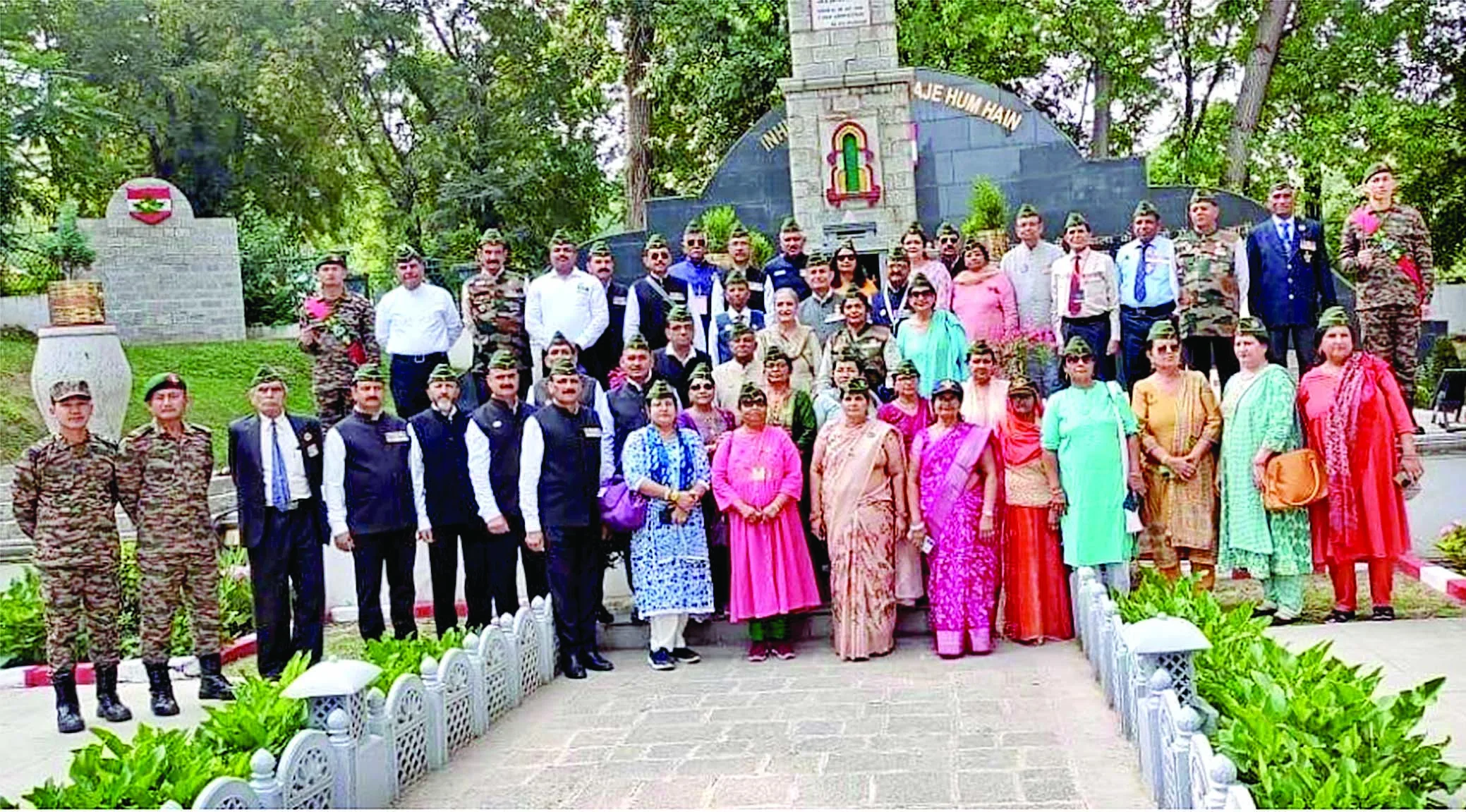
The Army has been instrumental in creating a safe environment for tourists, which has encouraged the growth of homestays, guesthouses, and local eateries. They actively support local hoteliers by providing training to improve their services and make the region more tourist-friendly. The visit was very emotive and successful. The National General Secretary of ABPSSP had made all arrangements with the Army authorities at Srinagar, Drass and Kargil. All the Army formations who were involved in the conduct of our visit were more than willing to help us out, sometimes out of their way. In the end, Being a former naval officer, I would like to salute every man and woman of Indian Army, who are posted in the Kashmir Valley and Ladakh. Living in inhospitable conditions, where even breathing becomes difficult, yet they provide all succour to the transiting defence personnel on daily basis. The dedication of the Subedar Majors managing the Transient Camps at Srinagar, Sonamarg and Drass was a perfect example of dedication of service to the country.













Comments