





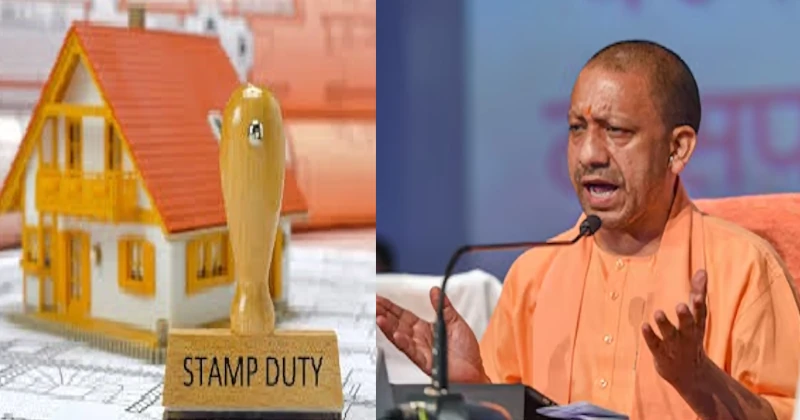
To boost women’s financial independence and promote gender-inclusive growth, the Uttar Pradesh Cabinet approved a 1 per cent rebate in stamp duty for properties purchased in the name of women, applicable to transactions valued up to Rs 1 crore. The decision significantly expands the existing benefit, which was previously capped at just Rs 10 lakh. Now it offers women homebuyers a meaningful incentive and aligns with the goals of the state’s flagship Mission Shakti programme. A total of 37 proposals were passed during the Cabinet meeting at Lok Bhavan in Lucknow, led by Uttar Pradesh Chief Minister Yogi Adityanath, with the stamp duty rebate standing out as a key highlight due to its direct impact on women empowerment and property ownership in urban and semi-urban areas.
Under the revised provision, women buyers will now receive a 1 per c concession on the standard 7 per cent stamp duty charged on property purchases, provided the property value does not exceed Rs 1 crore.
Earlier, the benefit was limited to a maximum of Rs 10,000 for property worth up to Rs 10 lakh, an amount that fell short and excluded most urban housing deals due to rising real estate costs. Now, with the updated cap (revised limit), women stand to save up to Rs 1 lakh on stamp duty for a property worth Rs 1 crore, a substantial boost to middle-class women aiming for financial independence.
Labour Minister Anil Rajbhar, while addressing the media, stated, “This decision will help more women, especially from the middle class, to become homeowners. Owning property enhances a woman’s confidence and status in society, making her more financially empowered.”
The measure is expected to significantly boost the number of registrations in women’s names, which will have long-term social and economic impacts. It also complements the Central Government’s Budget 2024 announcement, which encouraged stamp duty reductions for women to promote asset ownership and gender equity.
Strengthening Mission Shakti
This stamp duty concession supports Mission Shakti, which is Uttar Pradesh’s flagship initiative that focuses on empowering women. Launched under CM Yogi Adityanath’s leadership, the program focuses on making women self-reliant through financial assistance, skill development, and policy support.
Officials believe that the new exemption will not only increase women’s participation in real estate but also enhance their role in decision-making within families and society at large.
IRDE-DRDO Infra Project Cleared in Defence Corridor
Another key decision by the Cabinet was the approval to allocate 10 hectares of land in the Lucknow node of the UP Defence Industrial Corridor to the Instruments Research and Development Establishment (IRDE), a division of the Defence Research and Development Organisation (DRDO). The land will be offered on a nominal annual lease at no cost for setting up an Infrared Detection Technology Centre. The project aims to develop an indigenous semiconductor IR detector manufacturing facility, a critical technology used in defense surveillance, night vision equipment, and missile systems. According to government officials, the centre will provide direct employment to around 150 engineers and technical personnel and indirect employment to more than 500 people through associated industries and logistics.
The IRDE centre is a part of India’s long-term strategy to boost indigenous defense production and reduce reliance on foreign technology.
The Uttar Pradesh Defence Industrial Corridor, spread across six nodes: Lucknow, Kanpur, Jhansi, Aligarh, Chitrakoot, and Agra is being developed as a hub for defense manufacturing in India. The inclusion of the DRDO project in Lucknow reflects Uttar Pradesh’s growing role in national security and strategic manufacturing. This is also expected to attract more high-tech defense investments, catalyzing local economic growth and expanding job opportunities in the tech and defense sectors.
The twin decisions taken by the UP Cabinet empowering women through expanded stamp duty benefits and strengthening national defense capabilities through indigenous technology development underline the government’s balanced approach to social welfare and industrial progress.
The property tax rebate for women will likely stimulate higher female participation in real estate, thereby promoting asset creation, while the DRDO project will accelerate defense innovation and contribute to India’s goal of self-reliance (Aatmanirbharta) in critical technologies.
Both initiatives are strategic steps towards shaping a more inclusive and forward-looking Uttar Pradesh.














Comments