





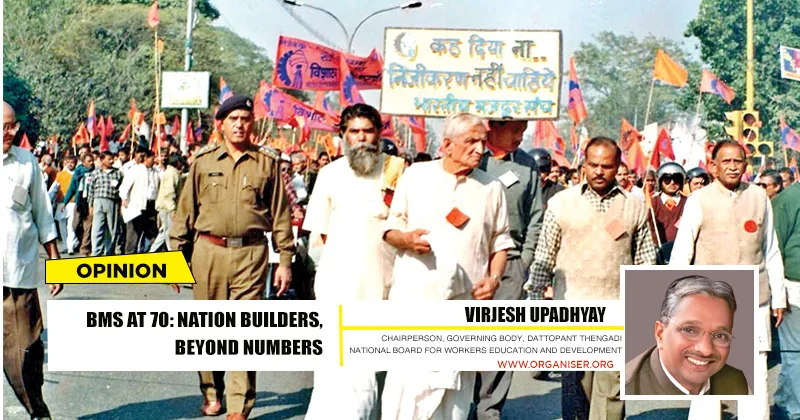
When it comes to a society in which trade unionism frequently finds itself adrift, flattened by the tides of platform capitalism, informalisation, and globalisation, the Bharatiya Mazdoor Sangh (BMS) stands strong like a beacon that is rooted in cultural rock. The movement was established in Bhopal on July 23, 1955, by Dattopant Thengadi, as an alternative to the foreign doctrines that were hijacking Bharat’s labour rhetoric. Its tale is not one of factional breakdowns or leadership ambitions; it is the story of a civilisational resurrection.
The Indian trade union movement at the time was greatly inspired by Leftist ideals, which reduced the worker to a simple instrument in the war against the employer and the state. These ideologies were prevalent during the historical period. According to the confrontation-first paradigm, labour was viewed as an instrument rather than a being. BMS did not originate as a counter-organisation but rather as a new consciousness, which was motivated by the profoundly civilised principles of Dharma, cooperation, and nationhood among its members. It was not the intention of this organisation to add another name to the trade union registration; rather, it aspired to recapture the very essence of labour itself.
Not a Mechanism, But a Movement
However, in contrast to traditional trade unions that are affiliated with political parties or Western ideological frameworks, BMS does not consider labour to be merely an economic unit. Through its foundational ideology of the “industrial family,” it reimagines the workplace as a peaceful arena in which the worker, the business, and the nation are not adversaries, but contributors. Every single one of them is considered to be a co-creator in the national project.
From its humble origins to become Bharat’s largest Central Trade Union, the emergence of BMS was not achieved through political patronage or mass strikes; rather, it was gained through grassroots organisation, ideological clarity, and moral independence. The inaugural All India Conference, which took place in Delhi in 1967, was attended by 541 different unions. BMS was acknowledged as the largest Central Trade Union by the year 1996, a position that it continues to maintain to this day. At the present time, it is active in more than 620 districts, bringing together more than 6,500 affiliated unions in 44 different industries, which include both legal and informal realms. However, what differentiates BMS from other companies is not just its size; rather, it is its very essence.
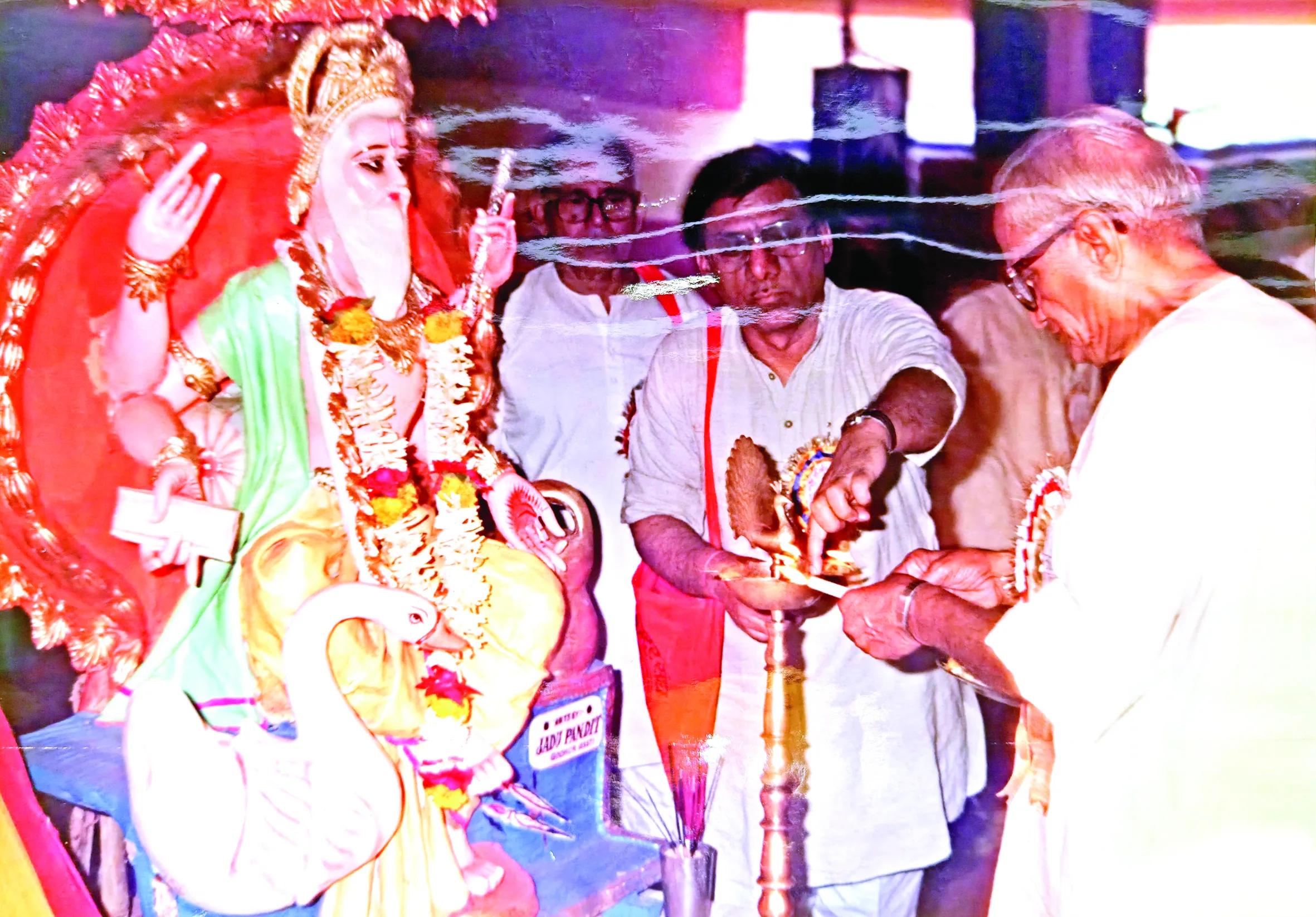
Vishwakarma Jayanti VS May Day
Vishwakarman havisha vavrudhanah- Rigveda 10.81.6. Vishwakarma started a long tradition of such great personalities in India’s history who sacrificed their lives for the sake of others. He was the first labour in the world and is the Acharya of labour. Work is considered . Many people belonging to different caste divisions of labour consider that they are the successors of Vishwakarma. Those respectable skilled labour who served the society by their skilled work came to be called as Vishwakarmas. In western history, labour always remained exploited. During the slavery period of western history, the master had the right over even the life of his slaves. However, after the industrial revolution, large factories came into being, and thousands of workers working together in factory premises made them organised. Thus, western society slowly started recognising the workers. However, in India, labour had a high dignified position in society from the time of the Vedas. Vishwakarma, who is adorned with divinity, symbolizes the dignity of labour. Vishwakarma symbolises the paradigm shift in the present-day thought process on labour. One aspect of it is, the BMS had accepted family as a model for industrial relations, i.e. “Industrial family”.
This is in contrast with the master-servant relationship of the west or the class enemy concept of the Communists. May Day imported from the west fails to motivate labour positively, whereas Vishwakarma Jayanti does. That is why Bharatiya Mazdoor Sangh also has chosen not to celebrate May Day as Labour Day. Instead, it celebrates Vishwakarma Jayanti as National Labour Day. The many states in India also have officially declared Vishwakarma Jayanti as Labour Day.
A Sacred Duty
A mantra essential to the identity of BMS is ‘Shrameva Jayate’–Labour Alone Triumphs. The Bharatiya civilisational ethos is the source of inspiration for this motto, which strives to regain the spiritual purity of labour. Work is not merely the act of toiling for monetary compensation; it is an act that is moral, social, and spiritual in nature. Within the realm of Bharatiya philosophy, there exists a notion known as loka-saṅgraha, which emphasises the importance of contributing to the well-being of society by the implementation of ethical actions. As Dattopant Thengadi elaborated, “The problem is not with the worker, rather, the problem is with the ideology that separates him from his society and Dharma,” This is where the philosophical rejection of paradigms that are conflict-oriented and imported may be found. In its place, BMS draws inspiration from the Bharatiya traditions of guilds, cooperative production, and duty-bound employment, all of which place an emphasis on dignity above pressure.
Serving All: From Farms to Manufacturing Facilities
Within the realm of Bharatiya labour, BMS’s influence can be felt across the full spectrum. Not only does it represent workers in public sector enterprises (PSUs), banks, and private sectors, but it also represents the millions of workers who are not commonly recognised, such as agricultural labourers, construction workers, Anganwadi and ASHA workers, workers in gig and platform industries, and tribal labourers. Legal recognition, social security, and welfare boards are all things that BMS has requested for those individuals who are frequently excluded from formal protections. It recognises that the crisis that we are currently experiencing is not only economic; it is also existential. BMS provides a sense of belonging and dignity in a society where work is the subject of atomisation and identity is reduced to measurements. It is clear that the Sangh has dynamically altered itself. The company has implemented a legal chatbot that is powered by artificial intelligence, skilling programmes, safety and financial literacy modules, young leadership training, and efforts that are specifically geared toward women workers as a response to the new world of artificial intelligence, automation, and gigification. This is not an add-on; rather, it is an essential component of its ever-evolving goal.
Pro-Worker, Not Anti-Industry
Throughout its history, BMS has maintained a patriotic orientation that is pro-worker rather than anti-industry. Not out of a sense of orthodoxy, but rather because it puts job security and national economic sovereignty in jeopardy, it has been opposed to the privatisation of public sector enterprises (PSUs). However, it also provides support for private employers who are ethical and who uphold fair procedures. In the midst of the COVID-19 outbreak, BMS lauded a great number of businesses that managed to keep their employees despite suffering losses. With its non-dogmatic approach to pragmatism, BMS stands out in a labour scene that is becoming increasingly polarised. It does this by providing assistance to labour-intensive industries, micro, small, and medium-sized enterprises (MSMEs), and rural employment in order to reduce migration from areas of distress and to foster inclusive growth. At the same time, it asserts that economic justice must start with the worker, and that prosperity cannot be constructed on the foundation of hazardous labour.
Not After Headlines, But Creating Policy
Through its participation in policy engagement, BMS has been a significant contributor, providing support for progressive aspects of the new Labour Codes while simultaneously opposing provisions that restrict union recognition or collective bargaining. Because of its interventions, unjust implementations have been delayed, and reconsiderations have been pushed; this demonstrates that BMS continues to operate with substance rather than symbolic even in the realm of policy.
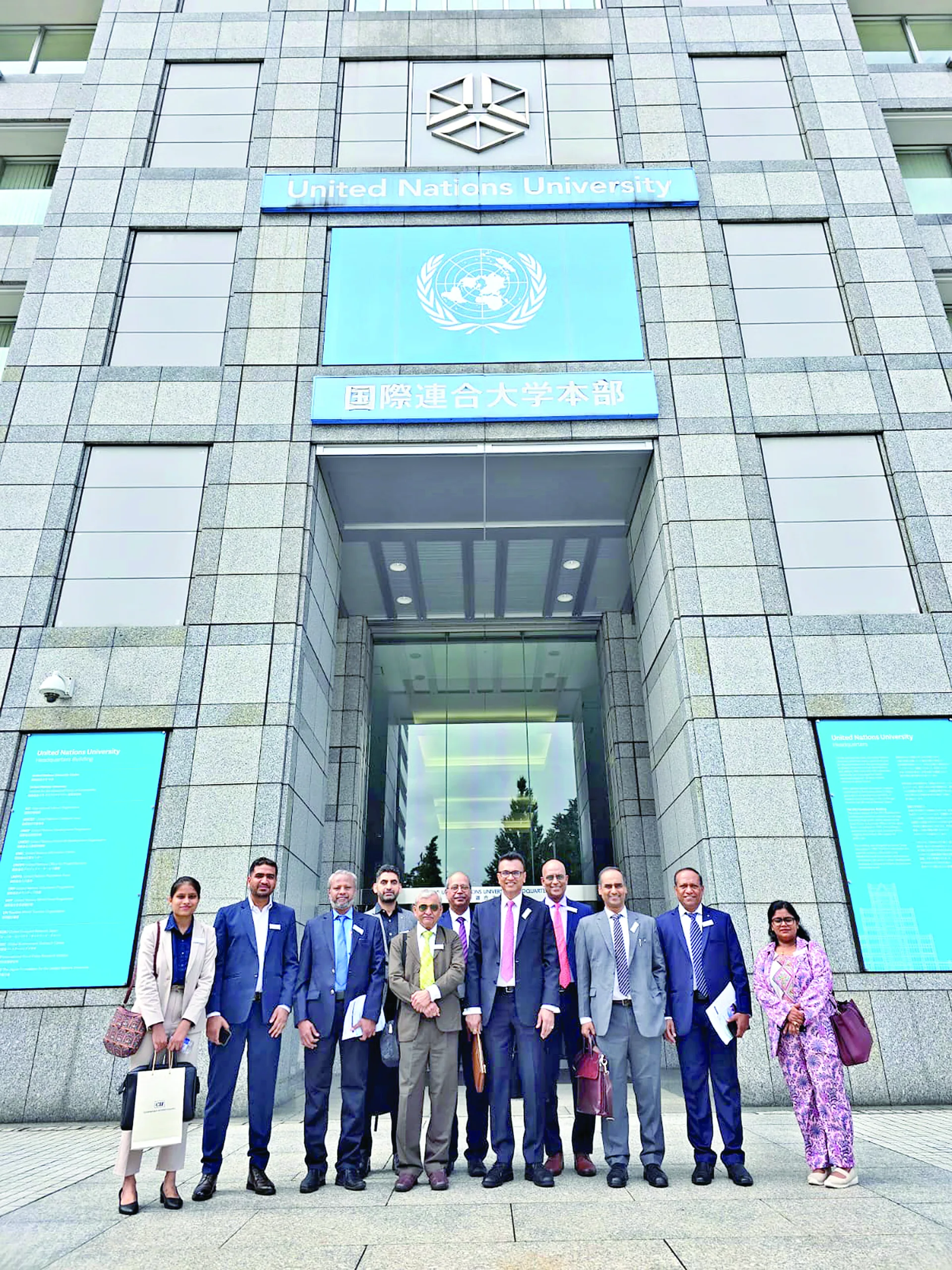
In addition to this, its participation on the global scene has expanded. A South-South dialogue that challenges Western-dominated methods of trade unionism was promoted by the Business and Management Society (BMS) while Bharat was serving as the G20 chairman. The BMS also chaired the Labour-20 (L20) and represented Bharat in the BRICS Trade Union Forum.
A Future Constructed on Foundations, Not Fame
What started with Dattopant Thengadi is still going strong under the leadership of personalities such as Hiranmay Pandya, who have taken BMS to international stages without ever compromising its foundations. The Sangh is not a populist movement; it is a movement characterised by its calm strength and rooted clarity. It is clear from the slogans that describe its essence:
As stated by Rashtravaad, Shramvaad, and Samvaad, the three pillars of pride in nation, respect for labour, and a preference for discussion over conflict serve as the guiding principles for how BMS interacts with the rest of the world. Majdoor Ekta, Rashtra ki Pragati, are words used to describe the phrase “National Progress.” This claims that the empowerment of collective workers is necessary for the growth of the nation on a national scale.
The phrase Sangharsh aur Samvaad ke maadhyam se samaadhaan is a Samaadhaan (solution) that is derived from Sangharsh (struggle) and Samvaad (dialogue) ie obtaining solutions through the medium of struggle and conversation. This motto spans the gap between bravery and cooperation, reflecting a dedication to both working toward settlement and opposition. Shramikon ki unnati, Bharat ki samriddhi (Worker Advancement is Bharat’s Prosperity) – a direct connection between the growth of national prosperity and labour justice.
Work is a Divine Effort
An appeal to the worker’s spirituality to regard their labour as sacred, thus, establishing a connection to the cosmic energy of change and nourishment. In the words of “Hum Majboor Nahi, Majdoor Hain,” meaning we are workers and not helpless, we are a group of people who are working hard. In the face of exploitation and neglect, a powerful assertion of self-respect and empowerment is presented. These are not marketing tools; they are manifestos of meaning that reflect the goal of BMS in every relationship, policy debate, and protest.
A Civilisational Goal for Fragmented World
The conclusion is that the goal of BMS is more important than it has ever been as the company celebrates seventy years of principled growth. BMS provides not only representation but also resuscitation in a moment in which worker identities are being shattered and labour issues are being commercialised. It does not consider the worker to be a number, but a constructor of the nation and a respected contributor to the development of civilisation. Not only does the rise of the BMS marks the dawn of a new beginning, it also marks the end of the previous one. This beginning is not just for workers, it is for the entire society as a whole; a society looking forward to recover dignity, rootedness, and unity in this age of fragmentation.
















Comments