





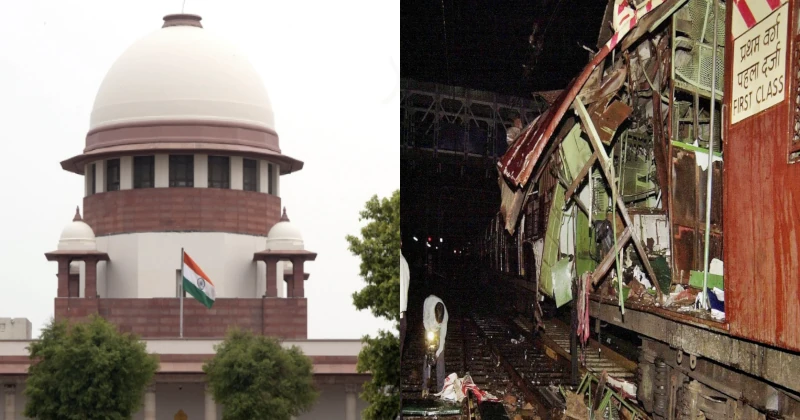
Nearly 19 years after seven RDX-laden bombs tore through Mumbai’s lifeline its Western Railway suburban trains killing 189 people and injuring over 800, the Bombay High Court on July 21 acquitted all 12 accused in the 2006 serial blasts case. This stunning verdict has now been challenged in the Supreme Court by the Maharashtra BJP-led NDA government, setting the stage for a high-stakes legal battle over what is widely seen as one of India’s darkest terror tragedies.
The acquittal overturned a 2015 judgment by a special Maharashtra Control of Organised Crime Act (MCOCA) court, which had awarded death sentences to five and life imprisonment to seven others for their roles in the meticulously coordinated terrorist attack. That lower court conviction came after nearly a decade of investigation and prosecution. But the High Court has now declared that the prosecution failed to prove guilt beyond reasonable doubt, citing lack of credible evidence and procedural lapses in the ATS investigation.
Just a day after the High Court verdict, Solicitor General Tushar Mehta on July 22, mentioned the case before a Supreme Court bench led by Chief Justice of India BR Gavai, seeking an urgent hearing on the Special Leave Petition (SLP). “It is a serious matter… the SLP is ready. Please list it tomorrow. There is urgency,” Mehta pleaded, reflecting the gravity of the situation.
Chief Justice Gavai acknowledged reports that eight of the accused have already walked free, underscoring the immediacy of the state’s plea. The Supreme Court has agreed to hear the matter on Thursday, 24 July.
On the evening of July 11 2006, as Mumbai’s rush hour peaked, seven bombs exploded in first-class compartments of trains between Churchgate and Virar in a span of 11 minutes, using pressure cooker bombs filled with RDX, a deadly explosive material. The blasts targeted India’s financial capital’s lifeline — its local trains — leaving commuters dead, dismembered, and traumatised.
For years, the investigation pointed fingers at Pakistan-based terror outfit Lashkar-e-Taiba, working allegedly through SIMI (Students Islamic Movement of India) operatives and Indian Mujahideen sleeper cells. The Maharashtra ATS and intelligence agencies claimed that the planning involved training camps across the border and logistical coordination within India.
But in their 500+ page verdict, the High Court bench comprising Justices Anil Kilor and Shyam Chandak shredded the prosecution’s case, ruling that the ATS had failed to:
- Prove chain of custody for crucial evidence.
- Establish credible links between accused and recovered explosives.
- Demonstrate motive or definitive association with foreign terror entities.
- Justify the admissibility of confessional statements allegedly extracted under duress.
- Convincingly corroborate witness testimonies, some of which the court called “tutored.”
Mohammed Sajid Ansari, one of the acquitted who had been serving a life sentence for allegedly providing logistical support, made damning claims against the ATS, “We were innocent… Confessional statements were extracted under torture. False evidence and tutored witnesses were planted.”
Ansari, currently out on parole, said he was targeted because he had an electronics background and used to run a mobile repair shop — which the ATS claimed was used to assemble bomb triggers. “Police didn’t even know whether it was a timer or a trigger mechanism,” he remarked, accusing the state of scapegoating innocents.
For survivors and victims’ families, the High Court’s verdict is being seen as a colossal failure of justice. One of the most powerful voices has emerged from Chirag Chauhan, a Chartered Accountant and 7/11 survivor who was left paralysed and now uses a wheelchair.
“The law of the land has failed to deliver justice. Justice got killed today,” said Chauhan in an emotionally charged statement. “If Narendra Modi had been Prime Minister in 2006, justice would have been done. We saw how Bharat avenged Pahalgam — we could’ve got justice here too.”
Chauhan said he had long moved on, having even forgiven the terrorists, but couldn’t digest the system letting all accused walk free.
“This is a betrayal of 200+ lives lost, of hundreds like me who are permanently scarred. No one has been held accountable.” On the 19th anniversary of the blasts, Chauhan had written on social media, “19 years ago, 7/11 changed my life. I survived paralysis, became wheelchair-bound. Yet I never gave up.”
Maharashtra’s top leadership, including Chief Minister Devendra Fadnavis, was briefed hours after the verdict. Fadnavis, who holds the Home, Law and Judiciary portfolios, has reportedly directed top officials to coordinate with legal experts and expedite the Supreme Court challenge.
Revenue Minister Chandrashekar Bawankule said, “The government will evaluate the full judgment and evidence, and we are committed to challenging it if there are valid grounds.”
NCP minister and former Home Minister Chhagan Bhujbal echoed a similar stance, “We’ll study the verdict thoroughly. If needed, we’ll go to the highest court.” The ATS is also under pressure, with sources confirming that its senior officers are re-examining case files, legal advice, and evidence to bolster the case before the Supreme Court.












Comments