






In a historic moment for Bharat’s cultural heritage, Chhatrapati Shivaji’s Military Landscapes have been inscribed on the prestigious UNESCO World Heritage List, marking the 44th Bharatiya entry to receive this global honour. This landmark decision, announced during the 47th Session of the World Heritage Committee at UNESCO headquarters in Paris, recognises not just the architectural brilliance of these forts but also their immense role in shaping Bharat’s political, military, and cultural history.
More than stone bastions perched on hilltops or surrounded by the sea, these forts embody the spirit of Swarajya, symbolising resilience, strategic genius, and an enduring legacy that continues to inspire generations.
Emblems of Power and Sovereignty
Spanning from the 17th to the 19th centuries CE, Shivaji’s forts consist of twelve spectacular forts, eleven in Maharashtra and one in Tamil Nadu. This formidable network includes iconic names such as Raigad, Pratapgad, Panhala, Shivneri, Lohgad, Salher, Sindhudurg, Suvarnadurg, Vijaydurg, and Khanderi in Maharashtra, and Gingee in Tamil Nadu. These were not mere military installations; they were power centres and administrative hubs.
Strategic Vision of Shivaji Maharaj
Chhatrapati Shivaji emerged not merely as a warrior-king but as a discerning military strategist and architect of early modern state formation. His intellectual and strategic sensibilities were profoundly influenced by the formative environment of the Sahyadri ranges and, more critically, by the ideological guidance of his mother, Jijabai. Her deep-rooted commitment to Swaraj and the cultural-religious revival of Hindu self-rule provided the foundational ethos that shaped Shivaji’s vision of sovereign governance and resistance to foreign domination.
Beginning with the capture of Torna Fort in 1645, Shivaji laid the foundations of a three-tiered defensive grid: First Line of Defence: Forts like Rajgad, Raigad, Torna, and Purandar formed the core protection zone in the Deccan highlands, securing the political and administrative heart of Swarajya.
Second Line of Defence: Sea forts such as Sindhudurg, Vijaydurg, Suvarnadurg, and Khanderi protected the western coastline from maritime threats, particularly from the Portuguese, British, and Siddis of Janjira.
Third Line of Defence: Further south, Shivaji extended his influence through forts like Gingee and Vellore. These acted as bastions during his Karnataka campaign and ensured continuity even if northern territories were compromised. This multi-tiered defensive framework allowed the Shivaji’s followers to endure extended sieges, maintain strategic resilience in the face of invasions, and effectively assert control over a vast and diverse territorial expanse.
Engines of Administration and Survival
Shivaji regarded forts as the backbone of his kingdom, crucial for defence and administration. They were engines of governance, military planning, and economic resilience. Granaries like the famed Ambarkhana in Panhala stored grain for months, while rock-cut water tanks and cisterns ensured year-round water availability.
As noted in the 91 Kalami Bakhar written by Shivaji’s courtier Dattaji Trimal Wakenavis (or Waknis), forts were like iron nails holding the state together. They safeguarded both the land and its people. Shivaji’s meticulous fort management reflected his belief that forts were the true guardians of sovereignty.
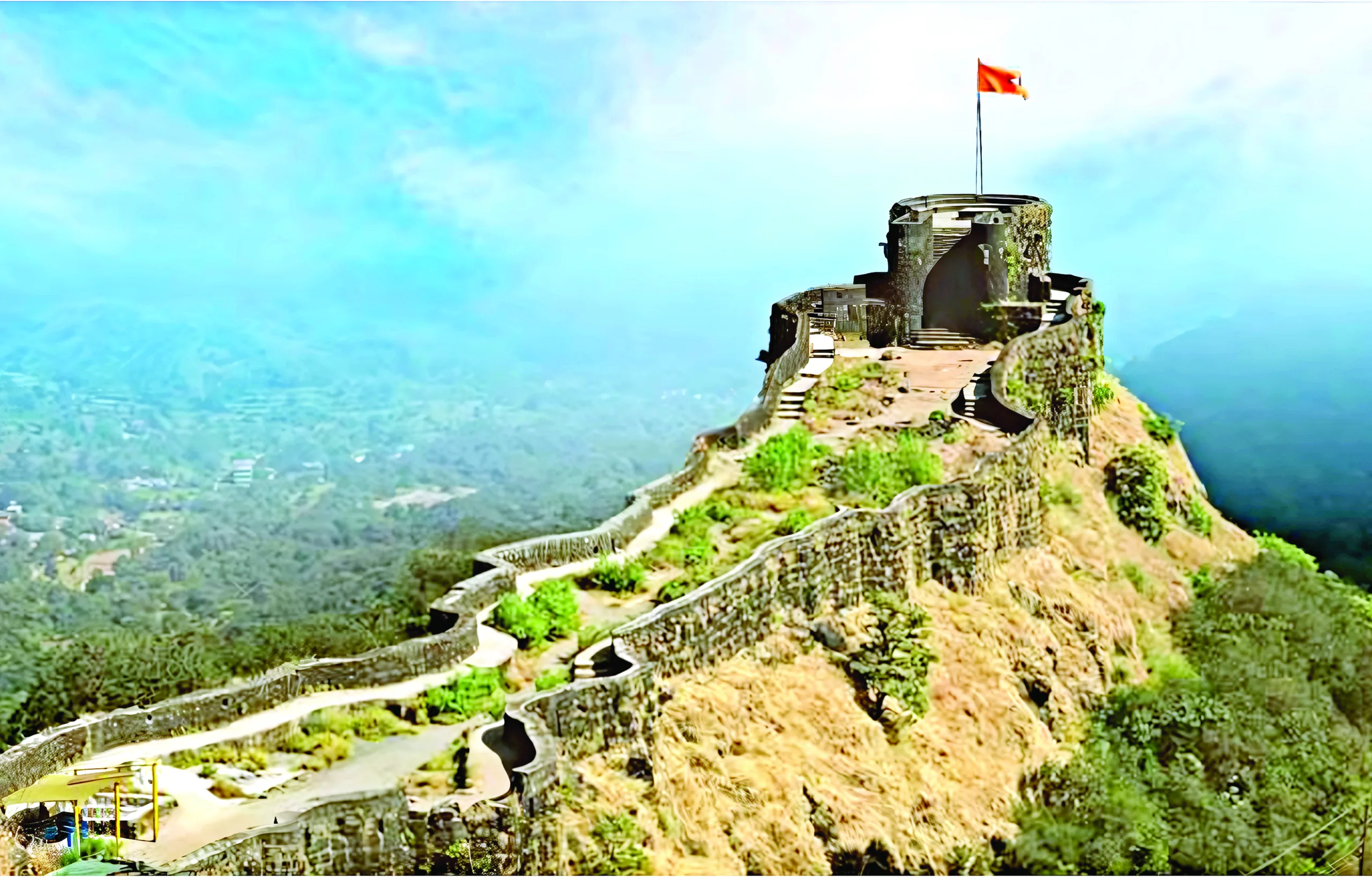
Each fort was managed by three officers: Havaldar (military), Sabnis (finance), and Karkhanis (supplies), ensuring no single person held excessive power. This system promoted checks and balances, discouraged corruption, and ensured smooth provisioning during both peace and war.
Importantly, these officers were rotated regularly, and hereditary succession was discouraged, fostering merit-based governance and accountability, a remarkably modern administrative model for its time.
Geography was the Strength
The natural landscape of the Deccan plateau played a crucial role in Shivaji’s followers success. As noted by historian K.M. Panikkar, “Geography constitutes the permanent basis of every nation’s history.” Shivaji turned geography into a formidable ally.
Several colonial writers have acknowledged the formidable military potential of the Deccan’s terrain. William Henry Tone remarked that “no country on earth is better calculated for the purpose of defensive war,” deeming it virtually unconquerable. Sir Richard Temple similarly described the Deccan hill country as among the strongest strategic regions in Bharat. Grant Duff went further, suggesting that few regions globally could match its defensive strength. The barren yet rugged landscape served as a tactical stronghold for local forces while posing severe logistical challenges to invading armies. The Sahyadri ranges gave significant political and military advantages during conflicts with enemies. The Western Ghats offered a naturally defensible terrain, steep ridges, dense forests, monsoon-fed valleys, and strategic mountain passes. The forts were deliberately located at vital chokepoints, along trade routes, and near water bodies. This integration with geography made them highly self-sufficient and virtually impregnable. Rainy seasons in the Ghats made prolonged sieges impractical for invaders, while the Shivaji’s followers, familiar with the land and climate, could mount surprise attacks or strategic withdrawals with ease.
Types of Shivaji’s Forts: Strategic Classifications
1. Forest Forts (Vana Durg): Natural Defences
Forest forts were the most natural, often blending into dense woodland terrain. In the Western Ghats, tropical semi-evergreen forests and thick canopies in valleys provided ideal cover for guerrilla tactics. An Important example is Pratapgad, chosen by Shivaji in 1659 to confront Afzal Khan. The dense Javali forest allowed Shivaji to conceal his forces, creating logistical difficulties for enemy and contributing to his victory. Texts like Ajnapatra emphasise the importance of preserving trees on hill belts for defence. Amatya Ramchandra also stressed the conservation of all trees on forts, regardless of utility.
2. Sthala Durg: Strategic but Less Favoured
Shivaji gave limited focus to ground forts in the early stages of his rule, as his campaigns were mainly concentrated in the Konkan and Ghatmatha regions, favouring hill terrain. Nevertheless, key forts like Chakan and Kalyan were strategically significant, especially for guarding Poona and Junnar.
During his Karnataka expedition, Shivaji captured forts like Vellore, Kopal, Belwadi, and Gingee. To reduce Vellore, he fortified nearby hills (Sajara and Gojara) and used artillery to lay siege. Factory records from Fort St. George provide valuable insights into Shivaji’s systematic efforts to strengthen fortifications as part of his broader military strategy. In a letter addressed to the English Governor of Madras, Shivaji articulates his intent to consolidate and expand his Governance’s influence in southern regions. This southern expansion was a calculated move aimed at establishing a base to support and reinforce the foundations of the newly emergent Swarajya.
3. Gadi: Residential Strongholds
A gadi was a fortified residence resembling a castle, historically built by jagirdars like Patils, Kulkarnis, and Deshmukhs during Bahmani rule.
These local elites collected revenue but often withheld large portions from the central treasury. With private troops and fortified mansions, they behaved semi-independently, sometimes even exploiting the peasants. After acquiring these regions, Shivaji cracked down on disloyal Sardars, confiscated their jagirs (Saranjams), and dismantled their gadhis to prevent rebellion. He insisted on keeping all forts under direct state control. The most famous gadi is the Shanivarwada in Pune, built by Peshwa Bajirao I and later expanded by successive Peshwas. Other examples include gadhis at Wagholi, Darewadi, Jadhavwadi, Karad, Tasgaon, Ranje, and Talegaon. Shivaji’s forts followed a design philosophy rooted in utility, speed, and sustainability. Unlike ornate Mughal forts or palatial complexes, Shivaji’s forts were compact, rugged, and closely aligned with the contours of their natural settings.
Key features
These forts were not only strategically located but also ingeniously designed for long-term sustainability and defence. Massive granaries (Ambarkhanas) ensured ample food storage to withstand prolonged sieges, while rock-cut water reservoirs provided a year-round water supply, critical during dry spells or encirclements. Watchtowers and bastions were positioned for maximum visibility, eliminating blind spots and allowing defenders to monitor vast stretches of terrain. Forts also included secret tunnels and escape routes, offering the flexibility for tactical retreats or surprise manoeuvres.
Signal points were integrated across select high-altitude forts, enabling optical communication (via flags, fire, or mirrors) over long distances. This network allowed coordinated military responses without the need for modern communication tools. Overall, this minimalist yet resilient architecture was designed for swift construction, easy maintenance, and adaptability to evolving military threats, embodying the Shivaji’s ethos of strategic efficiency.

Naval Supremacy and Coastal Command
Shivaji recognised the sea as a vital frontier for defence and expansion. Understanding the growing threat of European colonial powers and regional rivals, he laid the foundation for a strong Shivaji’s navy and established a series of coastal and island forts. Notable among them, Sindhudurg, constructed on a rocky island off the Malvan coast, served as a near-impregnable naval base. Khanderi Fort, located near Mumbai, played a strategic role in maritime surveillance, while Kolaba Fort near Alibag functioned both as a customs post and a defensive bastion.











Comments