





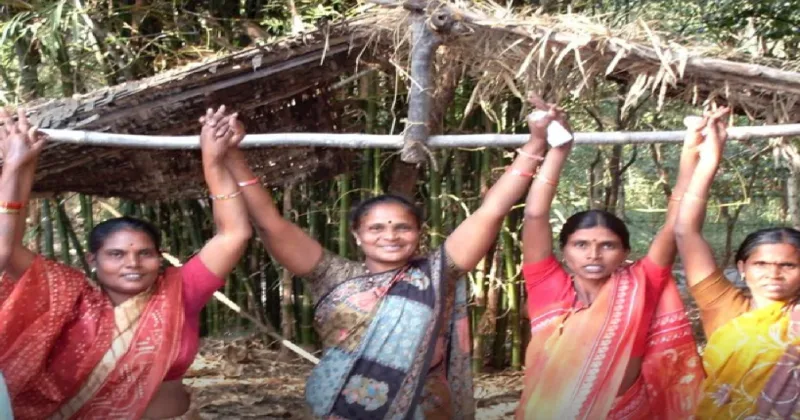
The latest Women Economic Empowerment (WEE) Index released by the Department of Planning has brought forth promising developments in Uttar Pradesh, highlighting a notable shift among women who are increasingly stepping beyond traditional roles to embrace self-reliance through self-employment, skill development, and leadership.
The WEE Index, a comprehensive tool developed to assess the economic, educational, and social progress of women, tracks performance across all 75 districts of the state. It evaluates progress in key areas such as entrepreneurship, employment, education and skill development, livelihoods, as well as safety and transportation. The department employs 49 indicators which are sourced from 15 different departments to draw a holistic picture of women’s empowerment on the ground.
The current report reveals a significant rise in women’s participation in education and vocational training programs. This, officials say, is largely due to targeted government initiatives such as:
- Mission Shakti, aimed at women’s safety and empowerment,
- Pradhan Mantri Ujjwala Yojana, which promotes clean cooking fuel,
- Swachh Bharat Mission, improving sanitation and hygiene, and
- Vocational Training Programs, which are enabling women to take up skilled work.
Efforts to recruit women as drivers and conductors in public transport have significantly boosted their mobility, self-confidence, and financial independence. Government schemes have helped improve women’s lives and also increased their awareness and involvement in earning and economic activities, said a government spokesperson.
District-wise Performance: Champions Leading the Way
Chief Minister Yogi Adityanath has hailed the Women Economic Empowerment (WEE) Index as a “historic step towards women’s dignity and self-reliance,”. He emphasised its role in enabling data-driven policy-making. By categorizing districts based on their performance, the index allows the government to tailor schemes more effectively to meet the unique needs of each region.
Among the top performers, or ‘Champion Districts’, are Lucknow, Kanpur Nagar, Varanasi, Jhansi, Sultanpur, Gautam Buddha Nagar, Prayagraj, Ayodhya, Sonbhadra, Rae Bareli, Gorakhpur, Deoria, Ambedkar Nagar, Agra, and Ghaziabad. These districts have shown outstanding progress due to the efficient implementation of government schemes, high levels of women’s participation, and strong institutional support. Women in these areas are actively engaging in entrepreneurship and employment, helped by initiatives like the One District One Product (ODOP) scheme, which has helped women-led enterprises and self-help groups showcase the local products on national as well as global platforms.
Following closely are the ‘Leader Districts’, including Pratapgarh, Moradabad, Barabanki, Aligarh, and Bareilly. These regions have shown promising results and are moving in the right direction, but continued monitoring and support are essential to maintain their upward trajectory.
In the ‘Contender Districts’ category, which comprises Ghazipur, Jalaun, Muzaffarnagar, and Bulandshahr, government interventions are reaching women, but there remain notable gaps in areas such as skill development and employment generation. These districts need focused efforts to transform their potential into tangible progress.
At the lower end of the index are the ‘Aspirational Districts’ such as Chandauli, Baghpat, Amroha, Badaun, Sitapur, Siddharthnagar, Balrampur, Mahoba, Sambhal, and Shravasti. These districts continue to face challenges related to grassroots awareness, women’s safety, education, and self-employment. Recognizing these hurdles, the state government has instructed officials to launch targeted campaigns and interventions to address the specific issues affecting women’s empowerment in these areas.
To ensure holistic development, the government aims to intensify its efforts through collaborative planning with local administrations, improved monitoring mechanisms, and enhanced community engagement. Special attention will be given to Aspirational and Contender districts to close the existing gaps and elevate their performance on the WEE Index.
As noted by the Planning Department, women across Uttar Pradesh are emerging as agents of change, from managing home-based businesses to taking on public leadership roles. Experts believe that the WEE Index will not only serve as a vital tool for measuring progress but also act as a guiding framework for inclusive and responsive governance. It reinforces the importance of sustained, localized, and data-driven interventions in advancing women’s empowerment.















Comments