





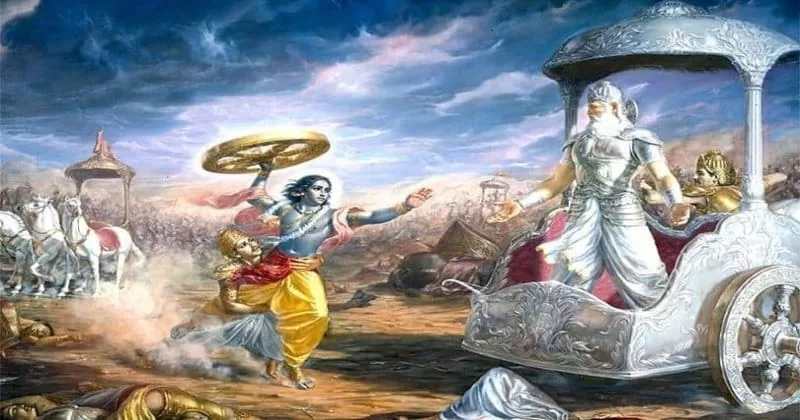
In today’s world of instant media and global discourse, we are witnessing a war of narratives – a battle over the stories and perceptions of cultures and values. Nowhere is this more evident than in how Sanatan Dharma, the eternal spiritual tradition of Bharat, is portrayed. Often, this ancient heritage finds itself misrepresented or even attacked by those who misunderstand its core values. For example, a recent political leader in Bharat controversially equated Sanatan Dharma with diseases like malaria and dengue, calling for it to be “eradicated”. Such extreme rhetoric shows how high the stakes are in shaping public opinion and identity.
At its heart, this war of narratives is a struggle between truth and distortion. On one side, scholars and devotees of Sanatan Dharma seek to present the truth of a timeless culture – one known for its inclusivity, wisdom, and resilience. On the other side, various forces push false narratives that paint the tradition as backward or unjust. From colonial-era writings that exaggerated Bharat’s social ills to some modern media bias against Hinduism, distortions abound. This is the reason why Bharat must craft and project its own narrative with truth and pride, rather than letting others define it.
Sanatan Dharma’s core philosophy actually threatens those who aim to divide or dominate, which is why it faces attacks. This tradition teaches that the Divine resides in every being and that all humanity is one family (Vasudhaiva Kutumbakam – “the world is one family”). Such a message of unity and empowerment undermines ideologies built on rigid hierarchies or exclusion. Indeed, a faith that says every soul is equally divine is “dangerous” to anyone who seeks to control society by sowing division. Understanding this dynamic is key to countering false narratives. A growing movement to decolonise the narrative about Bharat – by reclaiming our history, heroes, and cultural contributions – is now underway. The war of narratives is ultimately about taking back our story and telling it with facts, dignity, and pride.
Sanatan Dharma’s Timeless Strengths
Despite centuries of upheaval, Sanatan Dharma has retained fundamental strengths that uphold its civilisation. These strengths are the truths that any honest narrative must acknowledge
Inclusivity and Spiritual Freedom: Sanatan Dharma is built on the vision that all existence is one. The Vedas declare, “Ekam sat vipra bahudha vadanti” – Truth is one, sages call it by many names. Thus, Sanatan Dharma is profoundly pluralistic. It teaches respect for all paths to the divine and regards the whole world as family. Unlike exclusive belief systems, it never demanded one prophet or one book. Multiple paths – devotion, knowledge, service, meditation – have always coexisted under Sanatan Dharma, fostering a spirit of tolerance and harmony.
Reverence for Knowledge and Debate: The quest of knowledge and wisdom is sacred in this tradition. Since ancient times, Bharat has established great centres of learning (like Takshashila and Nalanda) and celebrated intellectual inquiry from all the parts of globe. Hindu scriptures often take the form of dialogue (questions and answers in the Upanishads), showing that questioning is encouraged. Logical debate (shastrartha) was a respected practice. This ethos produced a philosophical culture that valued education for millennia. Wisdom (vidya) is considered a path to the divine, which gave Hindu civilisation a rich legacy of science, mathematics, and literature.
Women in Sanatan Dharma: Shakti (Divine Feminine Power)
No narrative about Sanatan Dharma is complete without highlighting the role of women. A common accusation by critics is that Hindu culture is inherently patriarchal. But the truth is that women have always been revered as embodiments of Shakti – the divine feminine power – in this tradition. In fact, Hinduism is perhaps the only major religion that worships God in female form just as ardently as in male form. Goddesses such as Durga, Lakshmi, Saraswati, and Kali are central to worship, and festivals like Navaratri celebrate feminine divinity. This spiritual reverence laid the foundation for respecting women in society.
Ardhanarishvara, a half-Shiva, half-Parvati sculpture from Khajuraho, symbolises the unity of male and female principles in Sanatan Dharma. In this iconic representation, the Divine is half male and half female – indicating that the masculine and feminine are incomplete without each other. Such symbolism powerfully rejects any notion of women’s inferiority. It visually asserts that creation and balance in the universe arise from the partnership of both halves of humanity.
Hindu scriptures and law books also uphold the honour of women. History bears this out: Hindu women have risen to great heights, often because of their cultural grounding. From the Vedic philosopher Gargi, who debated sages in court, to medieval poet-saint Mirabai, whose devotion became legendary, to the freedom fighter Rani Lakshmibai, who embodied courage to Punyashlok Ahilyabai Hokar, who embodied statesmanship and cultural resurgence– such figures drew strength from a culture that told them they had the divine within.
It is true that in later ages, especially under social upheavals, women’s status declined in practice. Medieval invasions and colonial laws imposed restrictions that were never part of the original teachings. However, reformers and saints over the centuries worked tirelessly to restore women’s rights and education, in line with scriptural ideals. Today, recognising the concept of Shakti and the precedent of strong women in Sanatan Dharma is key to refuting the myth that Hindu culture oppresses women. By reviving and living up to those ideals – honouring women and treating them as equals – Bharatiya society not only does justice to its women but also debunks a favourite false narrative of its critics. After all, a culture whose ethos says the gods rejoice where women are respected cannot accept anything less than respect and empowerment for women.
Cultural Intelligence and Youth Leadership
In a globalised era, the ability to navigate different cultures, known as cultural intelligence, is a highly valuable skill. Sanatan Dharma inherently cultivates cultural intelligence. Growing up in the dharmic ethos means learning to appreciate diversity from the start: multiple languages, myriad gods and customs, and a philosophy that accepts truth in many forms. The Hindu idea of the world as one family encourages a broad-minded outlook. Thus, Bharatiya youth steeped in their culture can engage with the wider world confidently – respecting others’ differences while proudly upholding their own values.
What can we do, as proud inheritors of this civilisation, to win this war of narratives?
Here are a few calls to action for readers, especially the youth
Educate Yourself and Share Knowledge: Make an effort to learn about Bharat’s history, philosophy, and scriptures from authentic sources. An informed individual can counter myths and answer questions with facts. Share what you learn – in conversations or on social media. Even enlightening a few friends about the truths of Sanatan Dharma creates a ripple effect.
Lead by Example – Live Your Values: Practice the principles of Sanatan Dharma in daily life to bust misconceptions. Show through actions that a dharmic life means compassion, strength, and respect for all.
Speak Up and Unite: If you encounter Hinduphobic or factually incorrect portrayals in media or school, politely speak up. Use your voice or pen to highlight positive stories and achievements rooted in Sanatan Dharma. By fostering unity and understanding, we carry forward the inclusive spirit of our culture and make it harder for misinformation to thrive.
Writing Our Own Story with Pride
The war of narratives is not just about public opinion—it’s about civilisational justice. Sanatan Dharma, with its deep spiritual philosophy and inclusive ethos, deserves to be represented truthfully. You don’t need to start a movement. Even correcting a friend’s misconception, sharing a thoughtful article, or telling your children the truth of their heritage is powerful. As Mahatma Gandhi reminded us, satya (truth) and ahimsa (non-violence) can shake empires.
The youth of Bharat are the custodians of an eternal legacy. Their voices will shape how Sanatan Dharma is remembered, respected, and revived. Let us rise. Let us tell our story—of wisdom, strength, and unity—and tell it boldly. By doing so, we honour our ancestors, inspire our peers, and pave the way for a future where truth triumphs over distortion. Sanatan Dharma has survived invasions, colonisation, and erasure attempts. Now, it’s time not just to survive, but to shine.











Comments