





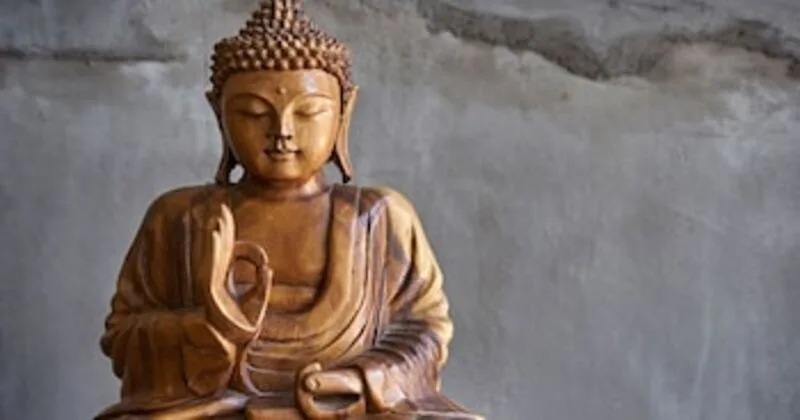
In a significant archaeological breakthrough, researchers from the Indian Institute of Technology (IIT) Kanpur have identified what may be remnants of ancient Buddhist stupas and related structures beneath the soil of Yamunanagar district in Haryana. This discovery, made using advanced Ground Penetrating Radar (GPR) technology, could reshape the historical narrative of the region.
The findings emerged from a survey commissioned by the Haryana State Department of Archaeology, targeting sites such as Topra Kalan and other nearby villages, where remnants, including old bricks, had long suggested a hidden historical significance.
The IIT Kanpur team, led by Professor Javed Malik from the Department of Civil Engineering, used GPR to detect subsurface anomalies without the need for excavation. Their scans revealed circular patterns, ancient wall alignments, and chamber-like formations around 6 to 7 feet deep — features strongly resembling Buddhist stupas or residential cells.
“These signatures show organised, deliberate construction beneath the surface,” said Professor Malik. “We believe they could be the remains of small stupas, walls, or even entire ancient dwellings.”
One of the focal points of the survey was Topra Kalan — a village known for its ancient Mandir atop a mound. Though scanning inside the Mandir was restricted, the area just beyond its walls revealed strong radar reflections forming a semi-circular shape, consistent with stupa architecture. Archaeological officials at the site supported this interpretation.
The team also surveyed another intriguing site referred to by locals as “Jarasandha ka Qila”, a mound linked to characters from the Mahabharata. Here too, GPR data suggested the presence of a circular structure, though less distinct than that at Topra Kalan. Villagers still perform age-old rituals on this site, hinting at its longstanding cultural significance.
According to Professor Malik, samples from the surveyed areas have been sent for scientific dating. “We’re waiting on confirmation from lab analyses. That will help us determine whether these structures belong to the Buddhist period or possibly even earlier,” he explained.
If the Haryana archaeology department approves, full-scale excavations could soon begin. “This discovery could establish Yamunanagar as part of a broader ancient Buddhist circuit,” Malik noted. “The existence of stupas or monasteries here would shed light on the spread of Buddhism into northwestern India and could even hint at trade routes and cultural exchange systems active thousands of years ago.”
While only a few sites have been surveyed so far, researchers believe this may be just the beginning. If further studies confirm a widespread network of similar structures, it could significantly elevate Haryana’s place on the archaeological and historical map.
“This is a potential milestone in understanding India’s cultural and spiritual heritage,” Malik added. “Uncovering such buried legacy not only enriches historical knowledge but also fosters pride in our shared past.”
The IIT Kanpur team continues to work closely with state officials and the Archaeological Survey of India, aiming to expand their investigations to additional promising sites in the region.















Comments