





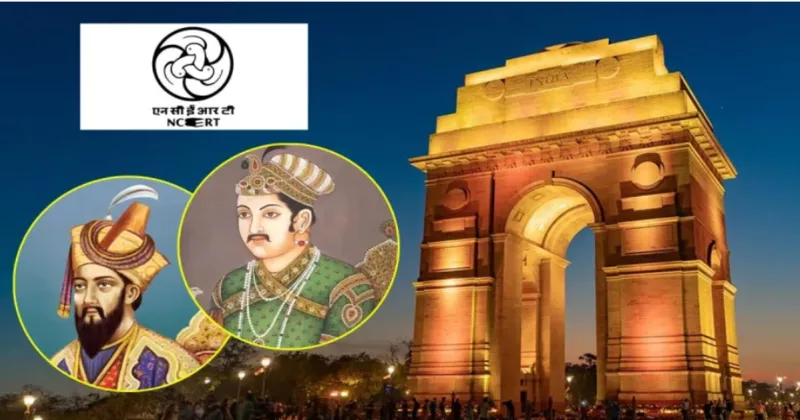
The National Council of Educational Research and Training (NCERT) has made significant revisions to the Class 8 History textbook. In the updated edition, long-overdue clarity has been brought to how India’s medieval invaders were portrayed. For the first time in decades, the NCERT textbook calls Babur a “brutal invader”, describes Akbar as “a blend of brutality and tolerance”, and labels Aurangzeb specifically as a “temple destroyer” who enforced a harsh and oppressive rule over his subjects.
This major change comes after years of debate and criticism against the whitewashing of Mughal atrocities in school textbooks. The chapter on India’s medieval period now carries the title “Dark Ages”. This replaced the soft language that earlier made foreign invasions, violence, and forced conversions look better than they actually were.
The move by NCERT is seen as an effort to show history on the basis of real facts, without the influence of past ideologies.
Ratan Sharda, a senior karyakarta of the RSS praised the shift. During a debate on the TV Channel, he remarked, “It is good to see even Marxist historians now acknowledging the atrocities of invaders, even if they still try to raise the bogey of isolated Hindu kings’ actions. The failure of the Aryan Invasion Theory (AIT) already showed us that history needs reviews. This step reflects the growing recognition that history is complex and cannot be viewed through a monochromatic, Leftist worldview.”
Is politics dictating school syllabi?
Is this an attempt to villainize the Mughals?
Or is this course correction by the NCERT?You know very well that the history was rewritten, with so-called scientific terminology somewhere in 1990s by the Aligarh School and JNU historians who… pic.twitter.com/3bonthE3Rb
— IndiaToday (@IndiaToday) July 16, 2025
The earlier versions of NCERT textbooks were largely under the influence of the Aligarh School and JNU historians and for decades they painted a sanitized image of Islamic invaders. They highlighted their administration and art, while largely ignoring the brutal violence, temple destruction, and religious persecution that came with their rule. This way of writing history was started in the 1990s in the name of “scientific” and “secular” thinking. It purposely hid the damage done to Indian civilization. As a result, many students were taught a filtered version of history that left out forced conversions, temple destruction, and the suffering of the majority community.
However, the new NCERT history textbook content seeks to bring balance and honesty into the classroom. It does not turn a blind eye to the harsh truths of Aurangzeb’s reign or Babur’s ruthless invasions.
The changes made in NCERT history textbook also acts as a wake-up call for sections of Indian academia who, for too long, insisted that presenting the “unpleasant” truths of Indian history would divide society. Suppressing truth only creates misunderstanding, false ideas, and confusion.
The “Dark Ages” chapter reminds us of how native traditions were suppressed for centuries, with temples, libraries, and learning centres destroyed and how many unknown heroes stood up to protect their faith, culture, and freedom.
With this revision, India enters a new era of educational honesty. It sends a powerful message: India’s youth deserve to know the truth about their civilisational journey, not just its golden ages, but also the struggles, strength, and revival that shaped it. As Ratan Sharda ji rightly pointed out, “This is not just about correcting textbooks. It’s about restoring civilisational memory.” And in doing so, India is finally setting the historical record straight.













Comments