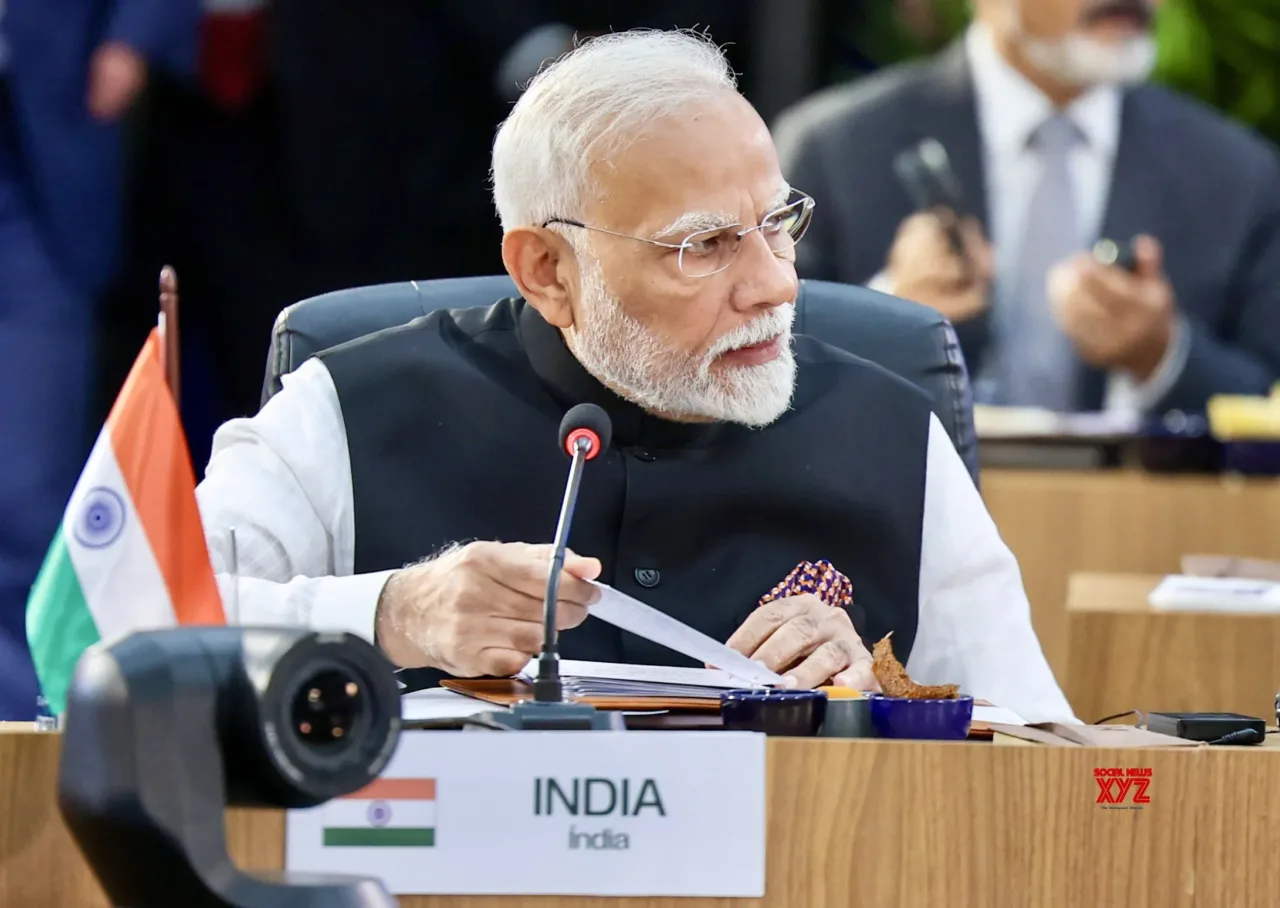
India assumes the chair of BRICS for the upcoming year and will be hosting the 18th BRICS summit in 2026. In this direction, Prime Minister Narendra Modi reiterated that during India’s chair of BRICS, the nation would prioritise the growth and welfare of the Global South and would champion a ‘people-centric’ and ‘humanity first’ approach. Prime Minister also reiterated that India would redefine BRICS and give it a new form, where BRICS will mean ‘Building Resilience and Innovation for Cooperation and Sustainability’.
BRICS thus provides India an opportunity to strengthen the goals and resolve of the Global South and the emerging economies in order to foster technological innovation, sustainable development and a balanced world order. However, to successfully accomplish the BRICS agenda, as a host nation, India has to also navigate a lot of challenges due to spiking geopolitical and geo-economic upheavals.
Reasons for the Emergence of BRICS
In 2001, renowned economist Jimm O’Neill of Goldman Sachs coined the acronym BRIC that stands for Brazil, Russia, India and China. Economist Neill came up with this idea realising the growth potential of these emerging economies and their vitality for the global growth, as they comprise 45% of the world population and 37% of the global economy, that can counter-balance the western-dominated clubs such as the G-7.
The BRIC grouping officially came into existence in the year 2006 with the meeting of the Foreign Ministers’ in New York. The maiden Summit level meet(meeting of heads of state) was held in 2009. South Africa officially entered the BRIC grouping in the year 2010, thus expanding the scope and reach of the BRICS agenda.
The core agenda of the BRICS encompasses-
• Countering the menace of cross-border terrorism
• Cooperation on climate change initiatives
• Securing food and energy efficiency
• Reforming the international economic, trade and financial systems in favour of global South and developing world.
• Fostering cultural connections and people-to-people ties.
With the vision of nourishing the economic and financial security of the emerging economies, BRICS has initiated the Contingent Reserve Arrangement (CRA) with a $100 billion lending capacity in order to meet the short-term liquidity needs and Balance of Payment (BOP) hurdles of the member-nations. The BRICS grouping has also set-up the New Development Bank (NDB), a multilateral development bank in 2015, to fund and support the sustainable development and infrastructure projects of the emerging economies.
Today, BRICS has outgrown the original five member-states and many emerging nations of the Global South are keen to be a part of the coalition. More than 40 countries have shown interest to join the multilateral platform and in the first phase of expansion Egypt, Ethiopia, Iran, UAE and Saudi Arabia joined the forum. In the latest 17th BRICS summit held in Brazil, Indonesia officially joined the grouping. The continuous expansion of BRICS, thus makes the multilateral forum more representative, dynamic and as a strong voice of the global South.
India Inhibiting the BRICS Chair: A Strategic Opportunity
While taking over the BRICS leadership from the previous Chair Brazil, Prime Minister Modi exclaimed that as the chair of BRICS, India will give priority to the issues of the Global South as it did during the Chairmanship of G-20 in 2023. As a pretext to this, in the 17th BRICS summit held in Rio de Janeiro, Prime Minister Modi spoke on post-pandemic recovery, trade connectivity, framing secure digital technology, healthcare, space, critical minerals and number of other topics that are crucial for the development of Global South.
BRICS chairmanship for the upcoming year, thus gives India a leadership opportunity to lead the collective voice of the global south and reaffirm the priorities of the emerging economies in order to rebalance the volatile geopolitical order that is currently entangled in trade wars, inflation, terror attacks, unending wars, humanitarian concerns and other geopolitical hiccups.
As Prime Minister exclaimed, BRICS helps India to reenergize the strategic visions carved during the G-20 presidency and helps to chart alternative trade routes, work for global health & preparedness against future pandemics and boost ambitious climate plans that aids the well-being of the most climate vulnerable countries of the Global South. In a world embroiled in trade wars & protectionist measures and supply chain disruptions, India’s BRICS presidency and strategic vision also helps to herald a new chapter in multilateral trade, building resilient supply chain mechanisms and economic relations. Ultimately, aiming at the sustainable future of the Global South and its people.
Most importantly, through BRICS presidency, India will gain an opportunity to frame a bold and strong voice against cross-border terrorism which is also one among the founding principles of BRICS. As a victim of cross-border state-sponsored terrorism and especially in the backdrop of the recent Pahalgam incident, being BRICS chair, will give India a forum to present its rhetoric against terrorism and helps the nation to consolidate a collective voice against terrorism through frequent diplomatic measures.
India is occupying the BRICS chair at a very crucial geopolitical juncture, when the world is dwindling with numerous challenges from trade and terrorism to health and climate change. This leadership role will definitely yield India a bold voice to shape and guide the world collectively, especially the Global South.
Being BRICS Chair: Prevailing Bottlenecks in Realising the Strategic Goals
There are few roadblocks that India has to navigate in the path of realizing its strategic vision as the nation presides over the BRICS multilateral forum.
• Dealing with the power blocs
The member-nations of the BRICS coalition are from a diverse background with differing geopolitical interests and priorities. From China, Iran and Egypt to Brazil, Indonesia and Saudi Arabia; every nation has a differing world-view and political affiliations. It is indeed challenging for India, to collectively consider every member and work for the benefit of Global South. For example, Chinese President Xi Jinping and Russian President Vladimir Putin have been rarely attending the summit-level meetings. They even skipped this year’s meet held in Brazil.
India, thus, has to advance an intense diplomatic manoeuvring in order to strengthen the collective voice and bring every member on the same boat. From climate actions to critical minerals, it would be challenging for India to weave joint measures, as every power bloc seeks to fulfill their superiority and national agenda. It would also be difficult for India to take a tough stance against terrorism as the member-nations hail from diverse ideologies and strategic priorities. It again demands extreme diplomatic efforts to realize these visions.
• Dealing with the ‘Trump’ Factor
The US President Donald Trump has been already irked about the BRICS coalition. As the recent BRICS Summit of Brazil mentioned concerns about Trump’s tariff game, the American President has warned that the BRICS nations would face additional 10% tariffs. Trump has also threatened that he would impose 100 percent tariff on BRICS nations if they go ahead with their own BRICS currency. However, many BRICS nations have denied the ambition to come up with an exclusive currency and claimed that they are only seeking to establish alternative easy trade mechanisms.
The grouping also contains hardcore American adversaries such as Iran. As the BRICS chair, these factors might be challenging for India to deal with, in the process of balancing between various power blocs. India has strategic interests with the US as well in terms of trade, Indo Pacific security architecture and other aspects. India is also set to host the QUAD summit later this year. Thus, it is a tightrope walk for India to balance between various power quarters in the path of securing not just the national interests but also the collective interest of Global South and beyond.
In the foreign policy dynamics of India, for the upcoming year, the government has to effectively deal with China, Russia, Iran and the USA, UAE, Egypt, Saudi Arabia who literally fall in the opposite camps of geopolitical chessboard. Be it to achieve trade goals or to eradicate climate and health catastrophes or to counter cross-border terrorism, ‘benevolent balancing’ will be the mantra for India in a fragile geopolitical landscape.
However, India can successfully navigate on this geopolitical path as a BRICS chair, given its proven strategic vision and diplomatic capabilities that the world has witnessed during the pandemic and the Vande Bharat mission to bring millions of stranded Indians back home or during ‘Operation Ganga’ to secure the Indian community from the Ukraine-Russia war and most importantly during the G-20 presidency where India successfully heralded the voice of Global South and came out with a joint statement by taking all members into consideration.