





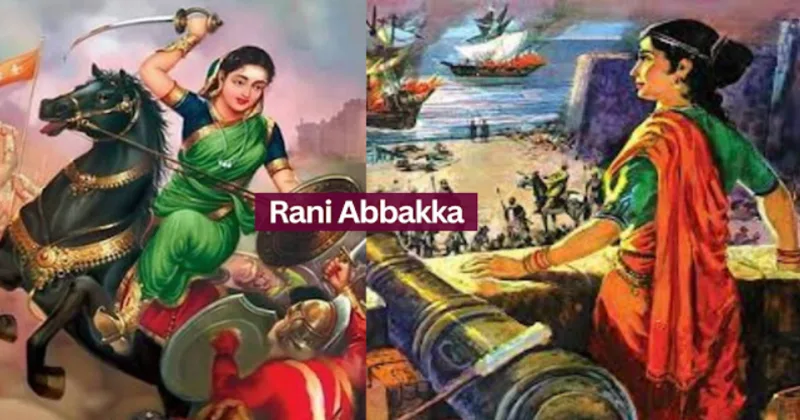
Rani Abbakka Chowta, reigning from approximately 1525 to 1570, stands as a pivotal yet often overlooked figure in Indian history. As the first Tuluva Queen of Ullal, a strategically vital port town in coastal Karnataka, she is celebrated for her fierce and sustained resistance against Portuguese colonial expansion. Her unwavering bravery earned her the epithet ‘Abhaya Rani’ (The fearless queen). Her legacy is particularly significant as it represents one of the earliest documented instances of Indian resistance to European colonialism, predating figures like Rani Lakshmibai by nearly three centuries.
Ullal was a prosperous port town and a vital hub for the spice trade, making it an irresistible target for Portuguese colonial ambitions to control lucrative global supply chains. The Portuguese sought to dominate and redirect trade, imposing “monopsonic contracts” and “protection money”. Abbakka’s defiance directly threatened their economic model, elevating her struggle beyond mere local defense to an early act of anti-colonial economic resistance.
Abbakka’s path to leadership was shaped by her dynasty’s unique matrilineal system (‘Aliyasantana’), which afforded women a prominent role in governance and ensured their training in “martial arts and state-craft”. Her uncle, Thirumala Raya, provided her with extensive training, preparing her to lead the kingdom effectively. Her administration was remarkably inclusive, with Jains, Hindus, and Muslims represented in her court and army, fostering a cohesive and unified kingdom.
Rani Abbakka’s reign was marked by her resolute refusal to yield to Portuguese demands for tribute. In 1555 (or 1556), she successfully repelled an assault led by Admiral Dom Álvaro da Silveira, demonstrating her military prowess. The Portuguese consistently underestimated her, assuming a “small kingdom led by a woman would easily capitulate”.
In 1568, during a major Portuguese assault that captured Ullal, Abbakka evaded capture, rallied 200 loyal soldiers, and launched a daring surprise guerrilla attack. This counter-offensive resulted in the death of General Peixoto and the capture of seventy Portuguese soldiers, forcing a retreat. Abbakka’s success stemmed from her effective use of asymmetric warfare, leveraging guerrilla tactics and her intimate knowledge of the local terrain, including the legendary use of ‘Agnivana’ (fire-arrows).
She forged crucial alliances with regional powers like the Zamorin of Calicut, and in 1570, a broader alliance with the Bijapur Sultan of Ahmednagar, creating a united front against the common European threat. Sadly, internal betrayal by her estranged husband, or his nephew Kamaraya III, who the Portuguese won over, provided intimate knowledge of her strategies and ultimately led to her capture. Despite her capture, her spirit of defiance remained unbroken; she continued to resist within prison and ultimately died fighting as a soldier, true to her lifelong commitment to her kingdom’s sovereignty.
Rani Abbakka’s story, though often consolidated into a single heroic figure in folklore, may involve a lineage of “three Abbakkas” who resisted between the 1530s and 1590s or later. Regardless, her legacy is now being recognized with festivals, awards, stamps, and museums, solidifying her place as India’s first woman freedom fighter.











Comments