





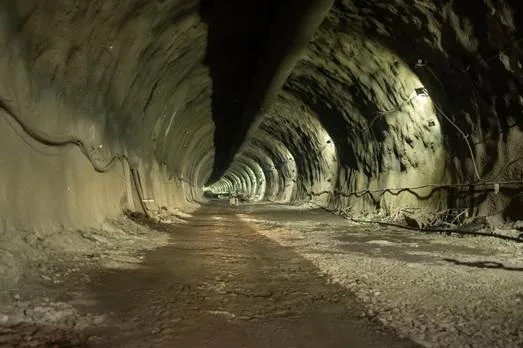
In a major engineering milestone, India’s mega Mumbai-Ahmedabad High-Speed Rail (MAHSR) project, also referred to as the bullet train corridor, has recorded the first breakthrough in its 21-kilometre-long undersea tunnel. This vital section, connecting Ghansoli and Shilphata in Maharashtra, will be a hallmark of India’s maiden high-speed rail line driven by advanced Japanese Shinkansen technology.
Released by the Ministry of Railways on July 14, the construction is indicative of swift development in a project that is generally considered the face of India’s future in high-speed rail travel and a symbol of Indo-Japanese technological cooperation.
Under the visionary leadership of Prime Minister Narendra Modi, India is witnessing a historic transformation in infrastructure that is both futuristic and inclusive. From roads and railways to digital corridors and green energy, the Modi government’s relentless focus on connectivity, innovation, and global partnerships is laying the foundation for a Viksit Bharat by 2047. Strategic collaborations, like with Japan for the Mumbai-Ahmedabad Bullet Train project, highlight how India is combining Atmanirbharta with cutting-edge international technology to fast-track progress toward becoming a global economic powerhouse.
Tunnel Milestone
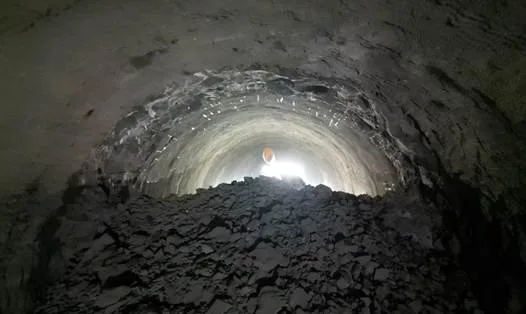
The most challenging part of the 508 kilometre corridor, the 21 km tunnel features a 7 km undersea portion beneath Thane Creek. It is being built with a combination of tunnel boring machines (TBM) and the New Austrian Tunnelling Method (NATM). A 2.7 km continuous NATM section has been finished from the Shilphata end, says the National High-Speed Rail Corporation Ltd. (NHSRCL). This is being welcomed as the project’s first underground breakthrough.
This is not merely symbolic progress. It is the conquering of one of the most challenging construction obstacles on the project. The tunnel is being excavated at depths between 25 and 114 meters below ground level. Safety is being monitored by engineers employing sophisticated geotechnical sensors like settlement markers, piezometers, and inclinometers.
Fast-tracking Civil Infrastructure
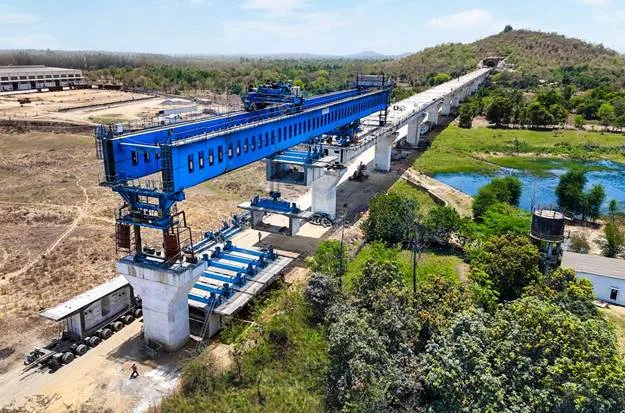
At the same time, civil works on the whole bullet train route are moving rapidly. According to official statistics, 310 kilometres of viaducts have already been built. Five of the 12 planned stations are completed while three are in advanced stages of development. Fifteen river bridges are complete and another four are also in advanced stages of development.
Among the highlights is the Bandra-Kurla Complex (BKC) station in Mumbai. It is a subterranean wonder 32.5 meters below ground. It has been designed to carry a 95-meter-high building over it, blending beauty, strength and efficiency.
NHSRCL has recently inaugurated a 100-meter ‘Make in India’ steel bridge over the Dedicated Freight Corridor near Bharuch. This reflects India’s determination to construct the corridor utilizing in-country abilities wherever feasible.
Japan’s Shinkansen E10
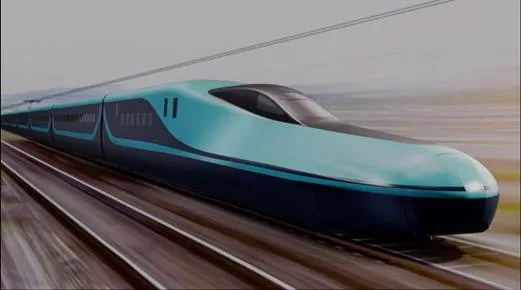
This will further add to the prestige of the project since the next-generation E10 Shinkansen trains will be driving this corridor. They are simultaneously planned to be introduced in India and Japan. These trains are the successors of the E5 series currently operating in Japan. The E10 series (derived from Japan’s ALFA-X prototype) have the potential to drive at speeds up to 400 km/h, though the operation on the Mumbai–Ahmedabad corridor would be capped at 320 km/h in the initial run.
Japan also donates two trainsets, customised E3 and E5 series, for inspection and testing use on the MAHSR corridor. The units will be arriving as early as 2026, allowing early trials, system adaptation and calibration to Indian terrain and climate conditions.
Financial Backbone and Strategic Partnership
The Mumbai–Ahmedabad High-Speed Rail is financed by a soft loan from the Japan International Cooperation Agency (JICA), which is financing about 80 percent of the estimated cost of the project at Rs 1.08 lakh crore (US$18 billion). The terms of the loan are an ultra-low interest rate of 0.1 percent with repayment to be made over 50 years.
The rest of the funds is coming from the Indian government and the Maharashtra and Gujarat governments together. This financial arrangement is a unique combination of international cooperation and domestic investment.
Financial support is being given by Japan, but along with that, it is also providing technology transfer, providing expertise and providing operational support. This is what makes it a genuine strategic alliance.
Engineering Obstacles
While the heartening advance has been made, the project has not been free from issues. Three high-capacity German-origin TBMs essential for digging the tunnel are stuck in a Chinese port because of geopolitical tensions. The Ministry of External Affairs has been trying to get them released since the machines are vital for finishing the last 16 km of the tunnel, which cannot be done without them.
The NHSRCL has already finished a number of inclined and vertical shafts to facilitate the deployment of TBMs. However, until these machines have arrived, full-scale boring is half-stalled.
Timelines and Revised Deadlines
Initially slated for completion in August 2022, the project has undergone several deadline revisions due to land acquisition delays and pandemic-related slowdowns. According to NHSRCL officials and recent media reports, partial operations in the Gujarat section are now expected by 2028. Full corridor commissioning, including Mumbai, is targeted for 2030.
Once running, the bullet train is likely to cut travel time between Mumbai and Ahmedabad to more than two hours for non-stop travel and about three hours for stopping trains. This would be a huge improvement over today’s seven-hour ride by train.
A Glimpse of the Future
The success of this corridor will be a template for subsequent high-speed rail developments in India. Several new lines like Delhi–Varanasi, Delhi–Ahmedabad and Chennai–Mysuru are being considered. India’s railways are already working on feasibility studies and partnership models based on learning from the MAHSR experience.
In addition, the project is also spurring local manufacture in the rail industry. Local firms such as the Integral Coach Factory (ICF) and Bharat Earth Movers Limited (BEML) are being enlisted to design intermediate-speed trains at 250-280 km/h. This may help minimize India’s future reliance on imports.
Strategic and Symbolic Significance
The bullet train is not merely a means of transport. It is India’s vision to jump into a world of high-speed, sustainable and efficient transport.
Politically, it marks a firm and long-term alliance between India and Japan. Technologically, it puts India in an elite category of countries that can carry out such high-speed rail infrastructure. Economically, it will most probably drive growth along the corridor by linking critical cities, industrial clusters and tourism destinations across Gujarat and Maharashtra.
There are also environmental gains expected, with high-speed rail promising a greener option for short-distance flights and fossil-fuel-burning trains.
With the first breakthrough in its 21-kilometre under-sea tunnel, the Mumbai–Ahmedabad bullet train project has reached a major milestone. The dream that started about nine years ago is finally moving into a phase of visible and tangible delivery. Viaducts are emerging, bridges are crossing rivers, stations are coming up and the world’s fastest trains are making preparations to get on Indian rails.
While India is racing towards a 2030 launch date for complete operations, the bullet train is no longer a pipedream but a very tangible and palpable future. A future of speed, safety and strategic prowess hurtling forward at 320 km/h.










Comments