





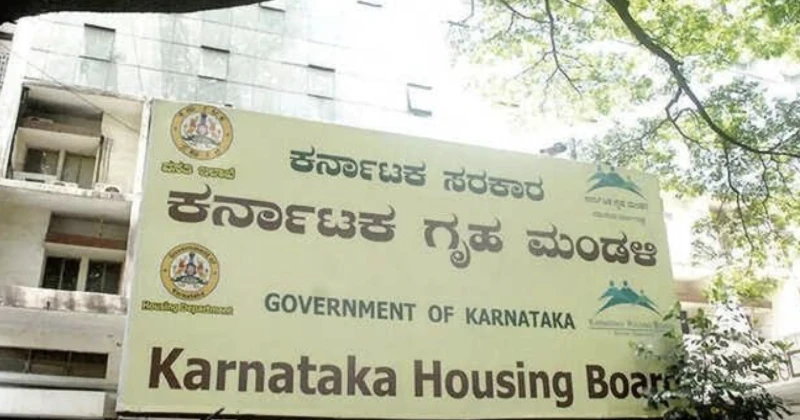
A fresh layer of controversy has engulfed the Karnataka Housing Board (KHB) after shocking revelations of forgery and alleged large-scale irregularities in the allocation of its sites in Bengaluru’s Yelahanka suburbs. What began as an investigation into the illegal alienation of two corner plots—one each in Yelahanka Suburban ‘A’ and ‘B’ Sectors—has now widened into a massive probe into suspected illegality in the allocation of as many as 178 plots, with the Lokayukta police moving swiftly to examine every related document and transaction.
The illegal transfer of plots, said to be worth more than Rs 20 crore in the open market, has already exposed loopholes in the KHB’s site management and auction system. Preliminary investigations have confirmed that private individuals fraudulently registered plot number 271 in ‘A’ Sector and plot number 239 in ‘B’ Sector by creating fake ownership documents, without any valid auction, approval or consent from the Board’s top authorities.
Forged documents, real losses
According to Lokayukta sources, the probe so far shows that in both instances, the forged documents bypassed mandatory approval from the KHB Commissioner, who alone holds the authority to allocate sites. Ordinarily, the allocation process includes an auction, an information letter or auction sale confirmation, and a purchase order signed by the Assistant Executive Engineer (AEE) or Assistant Revenue Officer (ARO). Instead, the plots were grabbed illegally, resulting in a direct loss of crores to the state exchequer.
The key accused in this alleged racket include retired KHB Assistant Executive Engineers Syed Asgar, Govindaiah, and Satish Harini. An FIR under the Prevention of Corruption Act has already been registered against them in Brahmapur. At the same time, the Lokayukta has indicated that more criminal cases are likely if deeper irregularities emerge in the larger pool of 178 plots.
Social activist blows the whistle
The shocking trail of fake paperwork and missing records first came to light due to persistent efforts by social activist K.S. Chandrashekhar. Back in 2021, Chandrashekhar filed an RTI application seeking all official documents related to the allocation of plots 271 and 239. In its reply, the KHB brazenly claimed that no files existed for these plots—despite physical evidence showing that private individuals had already registered them.
Undeterred, Chandrashekhar dug out documents through unofficial channels and handed them over to the Anti-Corruption Bureau (ACB), demanding strict action against those who fabricated papers and facilitated the illegal registrations. When the Lokayukta took over the probe from the ACB, it reopened the case with a wider focus.
Plot 239: Crime, complaint and a curious delay
While plot 271’s fraudulent transfer has seen some movement, the case of plot 239 shows how red tape and alleged collusion delayed justice. In 2022, KHB discovered that plot 239, which it had retained without auctioning, had been falsely registered by S.V. Hariprasad and others. Though KHB decided to lodge a criminal case, the attempt fizzled out when an official named S. Virupaksha went to the Yelahanka Suburban Police Station in February 2023 but returned empty-handed after being advised by the police to take up the matter with higher-ups.
Even today, no formal police complaint exists against the prime accused in the forgery of plot 239, forcing the Lokayukta to issue a fresh directive asking KHB to file a separate FIR without delay.
More trouble brewing for KHB
Now, the Lokayukta has widened its lens to all 178 plots allotted by KHB in the Yelahanka region. Notices have been served to multiple sub-registrar offices—including Yelahanka, Gandhinagar, Chikkajala and Byatarayanapura—demanding registration records. The Lokayukta’s investigation team has also asked the KHB Commissioner to submit all acquisition papers, auction records, sale confirmations, and allocation files related to these plots.
With retired engineers, local officials and possibly even serving KHB staff under the scanner, sources say the scandal could blow into one of the biggest housing board scams in recent times if widespread document forgery is proven.
How the scam may have unfolded
Documents reveal that the Karnataka Housing Board had acquired over 360 acres of land in Yelahanka—203.16 acres in ‘A’ Sector and 157 acres in ‘B’ Sector—way back in 1979. Between 1978 and 1988, these were developed into residential sites for the public, with corner plots kept aside to be sold through open auctions for revenue generation. But the very system meant to ensure transparent public auctions appears to have been hijacked through forged papers and inside help, resulting in the illegal alienation of prime urban plots.
















Comments