




Over centuries, Indian artisans, with their skills and imagination, have made immense contributions to India’s phenomenal economic growth. Between the 1st and the 18th century, India was the largest economy in the world. Historian Angus Maddison noted that from 1 to 1000 AD, India had a 30 per cent share of the world’s GDP. It was the artisan community that had the amazing skills and imagination to create magnificent utility and decorative items from the material available in nature. Those objects of beauty were exported from India; the value added was so high that the Indian sailors returned from foreign lands with a shipload of gold after selling those objects.
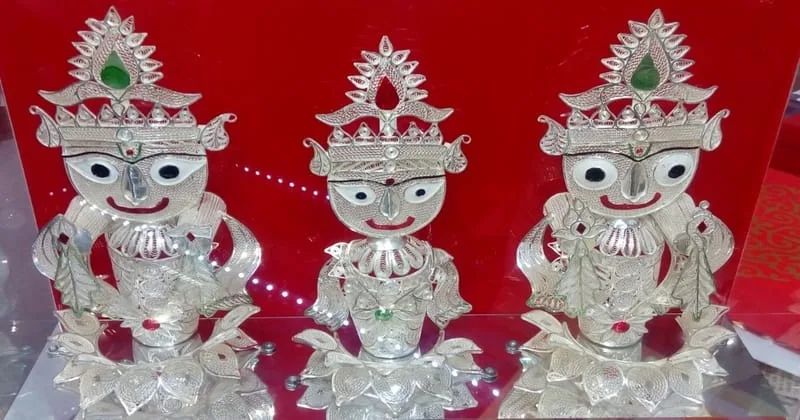
Utkala, now known as Odisha, was one of the leading exporters of handicrafts. Even today, the artisan community still survives in the state to mesmerise art lovers with their creative skills. Silver filigree craft (Rupa Tarakasi Kama) of Cuttack is a renowned handicraft tradition that has survived due to the dedicated efforts of the filigree artisans of Cuttack. The Rupa Tarakasi kama will not only become a popular export item, but it will generate income for the artisans and employment for the state.
Creating silver filigree items requires special skills and imagination. The silver filigree artisans first melt the silver and make thin wires. Then they weave those wires to make decorative and utility items. Musical instruments, sindoor boxes, the Krishna-Arjuna chariot, gods and goddesses, animals, birds, cycles, ornaments, temples, traditional ships, religious symbols, pallakins, musicians, rose flowers, vanity bags, and wall hangings are made by blending different techniques, such as rose, Jangira, and siko. Artisans can create any object by utilising their skills and imagination.
Despite the craft’s popularity in the market, genuine silver filigree items from Cuttack are fast disappearing; the young generation of artisans does not want to master the skills, as it takes a minimum of five years to learn this craft. They want quick money and do not want to work hard to become experts; this has put this rich craft tradition on the crossroads. Second, the customers look for cheaper items and do not want classic art objects due to their high price tag. In fact, they don’t understand the value of art and the high value addition in it. Only a few customers with an artistic sense purchase artistic silver filigree crafts; they understand the true value of these silver filigree crafts. As their number is fewer, the costly art objects do not sell in the local market, though these items have demand in big cities and in foreign countries. The local handicraft traders want business, and they ask artisans to make smaller and less complicated items at a lower price. When artisans continue to produce lower-quality items for the market, they lose their skills and enthusiasm. It is very essential for the state government, rich craft lovers and exporters to identify genuine artisans and engage them in making export-quality filigree items. If the senior artisans survive, they can pass their skills on to the younger generation. Artisans require a minimum of Rs 800 to Rs 1000 per day to continue in this profession.
Today, cheaper quality silver filigree items made by machines are sold in the market. Gullible customers fail to distinguish between the original silver filigree works and machine-made works brought from other states. Government agencies, media, and voluntary organisations in Cuttack should educate buyers so that they can distinguish fine handmade silver filigree from the drab machine-made work. It is essential to teach children in schools how to appreciate art objects. Raw materials, working capital, and marketing facilities should be provided to genuine silver filigree artisans in Cuttack. A direct export facility in the Bhubaneswar Airport should be created for the local exporters and the artisans, as they run from pillar to post when they export the items from Calcutta. The future of silver filigree is bright, as the government takes a series of steps to protect and preserve India’s handicraft traditions.














Comments