





In a development aimed at curbing religious conversions in Maharashtra, the state government, led by Chief Minister Devendra Fadnavis, has announced plans to introduce a robust anti-conversion law.
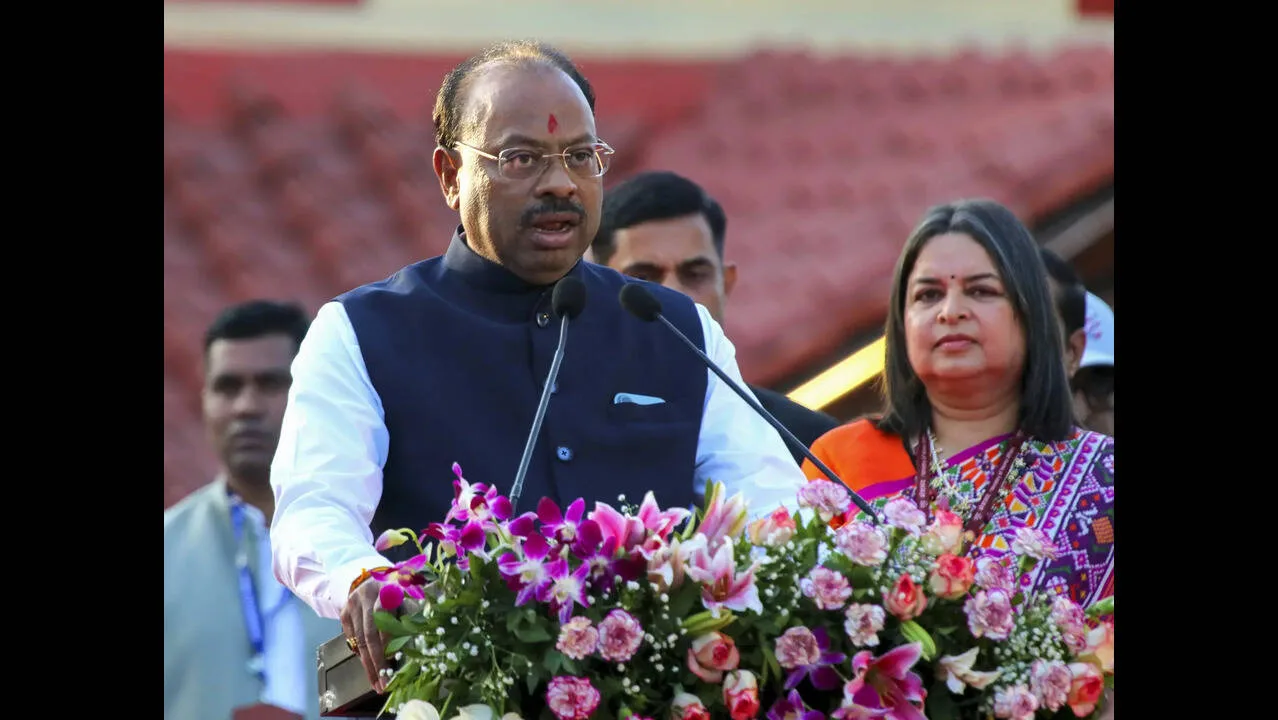
The announcement was made by Revenue Minister Chandrashekhar Bawankule during the ongoing monsoon session of the Maharashtra Legislative Assembly on Wednesday (July 9), addressing concerns raised by legislators about the rising instances of religious conversions in the state.
Additionally, Bawankule revealed that unauthorised churches in the Dhule-Nandurbar region will face demolition within six months, signalling a tough stance on illegal religious structures.
Strict Anti-Conversion Law in Pipeline
The Bharatiya Janata Party (BJP), which secured a resounding mandate in the recent state elections, is set to adopt a hardline approach to tackle religious conversions.
Speaking in the state assembly, Revenue Minister Chandrashekhar Bawankule, a senior BJP leader and former state party president, assured legislators that the government is committed to enacting a stringent law to prevent forced or induced religious conversions. The announcement came in response to questions raised by BJP MLAs, including Anupbhaiya Agrawal and Atul Bhatkhalkar, who expressed concerns about the increasing instances of conversions, particularly in tribal areas.
Bawankule emphasised that the proposed legislation would include tough provisions to deter religious conversions driven by coercion or inducement.
“The state government is serious about addressing the issue of religious conversions. We will bring a strict law to ensure such activities are curbed,” Bawankule stated in the assembly.
He added that he would hold discussions with Chief Minister Devendra Fadnavis to finalise the framework for the anti-conversion law, ensuring it is comprehensive and effective.
Bulldozers to clear unauthorised Churches
In a move that has sparked significant attention, Bawankule announced that the government has directed the Divisional Commissioner of Dhule-Nandurbar to conduct a thorough investigation into unauthorised churches in the region. These structures, deemed illegal, are to be demolished within a six-month timeframe. The minister’s statement underscores the government’s intent to crack down on religious establishments operating without proper authorisation, particularly in areas where conversions are reportedly prevalent.
The announcement drew immediate reactions from legislators. BJP MLA Atul Bhatkhalkar questioned the need for a six-month investigation period, arguing that if the structures are already known to be illegal, action should be taken promptly.
“Why wait for six months when we know these are unauthorised? Immediate action should be taken against such illegal religious structures,” Bhatkhalkar urged in the assembly.
In response, Bawankule clarified that due process requires verifying complaints and conducting investigations before demolition, ensuring fairness and adherence to legal protocols.
Concerns over conversions in Tribal areas
The issue of religious conversions has been a growing concern in Maharashtra, particularly in tribal-dominated regions. BJP MLA Sanjay Kute highlighted that conversions are not confined to Nandurbar but are occurring across tribal areas in the state. He called for comprehensive measures to address the issue statewide. Similarly, MLA Anupbhaiya Agrawal alleged that in Navapur, located in Dhule district, both tribal and non-tribal communities are being lured into adopting Christianity through inducements. These claims have fueled the demand for stricter regulations to prevent such activities.
The Maharashtra government’s move aligns with similar efforts in other states. Neighbouring Gujarat, under the leadership of late Chief Minister Vijay Rupani, had introduced an anti-conversion law, though some of its provisions were later stayed by the judiciary.
Several other states, including Uttar Pradesh, Madhya Pradesh, and Himachal Pradesh, have also enacted anti-conversion laws in recent years, reflecting a broader trend among BJP-ruled states to address concerns over forced or fraudulent religious conversions.
Political and Social Implications
The announcement has sparked a mix of support and debate. Supporters of the proposed law argue that it is necessary to protect vulnerable communities, particularly in tribal areas, from coercive conversion tactics. Critics, however, caution that such laws must be carefully drafted to avoid infringing on individual rights and freedom of religion, as guaranteed by the Indian Constitution. The Maharashtra government’s decision to target unauthorised churches for demolition is also likely to stir controversy, with concerns about its impact on religious minorities and the potential for communal tensions.
The proposed anti-conversion law and the crackdown on illegal religious structures mark a significant policy shift for the Fadnavis-led government, which is leveraging its strong electoral mandate to address contentious social issues. As the state prepares to draft the new legislation, all eyes will be on how the government balances its commitment to curbing conversions with the principles of religious freedom and legal fairness.
Next Steps
Minister Bawankule assured the assembly that the government would move swiftly to draft the anti-conversion law, with consultations already planned with Chief Minister Fadnavis. The investigation into unauthorised churches in Dhule-Nandurbar is expected to proceed concurrently, with the Divisional Commissioner tasked with submitting a report within the stipulated six-month period.
The government’s actions in the coming months will likely shape the discourse on religious conversions and the regulation of religious structures in Maharashtra.
For now, the Fadnavis administration has made its intent clear: to take decisive action against religious conversions and unauthorised religious structures, signalling a new chapter in Maharashtra’s governance.













Comments