





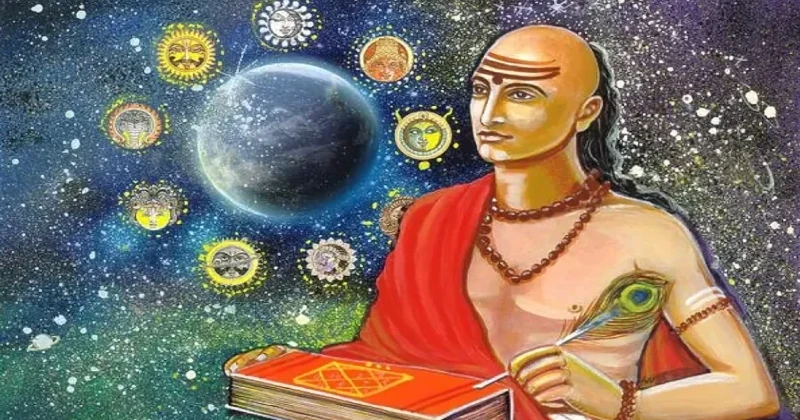
Our Vedic rishis possess unfathomable knowledge, which is truly praiseworthy. The breadth of knowledge at a period when the world was battling for necessities demonstrates the progress of our ancient Rishis. Though the Western world discovered this tremendous knowledge for its benefit, the time has come for youngsters to delve thoroughly into this heavenly wisdom to develop their scientific and technological abilities. This article covers the contributions of Maharishi Varahamihir and Maharishi Agastya.
Varahamihira: Great mathematician, astronomer and astrologer
Mihir was a renowned mathematician, astronomer, and astrologer of ancient Bharat, and was one of the Navratnas of the court of Emperor Chandragupta Vikramaditya, a symbol of his erudition and unique knowledge in astrology. Varahamihira’s Vedas present a comprehensive presentation of ancient sciences, including astrology and astronomy.
Mihir’s prophecy and his name
According to the famous legend, when Chandragupta Vikramaditya’s son was born, the Mihir predicted that one day a pig (Varaha) would cause the son’s death. The king made many attempts, but ultimately Mihir’s prediction proved true, and since then, he came to be known as Varahamihir. It is also believed that he gained divine knowledge of astrology through the worship of the Sun.
Major works: Brihajjatak, Brihatsamhita and Panchasiddhantika
Varahamihira wrote three major texts on astrology and astronomy:
1. Brihajjatak: This treatise on astrology provides detailed information on travel muhurat, marriage muhurat, and birth chart. It is a book on the planetary principles of astrology and time determination for making important life decisions.
2. Brihatsamhita: This treatise has a deep description of weather, agriculture science, animal and bird behaviour, building construction art, Vastu Vidya, and methods of steel making. Varahamihira described a method for predicting weather and natural disasters based on the behaviour of animals and birds, which aligns with the scientific principles of today. Along with this, he also mentioned the high quality of Indian steel making, which was exported to Persia and other countries.
3. Panchsiddhantika: This book is based on astronomy and describes the five major astronomical theories prevalent during the time of Varahamihir. This book examines the positions of planets and constellations, as well as the accurate calculation of time. The Panchsiddhantika is a reflection of Varahamihira’s deep study of astronomy and his extensive knowledge of trigonometry.
In Brihatsamhita, Varahamihira has also published detailed works on agriculture and Vastu Vidya. He has described the preparation of land for agriculture, the method of plantation, the optimal time for irrigation, and the measures to protect trees from diseases. Apart from this, the text also covers building construction techniques, principles of Vastu, and guidelines for constructing buildings.
Varahamihira has also described the real causes of eclipses, which shows his scientific approach. He said that a lunar eclipse occurs when the Moon enters the Earth’s shadow, and a solar eclipse occurs when the Moon passes between the Sun and the Earth. His view differed from the traditional beliefs of that time and provided a scientific explanation of astronomical phenomena.
Varahamihira utilised important formulas of trigonometry in his studies of astrology and astronomy, demonstrating his proficiency in the subject. His works also made significant contributions to the field of mathematics, making astronomical calculations simple and accurate.
Maharishi Agastya
Maharishi Agastya made a profound contribution to the great Ayurveda, astrology and religious texts of the Bharatiya Rishi tradition. He made a significant contribution to the invention of electricity and the development of the battery. The Vedic texts written by him describe the principles of electricity production and its use, which shows that ancient Bharatiya science was very advanced and rich.
In his texts, there is a process of electricity and its storage. He has described it, which aligns with the concept of a battery in today’s time. According to the Agastya Samhita, a method exists for generating a special type of electricity. He said that if water, a strip of copper, and a strip of zinc are placed in an earthen pot, then electricity is generated, similar to a galvanic cell.
This is similar to the structure of today’s battery, which has an electrolyte (typically water) between the cathode (a copper strip) and the anode (a zinc strip). Thus, the method of electricity generation described by Agastya proves the basic concept of the battery in modern times.
Maharishi Agastya not only explained the method of generating electricity but also its practical applications. He explained the method of electrolysis of water using electricity, in which water can be divided into hydrogen and oxygen gases through the application of an electric current. This process remains important even in today’s science, which demonstrates that the sages of ancient India possessed a unique scientific approach and technical knowledge.
The Agastya Samhita is a unique text written by Maharishi Agastya, in which he not only explains the methods of electricity production and its use but also contains a deep repository of scientific and technical knowledge. The method of electricity production mentioned in this book can be considered the precursor to today’s battery technology. He also explained that electricity can be used to stop enemies during war, which also shows progress in military technology of that time.
Unique Legacy of the Great Rishis of Ancient Bharat
Maharishi Sushruta, Maharishi Kanada, Maharishi Agastya, Maharishi Baudhāyana, and other great Rishis enriched Indian civilisation and science with their invaluable contributions. Their theories were not only spiritual and philosophical, but they also made unique contributions in fields such as science, mathematics, astronomy, yoga, chemistry, and grammar.
These Rishis of Bharat were not only renowned as religious and spiritual gurus but also pioneers in the fields of science and technical knowledge. Maharishi Charaka and Sushruta enriched medical science, while Maharishi Patanjali showed the path to balance the body and soul through yoga. Maharishi Kanada and Nagarjuna conducted extensive research in chemistry and atomic theory, while Maharishi Agastya propounded the principles of electricity. Baudhāyana, Bhaskaracharya, and Varahamihira made significant contributions to mathematics, astrology, and astronomy, which are still considered the foundation of modern science.
The intellectual ability and profound vision of these sages have proved that ancient Bharat was highly advanced in the field of knowledge. The books and principles written by them are still proving useful in the field of science, philosophy and medicine. These great sages made Bharatiya culture unique, and the entire world got enlightened by their teachings.
It is fitting to say that the sages of ancient Bharat are not only the pride of Bharat but also a priceless heritage for the entire humanity. Their principles are as relevant today as they were thousands of years ago. Their contribution to science and technology will continue to inspire and guide humanity for centuries.











Comments