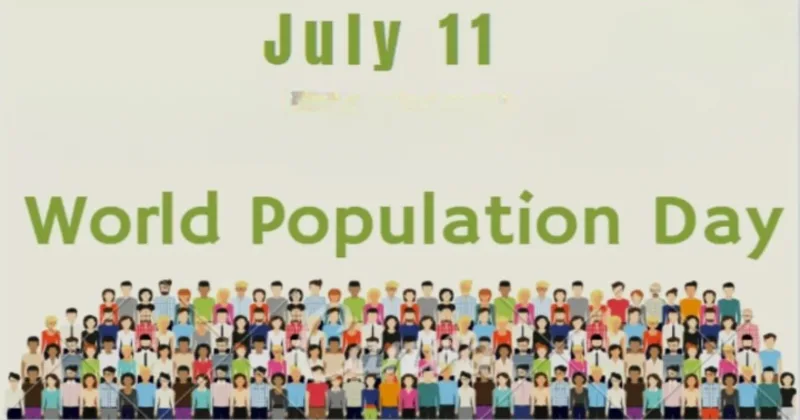
Representative Image
World Population Day is observed on July 11 every year. The idea to observe this particular day was inspired by the world population reaching the milestone figure of 5 billion on July 11, 1987. The noble aim of the UN behind observing this day is to raise awareness about the challenges of high population growth, reproductive health, family planning and gender equality.
The theme for World Population Day 2025 is ‘Empowering young people to create the families they want in a fair and hopeful world’. As per the UN estimates, the current world population is approximately 8.23 billion. India is the most populous country in the world with 1.46 billion (146 crore) people, which is equivalent of 17.78% of the total world population. The median age in India is just 28.8 years and we have 65% of the population below the age of 35 years. Out of the total population in India, approximately 37% live in urban centres and this number is growing rapidly every year.
Somehow the Number 1 tag in population is not considered an achievement. But the young demographic dividend can make India number 1 country in the world, in terms of GDP and equitable distribution of wealth. Though population control measures have slowed down the population growth, still the population of India is expected to exceed 1.5 billion (150 crore) by the year 2030. Courtesy better health care measures for the common citizens and free medical treatment of the elderly through government schemes like Ayushman Bharat Yojna, the life expectancy in India is a respectable 72.5 years.
The fertility rate in India in the year was 3.5. It meant that more than 3 children were born per family at an average in India. In the year 2025, the fertility rate has come down to 1.98, which means that not more than two children are born per family. Though the reduction of the fertility rate in the last 25 years is remarkable, this fertility rate is skewed in some religions and communities. For a balanced population growth for all economic strata, all the religions and communities should have similar fertility rate.
As far as India is concerned, the focus has to be on the young population. I would like to divide the 65% of India’s population, approximately 95 crore young people into three categories: below 15 years of age, 15-25 years of age and those between 25-35 years of age. Exact population data of the three categories may not be available but I reckon all three to be substantial figures.
Those below 15 years of age should still be studying. This category is something that the country should groom to be the future young leaders, entrepreneurs, scientists, cyber experts and innovators. In the next 20 years when we are looking at Viksit Bharat@2047, this young lot if groomed and empowered properly would be able to meet the current and futuristic challenges of India.
The next category of 15-25 years should be skilled and empowered as per the job requirement. In fact, our education system should make it mandatory to learn one employable skill to each person of this category. The last category of 25-35 should be in a job. This category still has many productive and industrious years ahead of them. The people from this category who are still not employed as per education qualification, should be trained for an alternate career. Every one should not be vying for a government job. There are many new career options available now.
With the young population come new challenges. I would like to flag three of my observations about the youth in India. The first is addiction to vices like smoking, drinking and consumption of gutka. The youth is being lured into such vices through lavish advertisement. Besides being a health hazard, this habit is causing wasteful expenditure of hard-earned money. The second observation is about their obsession with social media and excessive screen time. The youth is spending so much of time in the virtual world. The third vice which has afflicted a large number of youths is betting apps and living beyond means on loans and credit card.
As a military man who has spent considerable life outdoors, I have the following three suggestions for the youth of India below the age of 35 years. First, lead an active physical life. Run every day and play some games. Cricket is very popular but Indian traditional games like Kho-Kho, Kabaddi etc. require no sports infrastructure. Second suggestion to the young would be to learn one employable skill, be it carpentry, TV mechanic, electrician etc. Such skill should be learnt irrespective of your economic status and current job. The third suggestion to the young would be to develop some hobby which is different from your job content. Such hobbies like painting, cooking, gardening, photography etc. are likely to wean away the youth from the vices cited above.
India is conducting the next population census from this year onwards. The census will be conducted in two phases and will be completed by March 1, 2027. For the first time, this exercise will be digital and would collect a host of data including the caste census. While the caste has become a political issue, it is hoped that major parameters which enrich India to exploit the favourable demographic dividend are given the due priority. Based on the analysis of the population data, the political leaders and the social scientists should keep the futuristic roadmap ready which propels India to be Viksit Bharat@2047. Jai Bharat!

Leave a Comment