





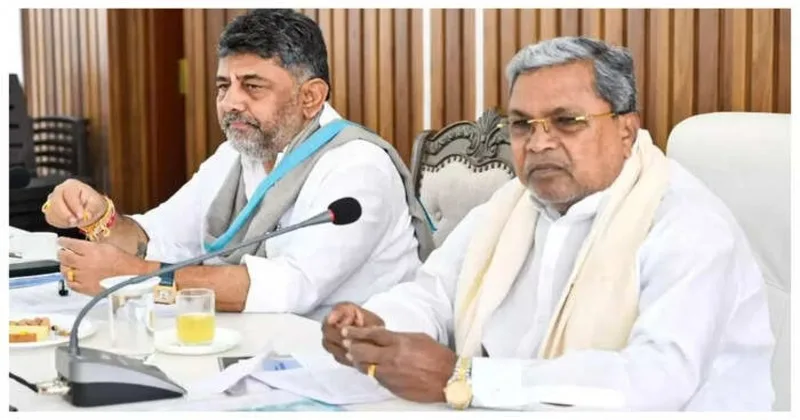
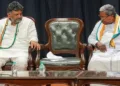
Bengaluru: The simmering factionalism within the Karnataka Congress has burst into the open yet again, with Chief Minister Siddaramaiah’s latest remarks triggering a fresh round of political tremors and setting the stage for an intense numbers game that could reshape the state’s leadership equation in the coming months.
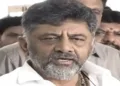
Speaking from Delhi this week, Siddaramaiah categorically declared that he would remain Chief Minister for the full five-year term — a pointed message that also carried a veiled swipe at his biggest intra-party rival, Deputy Chief Minister D.K. Shivakumar. By bluntly asserting that Shivakumar “doesn’t have the support of enough MLAs to stake a claim” for the top post, Siddaramaiah has reignited a cold war that never really went away.
An old rivalry, new tremors
Though both leaders have often publicly claimed to share a smooth working relationship, the undercurrent of rivalry has always been an open secret in Congress circles. Their uneasy partnership — forged under the Congress high command’s insistence during the government formation talks last year — was always held together by a delicate balance of numbers and political compulsions.
Now, with Siddaramaiah’s public statement and back-to-back meetings in Delhi, the old fault lines are visible once again. In a carefully timed move, the Chief Minister’s remark came just as Shivakumar was himself camping in Delhi and meeting key leaders, including Priyanka Gandhi Vadra — fuelling talk that he too was drumming up support to strengthen his camp.
Who stands where?
At the heart of this cold war is the classic Congress number game — how many MLAs back whom. Senior party insiders estimate that Siddaramaiah currently commands the loyalty of over 60 MLAs — mainly drawn from North Karnataka, Kalyana Karnataka, and pockets of Old Mysuru. Notable names include Ganesh Hukkeri, Ashok Pattan, Rizwan Arshad, Shamanur Shivashankarappa, Raja Venkatappa Nayak, and others who wield significant influence in Bagalkot, Koppal, Ballari, Davanagere, and Chamarajanagar.
In contrast, Shivakumar’s camp claims the support of about 30 legislators — primarily concentrated in Old Mysuru, Mandya, Ramanagara, and parts of Coastal and Central Karnataka. Senior leaders like N.A. Haris, S.C. Srinivas, Lakshman Savadi, Beluru Gopalakrishna, and young faces like Darshan Dhruvanarayana are among those counted firmly in the DCM’s corner.
Adding to the intrigue is a smaller but critical group of neutral fence-sitters — around a dozen MLAs and ministers like R.V. Deshpande, Vinay Kulkarni, and Priyank Kharge — who have so far chosen to keep their cards close to their chest. Their allegiance, or lack of it, could tilt the scales if the internal tussle escalates into an open showdown.
Cabinet lines drawn
The factional divide is not limited to the legislature alone. Within the cabinet, senior ministers like Dr. G Parameshwara, Dinesh Gundu Rao, K.J. George, and Satish Jarkiholi are seen as firmly aligned with Siddaramaiah, whereas the likes of Lakshmi Hebbalkar, Madhu Bangarappa, and D Sudhakar remain loyal to Shivakumar’s camp.
Meanwhile, senior leaders like Ramalinga Reddy, H.K. Patil, and Priyank Kharge continue to tread cautiously, preferring strategic neutrality — a stance that many believe gives them crucial bargaining power with both camps.
Delhi diaries: a war of messaging
This time, the high-stakes drama has shifted to Delhi. Both Siddaramaiah and Shivakumar have strategically used national media platforms — instead of local Kannada channels — to send their signals loud and clear to the Congress high command. Siddaramaiah’s carefully chosen words in a national TV interview — reiterating his full-term CM plan and questioning DK’s numbers — are being read as a counter to Shivakumar’s earlier tactic. Months ago, Shivakumar had stirred the pot by publicly hinting at a ‘power-sharing formula’ during a similar Delhi visit, claiming Rahul Gandhi was part of the discussion.
Many insiders believe Siddaramaiah’s latest remarks are not off-the-cuff but a well-orchestrated move to clip DK’s wings and project an image of unshakeable control — not just to the Karnataka cadre but to the Gandhi family as well.
Why does this matter?
The timing could not be more sensitive. Rumours of a possible cabinet reshuffle, murmurs of fresh power-sharing talks, and the Congress high command’s silence have all created fertile ground for speculation. Observers point out that the underlying tension between the CM and DCM camps has only grown since the Lok Sabha election results, where the Congress’s performance fell short of expectations in Karnataka — despite the state being one of the few where the party is in power.
High command’s balancing act
For Congress President Mallikarjun Kharge, who hails from Karnataka, this brewing factional fight is an unwelcome headache at a time when the party is desperate to showcase unity and stability in its few remaining strongholds. Both camps are putting up a public show of harmony, but the steady trickle of backchannel briefings and hush-hush strategy meetings has made it clear that the real battle is still simmering under the surface.











Comments