





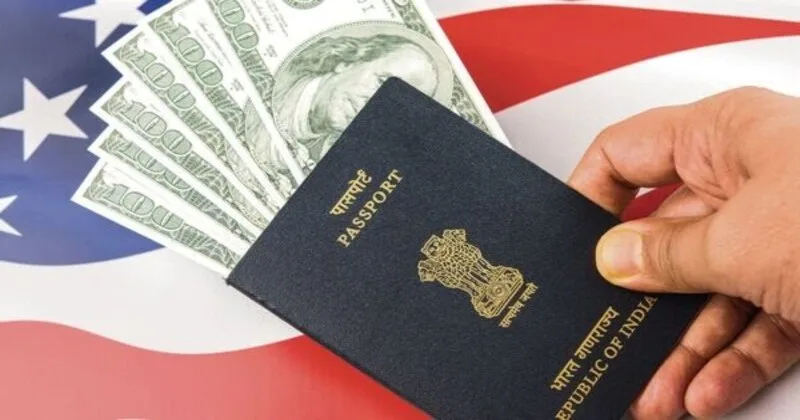
The US has introduced a new $250 Visa Integrity Fee under President Donald Trump’s One Big Beautiful Bill Act, signed into law on July 4. Pegged to inflation and subject to annual changes, the fee acts like a security deposit and may be refunded if applicants meet specific criteria. It’s viewed as a move to ensure compliance with US immigration laws.
The One Big Beautiful Bill became law on July 4 after being signed by President Trump, with the new visa rule included as part of the broader omnibus Act.
Starting in 2026, a mandatory Visa Integrity Fee will apply to all non-immigrant visa applicants—including tourist/business (B-1/B-2), student (F/M), work (H-1B), and exchange (J) visas—except those in diplomatic categories (A and G), who will be exempt.
Under the new law, the Department of Homeland Security (DHS) will collect the Visa Integrity Fee at the time of visa issuance, adding to existing application costs. The changes align with President Donald Trump’s push for stricter immigration enforcement.
The Act also introduces additional travel-related charges: a $24 I-94 fee, a $13 ESTA fee for Visa Waiver Program travellers, and a $30 EVUS fee for certain Chinese nationals holding 10-year B-1/B-2 visas. According to US immigration firm Fragomen, none of these fees are waivable.
Currently, a US tourist or business visa (B-1/B-2) for Indian applicants costs around $185 (Rs 15,855). Under the new rules, additional surcharges—including the $250 Visa Integrity Fee, $24 I-94 fee, and $13 ESTA fee—will raise the total cost to approximately $472 (Rs 40,456), more than double the original amount.
Starting in 2026, the Integrity Fee will be adjusted annually based on the Consumer Price Index (CPI), making it a recurring, inflation-linked charge. The fee functions as a kind of security deposit, aimed at encouraging compliance with US immigration laws.
While this may help reduce visa overstays, it could also deter legitimate travellers—especially from developing countries—and hinder cultural exchange.
How to Get the Visa Integrity Fee Refunded
A refund is possible, but subject to strict conditions. Visa holders must leave the US within five days of their visa’s expiration without applying for an extension or status change, or must adjust to permanent residency before their I-94 expires.
The I-94 is the Arrival/Departure Record issued by the US Customs and Border Protection (CBP) to non-immigrants entering the US.
The refund process for the Visa Integrity Fee is not automatic and demands thorough documentation, including proof of departure or successful adjustment of immigration status.
If visa holders fail to meet the refund criteria, the fee will be forfeited and transferred to the US Treasury’s general fund. Additional guidance from the US State Department is expected to clarify the refund procedures.
Although the fee aims to curb visa overstays, it could deter genuine travellers—especially tourists and students from developing nations—by imposing a significant financial burden. The added cost may require careful planning and could limit cultural and educational exchanges.













Comments