





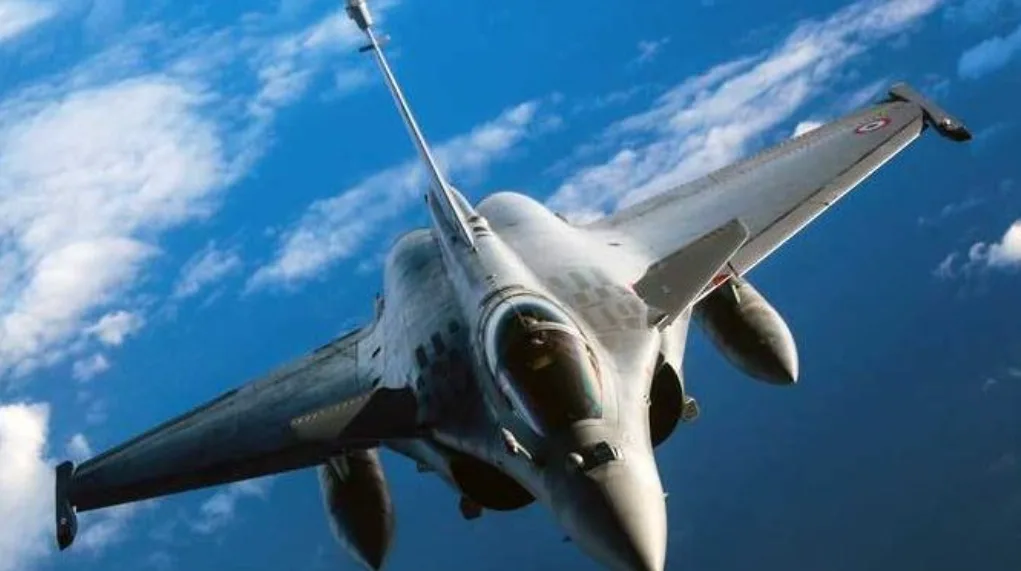
In May 2025, the Indian Air Force (IAF) executed Operation Sindoor, an extraordinary and modern air campaign that showcased not just firepower, but intelligence, stealth, and strategy. Lauded across the global defence community, it was even hailed as “the best spoofing and best deception of aerial warfare we’ve ever seen” by Ryan Bodenheimer, a former U.S. Air Force F-15E and F-16 Thunderbird pilot.
But what many may not realise is that this masterstroke of electronic warfare has its roots in an age-old Indian trait: jugaad — the art of intelligent improvisation. For the IAF, this was not the first time it had used a mix of technology, courage, and innovation to gain the upper hand. A similar brilliance was on display 26 years ago during the Kargil War.
Flashback: Kargil, 1999 — The Birth of Indian Aerial Ingenuity
During Operation Vijay, the Indian Army and Air Force faced a daunting challenge: pushing back well-entrenched Pakistani troops from icy Himalayan heights. The IAF launched Operation Safed Sagar, its air campaign to support ground forces. However, they faced a technological gap — the precision strike capabilities needed for high-altitude warfare were not readily available.
It was here that Indian ingenuity shone.
IAF pilots, flying Mirage 2000H jets, were handicapped by the lack of laser-guided targeting systems. France, the manufacturer of Mirage 2000H, had denied India access to advanced targeting pods. The solution? Indian brains made French aircraft accept Israeli technology. This included fitting Israeli Litening pods — meant for other platforms — onto the Mirages. The process involved “fooling” the Mirage’s French avionics into accepting the foreign equipment as compatible, all done amidst an active war.
This cross-tech innovation was championed by Air Marshal Raghunath Nambiar (then Wing Commander), whose behind-the-scenes effort made laser-guided bombs possible in the Kargil campaign. These guided weapons proved to be game-changers in surgical strikes on enemy posts, including the decisive destruction of Pakistan’s critical supply base at Muntho Dhalo in the Batalik sector. The mission, which dropped multiple 1,000 lb bombs, was based on out-of-the-box footage analysis — again a reflection of the IAF’s adaptive mindset.
Notably, IAF pilots at the time even used handheld GPS devices to navigate and accurately locate enemy positions. These devices, not yet integrated into fighter jets, became makeshift navigational tools. This “jugaad-intelligent, innovation” proved invaluable in a war where high-tech solutions were limited but the stakes were sky-high.
2025: Operation Sindoor — Evolution of Innovation
Fast forward to May 2025, and that same spirit of innovation returned — but this time armed with state-of-the-art Artificial Intelligence.
The Star of the Show: Rafale’s X-Guard
At the heart of this operation was a tiny but powerful device called X-Guard, carried by India’s Rafale fighter jets. It weighs just 30 kilograms, but don’t be fooled — it’s smarter than it looks.
The X-Guard is a high-tech decoy system. It trails behind the aircraft on a thin fiber-optic cable, sending out signals that make it look exactly like a real Rafale jet. It confuses enemy radars and missiles by pretending to be the actual aircraft — and it does this using Artificial Intelligence (AI).
Here’s how it works in simple terms:
- Enemy radars think they’ve locked onto an Indian jet.
- But what they’ve really targeted is the X-Guard.
- The real jet silently slips away while the enemy wastes its missiles chasing a fake.
- This clever trick played a huge role in protecting Indian pilots during Operation Sindoor.
How Operation Sindoor Fooled Pakistan
The target of India’s deception was Pakistan’s J-10C fighter jets and PL-15E missiles, which are Chinese-made. These missiles are powerful but not very good at telling what’s real and what’s fake. The X-Guard took full advantage of that.
When Pakistan fired its missiles, they chased the decoy instead of the real Rafale. In fact, reports suggest that some of the Pakistani claims about shooting down Indian jets were actually X-Guards getting hit — not real aircraft!
That’s a huge win for India. It means we saved lives, protected our pilots, and still got the job done — all by being smarter than the enemy.
What Makes X-Guard Better than Older Systems?
India’s X-Guard is faster, smarter, and reusable, unlike older American systems like the AN/ALQ-50 or MALD decoys. It can be deployed in under two seconds, can be reeled back in after the mission, and works like a “digital wingman,” taking enemy fire while the real pilot stays safe. A “digital wingman” means a smart electronic partner that flies with the real aircraft, helping to protect it during dangerous missions. In the case of the X-Guard, it acts like a virtual buddy that attracts enemy missiles and radar signals towards itself, so the actual pilot and jet remain safe. Just like a real wingman in a fighter formation supports and defends the lead aircraft, this digital version draws enemy attention away using high-tech signals and tricks. The pilot stays in control, getting real-time updates from the X-Guard, which can be pulled back in after the mission and used again. It’s like having a brave, loyal teammate made of technology.
Even more importantly, it talks to the pilot in real time. If a missile is tracking the plane, the pilot knows instantly — a big advantage in modern warfare.
A New Era of Aerial Warfare
Operation Sindoor wasn’t just about avoiding enemy fire — it was about setting a new standard in electronic and invisible warfare. It proved that modern wars are not just fought with bullets and bombs, but with brains, bytes, and signals.
India didn’t just win in the skies; it won in the realm of technology, innovation, and strategy.
For every Indian citizen, Operation Sindoor is a reminder that our Air Force is among the best in the world, not just in courage, but in using the latest tools to protect our nation.
As we move into a future where wars are fought with more electronics and less visibility, India has shown it is not just ready — it is leading.
















Comments