





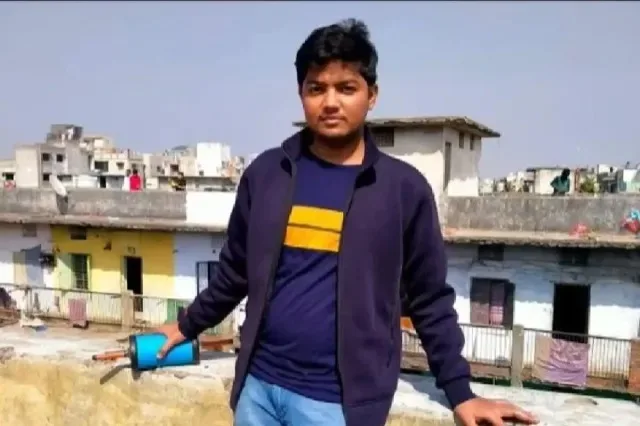
In February 2023, the tragic death of 18-year-old Darshan Solanki, a first-year chemical engineering student at the prestigious Indian Institute of Technology (IIT) Bombay, sent shockwaves across the country. The incident did not remain just a case of student suicide; it quickly snowballed into a politically charged debate. Before the facts could be thoroughly examined, leftist organisations, caste activists, and sections of the media wasted no time in framing his tragic suicide as yet another instance of caste oppression in India’s premier academic institutions. What followed was a calculated and opportunistic exploitation of a young life lost, with selective outrage, half-truths, and a glaring silence once the communal realities of the case came to light.
Nearly two and a half years later, with the trial against the accused, Armaan Iqbal Khatri, finally set to begin, the case continues to haunt India’s collective conscience, raising uncomfortable questions about society, justice, and the weaponisation of identity politics.
The Death of Darshan Solanki
Darshan Solanki was a Dalit. His admission into IIT Bombay was a matter of immense pride for his family, symbolising social upliftment through education. However, within three and a half months of joining the institution, he plunged to his death from the seventh floor of his hostel building. The timing, immediately after the end of his first semester exams and the circumstances of his death sparked immediate speculations.
In response to the case, IIT Bombay convened a 12-member committee to investigate the situation. The committee decided that Darshan’s poor academic progress and fall in attendance were major reasons. Their report did not suggest caste discrimination or bullying but instead personal academic issues.
How Leftist Groups Hijacked the Narrative
The initial reactions after his suicide were swift and familiar: left-leaning student groups, led by the Ambedkar-Periyar-Phule Study Circle (APPSC), instantly declared his death an ‘institutional murder’ the consequence of deep-seated caste discrimination allegedly perpetuated by upper-caste Hindu students.
This script has played out numerous times in the past: Dalit student dies by suicide, outrage follows, upper-caste Hindu society is collectively blamed, and institutions are accused of harbouring and enabling casteist attitudes. As expected, activists, leftist media portals, and self-proclaimed social justice champions amplified this narrative with little regard for factual accuracy or judicial due process. Jignesh Mevani, Ambedkarite groups, and university professors across India parroted the same accusations without waiting for investigations to conclude.
Despite the clear communal context, where the accused, a Muslim, allegedly harassed and intimidated a Hindu Dalit student the outrage industry turned mute. The APPSC, which had initially demanded the invocation of the SC/ST Atrocities Act, stopped pursuing the case with the same fervour. Leftist portals, which had breathlessly labelled the incident as a caste killing, moved on. The discomfort of having a minority accused and a Dalit victim did not sit well with their ideological biases. Dalit lives, in this worldview, matter only when the accused is a convenient scapegoat: namely, an upper-caste Hindu.
This selective outrage exposes the deep hypocrisy of India’s so-called caste activists and left-liberal intelligentsia. Their concern for Dalit lives is not rooted in genuine empathy or commitment to justice but is often instrumental used only when the alleged oppressor fits their narrative of Hindu upper-caste villainy. The moment communal realities surface, as in the case of Armaan Iqbal Khatri, the facade of solidarity collapses.
When the Accused Turned out to be a Muslim
The Mumbai Police’s Special Investigation Team (SIT), formed specifically to probe the case, discovered a handwritten suicide note in Darshan’s room that read, “Arman has killed me.” Forensic handwriting analysis confirmed that the note was indeed written by Darshan Solanki.
Further investigation revealed that the tragic chain of events leading to Darshan’s death had begun with an alleged communal remark made by him, which reportedly offended Armaan. In response, Armaan allegedly threatened Darshan with a paper cutter, leaving him deeply frightened. Multiple testimonies from fellow students supported this sequence of events. Darshan was said to have been so terrified that he repeatedly apologised to Armaan, even hugging him in an attempt to reconcile, yet remained deeply unsettled in the days leading to his suicide.
In April 2023, the Mumbai police recorded the statement of a batchmate of Darshan Solanki whom Solanki confided that he felt threatened by Arman Iqbal a day before his suicide.
In his statement to the police, the student said that when he met Darshan Solanki on February 11, the latter told him to “not be seen with him or else Khatri would harm him as well”.
An SIT source was quoted by media houses as saying that the student had met Darshan Solanki in his hostel room. “The latter told him to go away since if Khatri saw them together, he would harm him as well. When the student asked Solanki why Khatri would harm him, Solanki told him that he had made a communal remark, which had irked Khatri, who threatened him,” the officer added.
The discovery of the suicide note and witness testimonies led to Armaan’s arrest in April 2023 under Section 306 of the Indian Penal Code for abetment of suicide. Despite his legal team’s subsequent attempts to quash the FIR, the Bombay High Court, after hearing strong opposition from the state’s counsel and Darshan’s family’s legal team, allowed the trial to proceed.
The internal inquiry by IIT Bombay, while exonerating the institution of direct discrimination, acknowledged the need for stronger mental health support systems. The report highlighted that Darshan’s academic struggles, including poor grades and low attendance, were likely contributing factors to his emotional state. It recommended better counseling services, mentorship programs, and proactive engagement with students, especially those from marginalised communities, to prevent similar tragedies in the future.
Yet the gap between recommendation and implementation remains vast. Mental health remains a taboo subject in many Indian educational institutions. The intense focus on academic performance often overshadows the well-being of students. Darshan’s case serves as a tragic reminder that excellence without empathy is a recipe for disaster.
Weaponising Identity
Moreover, the selective outrage over Darshan’s death exposes the double standards of many so-called social justice advocates. True advocacy demands consistency and integrity, not opportunistic exploitation. If caste discrimination were genuinely the concern, then the socio-economic pressures, academic stress, and bullying faced by students from all backgrounds should equally command attention.
The fact that Darshan’s suicide was initially framed as an example of caste oppression, only for the narrative to collapse under factual scrutiny, has wider implications for how sensitive issues are debated in India. The reflexive rush to frame every tragedy through the lens of identity politics undermines genuine efforts to address systemic problems. It also risks desensitising the public to real cases of discrimination and injustice.
A Call for Genuine Justice
The upcoming trial against Armaan Iqbal Khatri is thus not just a legal proceeding; it is a litmus test for the justice system’s ability to rise above ideological pressures and deliver an impartial verdict based on evidence. The prosecution, led by Special Public Prosecutor Prakash Salsingikar and supported by Darshan’s family’s legal counsel, is expected to lay bare the sequence of harassment and intimidation that pushed the young student to despair. On the other side, Armaan’s defense will likely contest the causality between the alleged threats and Darshan’s decision to end his life.
The story of Darshan Solanki is a story of shattered dreams, a grieving family, and a society too quick to judge and too slow to listen. His life cannot be reduced to a headline or a hashtag. As the trial progresses, it is imperative that all stakeholders, judiciary, media, academia, and civil society, approach the case with the seriousness, compassion, and objectivity it deserves.
The lessons from Darshan’s death must go beyond courtroom debates. They must prompt introspection within India’s academic institutions, where success is often valued over well-being. They must inspire reforms that ensure no student feels so cornered, so isolated, that death appears as the only escape. And above all, they must remind society that every life matters, not as a pawn in ideological battles but as a human story worthy of dignity, justice, and remembrance.
As the nation awaits the outcome of the trial, one can only hope that justice for Darshan Solanki will be served, not through the lens of political convenience but through an honest pursuit of truth and fairness. Only then can his untimely death serve as a catalyst for real change, both within and beyond the walls of IIT Bombay.
The contradiction is stark and deeply revealing. The very activists who claim to champion intersectionality and social justice reveal their communal selectivity when confronted with uncomfortable truths. The life of Darshan Solanki deserved universal empathy, but what it received was conditional concern, weaponised when useful, discarded when inconvenient.
This hypocrisy not only undermines the pursuit of genuine justice for Darshan but also trivialises the very real issues of caste discrimination that do exist in Indian society. By reducing every tragedy to a political opportunity and by selectively choosing whose deaths matter, these groups erode public trust in social justice causes and polarise discourse along communal lines.
Meanwhile, the legal battle continues. Armaan Iqbal Khatri, who sought to quash the abetment of suicide case against him, faced stiff resistance from the Maharashtra state government and Darshan’s family. The Bombay High Court allowed the withdrawal of his plea, paving the way for trial proceedings. The prosecution, led by Special Public Prosecutor Prakash Salsingikar, is expected to present a robust case based on forensic evidence, witness accounts, and circumstantial findings.










Comments