





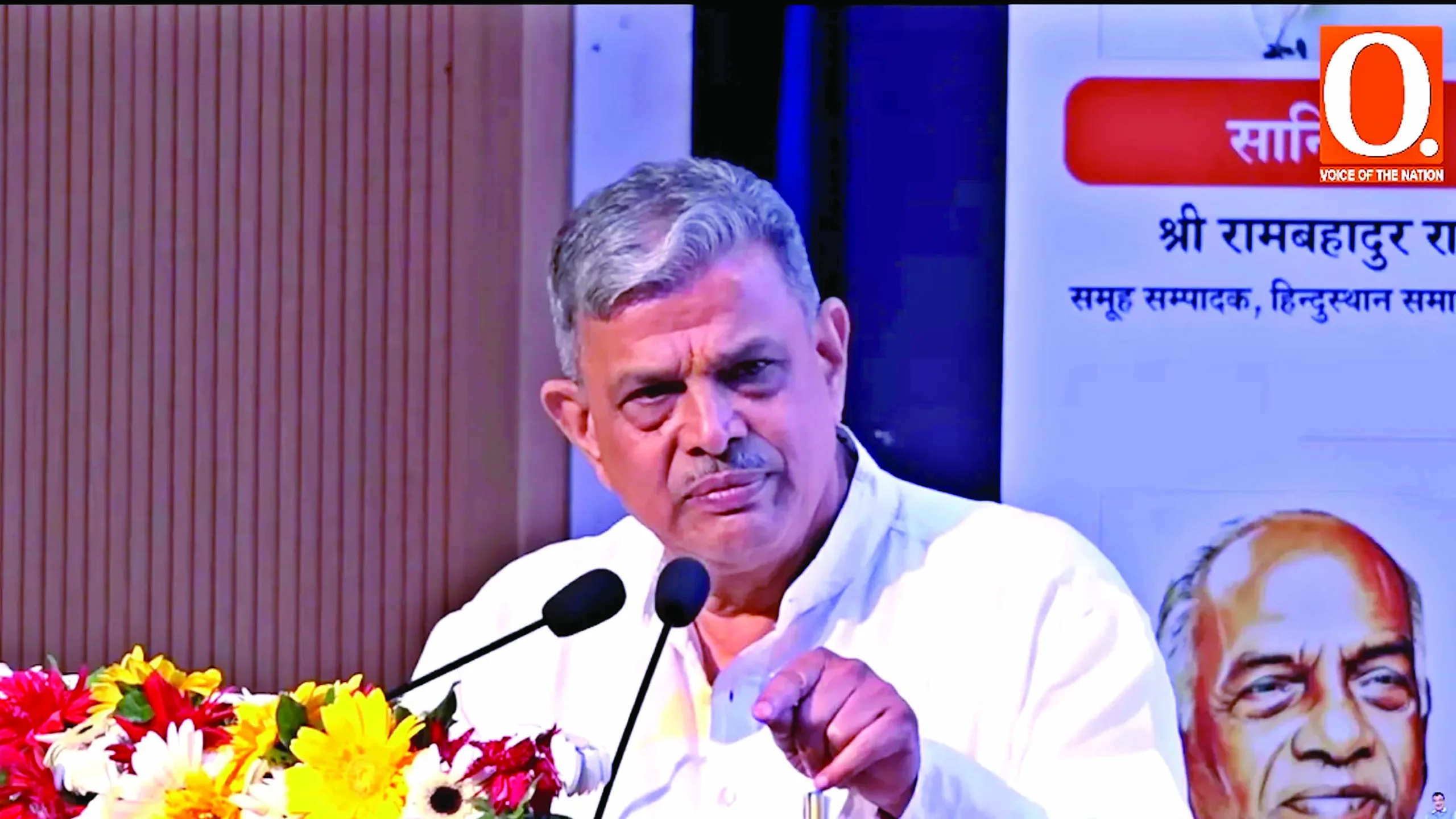
“Fifty years have passed since the Emergency, and many times on June 25 and 26 programmes have been organised discussing the truths of the Emergency, its background, and how it ended. But now, two generations have passed since then, it’s not their fault that they don’t know about it. For us, Emergency is a memory. In a democratic country like Bharat, there was a violation of Fundamental Rights. This is a part of Bharat’s history, and every generation should be told about it. Otherwise, programmes on June 25 and 26 will remain mere memorial days. That is why those who witnessed it talk about its dangers and what all happened”, said Rashtriya Swayamsevak Sangh (RSS) Sarkaryavah Dattatreya Hosabale, while addressing an event organised by Hindustan Samachar News Agency on the 50 years of Emergency on June 26 at the Ambedkar International Centre, New Delhi.
“Indira Gandhi (the then Prime Minister), in order to save her power, compromised with democracy. She lost the ground in three places — first, in the case against Raj Narain where the Court ruled that she could no longer remain an MP; second, in Gujarat, where Janta Front won and Congress lost, meaning a defeat in elections; and third, the mass movement across the country started by youth. In Gujarat, slogans like ‘Jeet Hamari Hai, Ab Bihar Ki Baari Hai’ were raised. Students demanded strict action against corruption, inflation, they also demanded election reform, and study reform. After the Emergency ended, these demands were taken forward by those involved in the movement. Now NEP 2020 has come. In 2000, on the 50th year of the Constitution, reform debates were held across the country. Debates were held on administrative reforms, because the system was a legacy of the British Raj. Seminars were held on electoral reforms and judicial reforms. The purpose of remembering Emergency was to carry forward such issues and these people did it”, he said.
“Emergency Crushed Democracy, but We Fought Back”: PM Modi
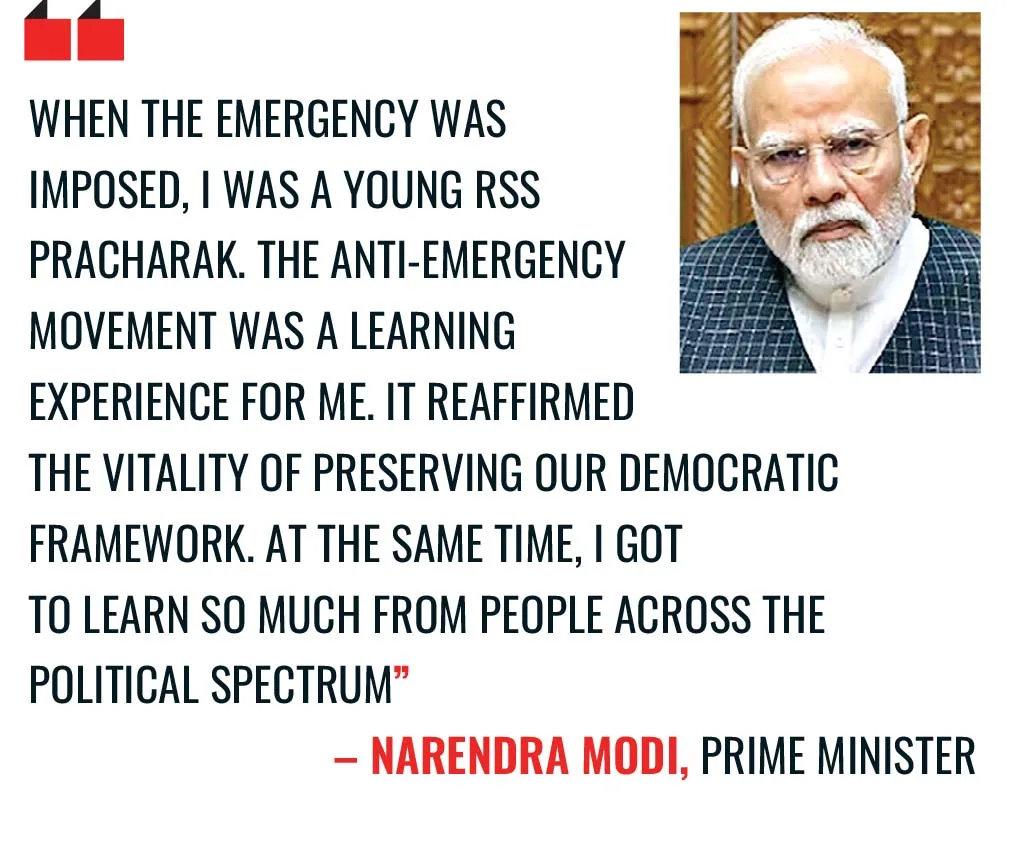
Marking the 50th anniversary of the Emergency, Prime Minister Narendra Modi on June 25, recalled his experiences during the period as a young RSS Pracharak, calling the anti-Emergency movement a significant learning experience that reaffirmed the importance of safeguarding democracy.

Taking to social media platform X, PM Modi wrote, “When the Emergency was imposed, I was a young RSS Pracharak. The anti-Emergency movement was a learning experience for me. It reaffirmed the vitality of preserving our democratic framework. At the same time, I got to learn so much from people across the political spectrum.”
The Prime Minister also welcomed a new book compiled by the BlueKraft Digital Foundation, titled The Emergency Diaries – Years that Forged a Leader, which explores the significant role played by PM Modi during the anti-Emergency movement in India.
He noted that the foreword of the book has been written by former Prime Minister HD Deve Gowda, describing him as a “stalwart of the anti-Emergency movement.”
The book is based on first-person anecdotes from associates, who worked with PM Modi during that time and uses archival material to provide a unique perspective on his formative years. The book delves into PM Modi’s experiences as a young RSS Pracharak during the Emergency, highlighting his contributions to the movement and his commitment to preserving democracy.
Urging families to share their experiences in 1975, the PM wrote in another post, “The Emergency Diaries chronicles my journey during the Emergency years. It brought back many memories from that time. I call upon all those who remember those dark days of the Emergency or those whose families suffered during that time to share their experiences on social media. It will create awareness among the youth of the shameful time from 1975 to 1977.”
Narrating an anecdote, Dattatreya Hosabale said, “When the Emergency was imposed, I was in a shakha in Bangalore. There was no mobile, no TV. Atal ji and Advani ji were also in Bangalore. We went to inform Atal ji that Emergency had been imposed, he had just received the information. The phones at the Government guest house didn’t work. We witnessed Atal ji and Advani ji being arrested right in front of us. SN Mishra told the police, ‘Where is the warrant to arrest us? Don’t teach me. I am a lawmaker.’ The police replied, ‘There is no warrant.’ At that moment, Atal ji said, ‘Now we’ll have to go to Mamaji’s house.’ That was the time when the voice of the people of Bharat was suppressed”.
During Emergency, said Hosabaleji, people faced third-degree torture, lost jobs, were beaten, and suffered atrocities. It was an example of what happens when people in power are driven by ego.
RSS Sarkaryavah further informed that a week before the Emergency was imposed, KR Malkani, the then Editor of Organiser, was called by Intelligence Bureau officers because he had written in his editorial that Emergency might be imposed. “He was asked ‘How did he know about this all’.”
‘Bharat Never Bows to Dictatorship’
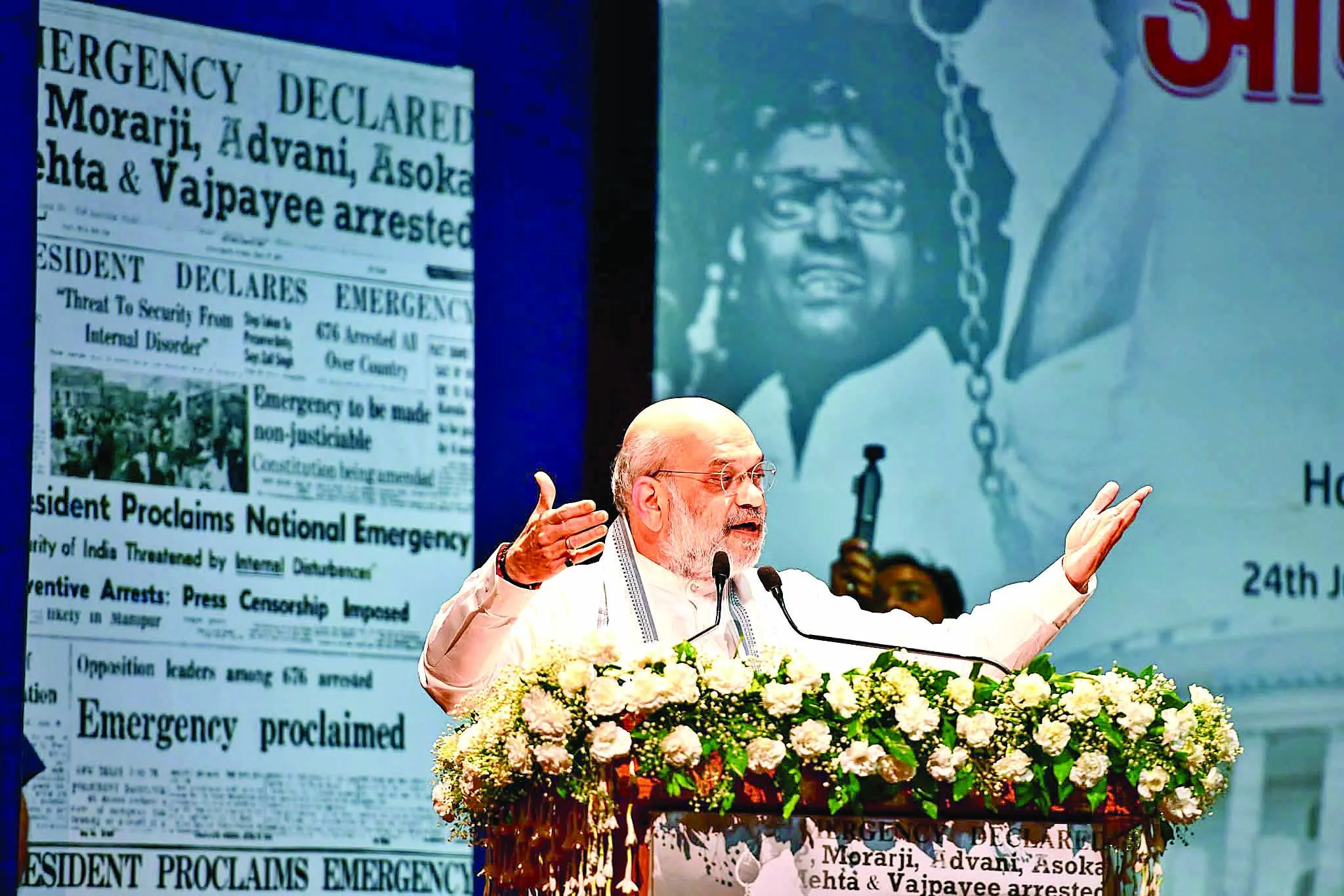
Union Home Minister Amit Shah, on the eve of the Emergency’s 50th anniversary, condemned Congress Party for imposing it in 1975, calling it a dark chapter in India’s democracy. He said June 25 will be observed as Samvidhan Hatya Divas to remind the nation of the dangers of dictatorship.
Condemning Congress for imposing the Emergency in 1975, Amit Shah said, “We overcame a dark chapter like the Emergency because our nation never bows to dictatorship.”
Speaking at a programme marking 50 years of the Emergency at the Pradhanmantri Sangrahalaya in Delhi, Union Home Minister said the Emergency was declared by former Prime Minister Indira Gandhi out of fear that she will not be able to retain power, despite the absence of any external threat or internal unrest. “Today marks the eve of the 50th anniversary of the Emergency. Some may wonder why we are discussing an event that happened so long ago,” Amit Shah said. “When 50 years pass after any national event, its memory often fades from society. But forgetting an event like the Emergency, which shook our democracy, would be harmful to the nation.”
He added, “Today, India is the world’s largest democracy because we overcame that dark chapter. Our nation never bows to dictatorship. The world witnessed the birth of democracy on this soil—India is the mother of democracy.” “It is hard to capture the Emergency in a single sentence, but I define it as the conspiracy to turn a vibrant multi-party democracy into a dictatorship,” he said. Noting that the Modi Government chose to observe June 25 as Samvidhan Hatya Divas to remind the nation of the suffering caused when leaders become dictators, Amit Shah said, “During the Emergency, such drastic changes were made that it was called a ‘mini-Constitution.’ From altering the Preamble to undermining the basic structure, everything was changed. The judiciary became submissive, and democratic rights were suspended. The nation must never forget this. That is why PM Modi declared June 25 as Samvidhan Hatya Divas—to ensure the country remembers the price of dictatorship.”
Pointing out that in 1975, the nation had completed 25 years of Independence, Hosabaleji said, “The crimes the British committed, the same way of running the state continued. The British ruled like masters, and even after Independence, that mentality of ruling the people continued. This mentality must be opposed and that is why the movement happened then”, he said.
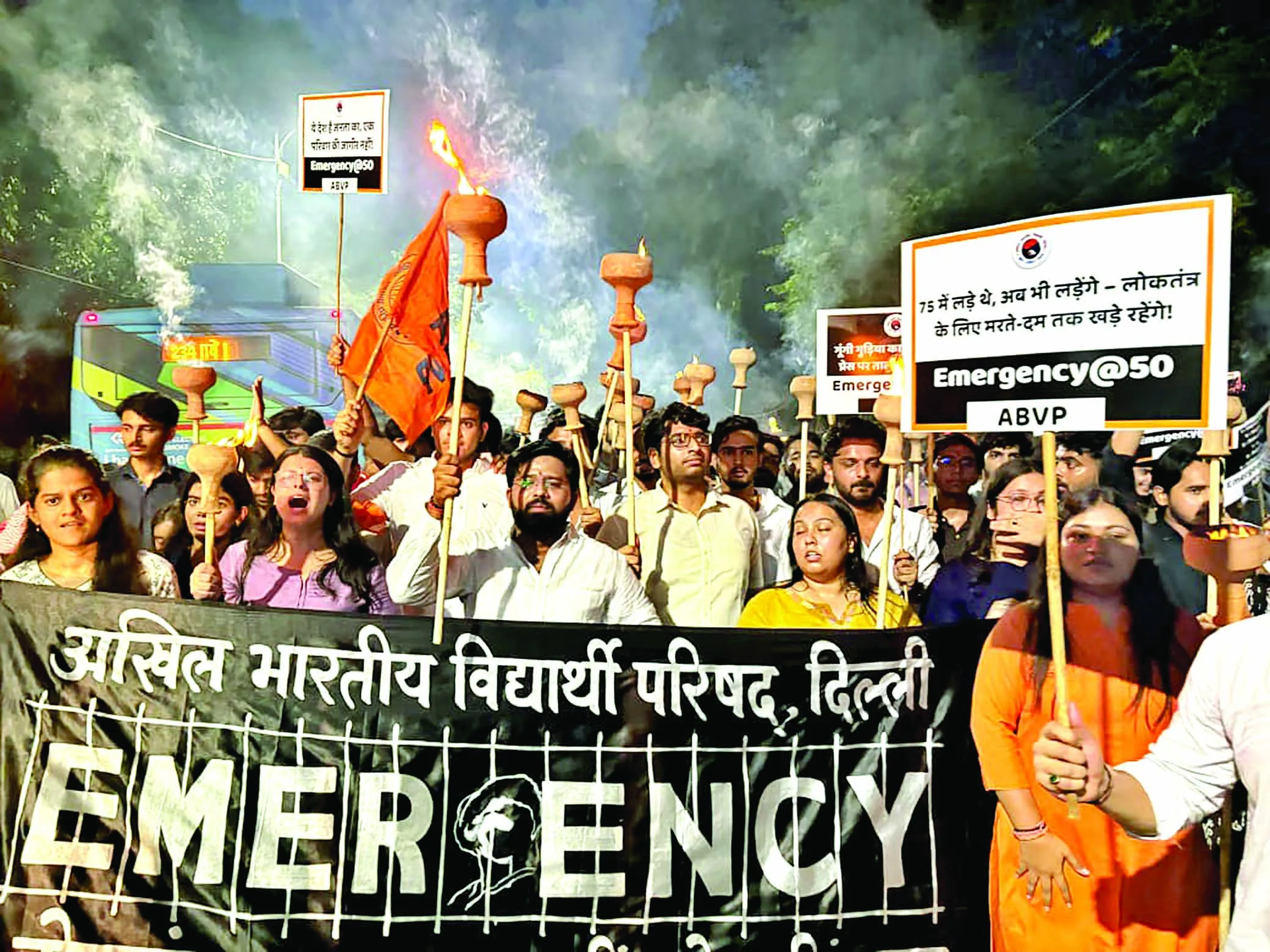
“The coming generations should not only be told about Indira Gandhi but also about the mindset of that time, a political party that does not care about the nation but only wants to rule, that must be conveyed”, he further said. Reflecting on the lessons we must learn from the Emergency, Dattatreya Hosabale said, “It was a test for both the people of Bharat and its democracy”.

Mentioning the mindset of the British Raj, he said, “Churchill had once said that Bharat does not deserve Independence, the people of Bharat are not mature enough for freedom and democracy’. Our Constitution came in 1950, and in 1975, Emergency was imposed, just 25 years later. At that challenging time for democracy, the people of Bharat who believed in democracy proved Churchill wrong and declared that this country does deserve democracy”.
Bharat reeled – under inflation, corruption, and discontent. From Navnirman in Gujarat to Sampoorna Kranti in Bihar, the cry was clear: nothing but a changec
An election challenged. Charges pressed. A judge, a courtroom, and a Prime Minister.
Justice Sinha delivered a quiet thunder Gandhi – held guilty of fraud, and disqualified.
The Supreme Leader turned to the Court – Supreme A conditional stay was granted —
and through that narrow window, the lamp of democracy was blown out.
On June 25, under cover of night, Emergency declared.
Cabinet cornered. Debates disallowed. Courtiers’ counsel and PM’s diktat.
President Ahmed affixed the seal on death warrant of democracy.
Democracy dismantled – not with force, but with ink.
Rights suspended. Lakhs imprisoned.
JP. Morarji. Vajpayee. Advani.
Artists and authors, poets and protestors, students and satyagrahis — all met
the same fate.
Bharat became a republic in chains.
With the press silenced and the custodian crippled, the Constitution was murdered —
spirit strangled and form mutilated.
Sterilisations enforced. Voices assaulted.
And a nation muted – people suffered in silence.
But the people did not forgive – and they did not forget.
In 1977, Indira fell – to the man she once dismissed.
The Janata Party, wings forged in resistance, rose like a phoenix and claimed the
people’s mandate.
The 44th Amendment tried to restore – what the 42nd had snatched.
Haunted by ADM Jabalpur, the judiciary repented – regaining its moral compass, though the scars remained.
Power had overreached. Institutions had obeyed. The Emergency ended. Its architecture remained. And memory became – the last form of resistance.
History warns. The Constitution educates. Conscience remembers — lest we forget.
Emergency does not return – with sirens or declarations, but in whispers and collusions,
masked as necessity, framed as national interest, wrapped in legalese, disguised as order.
Lest we forget: neither a riot nor a coup – just a signature, a silence, and a nation asleep.
To murder the Constitution, no army is needed – only apathy.
Redemption is possible – but always costly. And “We, the People,” must pay the price: to remember, to resist, and to rebuild.
Because if we do not rise in time – the Constitution will not fall.
It risks being erased.
Quietly. Legally. Completely.
— ADITYA KASHYAP
Referring to Rahul Gandhi, Dattatreya Hosabale said, “Those who imposed Emergency roam around with copies of the Constitution, but they have not apologised till today. They must apologise. One lakh people went to jail. Sixty lakh were forcibly sterilised. Judiciary was weakened. If their ancestors did this, then they must apologise in their name”.
Hosabaleji informed that during the Emergency, two words ‘Secular’ and ‘Socialist’ were added to the Constitution, which were not part of the original Preamble. “Later, these words were not removed, and there was no debate on this. Debates whether these words should remain or not must be held. These two words were not in Dr Ambedkar’s Constitution. During the Emergency, the country had no functioning Parliament, no rights, no judiciary and yet these two words were added. That is why this matter must be discussed”, he said.











Comments