50 years since Emergency: The murder of the constitution
December 5, 2025
  • Read Ecopy
  • Circulation
  • Advertise
  • Careers
  • About Us
  • Contact Us
Android AppiPhone AppArattai
Organiser
  • ‌
  • Bharat
    • Assam
    • Bihar
    • Chhattisgarh
    • Jharkhand
    • Maharashtra
    • View All States
  • World
    • Asia
    • Europe
    • North America
    • South America
    • Africa
    • Australia
  • Editorial
  • International
  • Opinion
  • RSS @ 100
  • More
    • Op Sindoor
    • Analysis
    • Sports
    • Defence
    • Politics
    • Business
    • Economy
    • Culture
    • Special Report
    • Sci & Tech
    • Entertainment
    • G20
    • Azadi Ka Amrit Mahotsav
    • Vocal4Local
    • Web Stories
    • Education
    • Employment
    • Books
    • Interviews
    • Travel
    • Law
    • Health
    • Obituary
  • Subscribe
    • Subscribe Print Edition
    • Subscribe Ecopy
    • Read Ecopy
  • ‌
  • Bharat
    • Assam
    • Bihar
    • Chhattisgarh
    • Jharkhand
    • Maharashtra
    • View All States
  • World
    • Asia
    • Europe
    • North America
    • South America
    • Africa
    • Australia
  • Editorial
  • International
  • Opinion
  • RSS @ 100
  • More
    • Op Sindoor
    • Analysis
    • Sports
    • Defence
    • Politics
    • Business
    • Economy
    • Culture
    • Special Report
    • Sci & Tech
    • Entertainment
    • G20
    • Azadi Ka Amrit Mahotsav
    • Vocal4Local
    • Web Stories
    • Education
    • Employment
    • Books
    • Interviews
    • Travel
    • Law
    • Health
    • Obituary
  • Subscribe
    • Subscribe Print Edition
    • Subscribe Ecopy
    • Read Ecopy
Organiser
  • Home
  • Bharat
  • World
  • Operation Sindoor
  • Editorial
  • Analysis
  • Opinion
  • Culture
  • Defence
  • International Edition
  • RSS @ 100
  • Magazine
  • Read Ecopy
Home Bharat

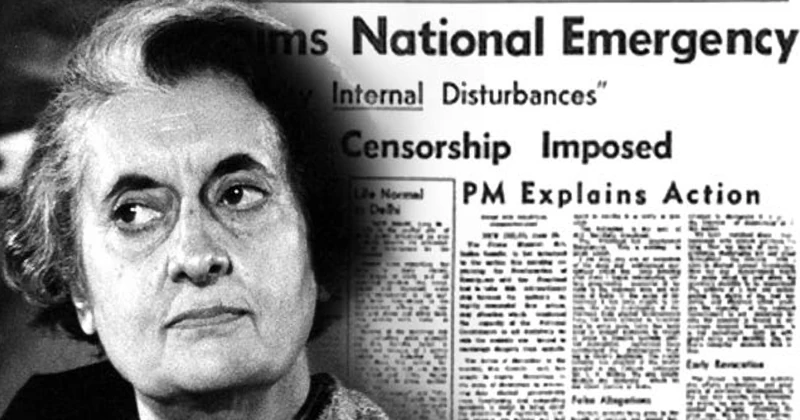
Fifty years since the murder of the Constitution: The background of the emergency

In the mid-1970s, India faced severe economic hardship, rampant corruption, and growing public unrest, culminating in widespread protests led by Jayaprakash Narayan after Indira Gandhi was disqualified by the Allahabad High Court for electoral malpractice

Adv Karan ThakurAdv Karan Thakur
Jun 29, 2025, 09:00 am IST
in Bharat, Opinion
Follow on Google News
FacebookTwitterWhatsAppTelegramEmail

It was a difficult time for the nation-very difficult. In 1971, Indira Gandhi came to power with the popular slogan “Garibi Hatao” (Remove Poverty). However, the country was in a dire state, plagued by corruption.

At that time, India was considered a poor country. In 1975, our GDP growth rate was just 1.2 per cent. Despite being the second most populous country in the world, we ranked 15th in economic output.

India’s foreign exchange reserves were only $1.3 billion (in comparison, they now exceed $640 billion).

Inflation was at its peak, with a rate of over 20 per cent. More than 50 per cent of India’s population lives below the poverty line. Unemployment was rampant. Industrial growth was negligible.

Except for one or two states, the Congress party ruled the entire country. Under its regime, corruption reached an all-time high.

In 1971, a man named Rustam Nagarwala impersonated Indira Gandhi’s voice over the phone and withdrew Rs 6 million in cash from a State Bank of India branch in Delhi. Although Nagarwala was caught, no one ever found out where the Rs 6 million went, and later, he died mysteriously in jail.

In 1975, the winter session of Parliament was dominated by a scandal involving Congress MP Tulmohan Ram, who had allegedly committed a major fraud related to import-export licenses.

Tulmohan Ram was said to be a close associate of the then Railway Minister Lalit Narayan Mishra, who allegedly managed all of the party’s “financial dealings.” Immediately after the Tulmohan Ram scandal broke, on January 3 1975, Union Minister Lalit Narayan Mishra was assassinated.

In short, the ruling Congress party was setting new benchmarks of corruption. Naturally, this triggered public outrage. The government appeared indifferent, taking no concrete steps to fix the ailing economy. Strikes and protests began rising across the country. Students in Gujarat initiated the Navnirman Movement against the corrupt government system. Their demand was: “Dismiss the corrupt Chiman Patel government.” The slogan “Chiman Chor Hatao” (Remove Chiman, the thief) gained immense popularity in Gujarat.

As student protests intensified, Morarji Desai announced an indefinite fast to pressure the government to dismiss the Gujarat administration. Eventually, Indira Gandhi had to bow. The Gujarat Assembly was dissolved, and fresh elections were announced. Opposition parties, including the Jan Sangh, the Organisation Congress, and the Praja Socialist Party, united to form the Janata Morcha (People’s Front) and contested the elections under its banner.

History was made..!

For the first time, in opposition to Congress, a large number of opposition legislators were elected. Out of 182 assembly seats, Janata Morcha won 86, with support from 8 independents. In June 1975, for the first time, a Janata Morcha government was formed in Gujarat under Babubhai Patel. This was a massive blow to Indira Gandhi. A similar movement was brewing in Bihar.

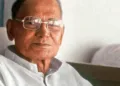
At the students’ request, Jayaprakash Narayan accepted leadership of the movement. The anti-corruption Navnirman Movement began to spread across the country. People began calling JP “Loknayak” (People’s Hero).

And then came June 12.

In Rae Bareli, Raj Narain, a rival candidate, filed a case in court accusing Indira Gandhi of electoral malpractice.

On June 12, Justice Jagmohan Sinha of the Allahabad High Court delivered his historic verdict against Indira Gandhi. He nullified her election under Section 123(7) of the Representation of the People Act and disqualified her from contesting elections for 6 years. This was an unprecedented decision. For the first time since independence, a sitting Prime Minister was disqualified for corruption. The verdict amplified public opposition.

Youths suffering from unemployment, masses oppressed by Poverty, and people frustrated with corruption all started demanding her resignation. The law had declared her ineligible for elections for six years. Naturally, the public expected her to resign from office. Morality also demanded it. But Indira Gandhi had no intention of resigning. Sanjay Gandhi was strongly opposed to her resignation.

The Prime Minister’s residence decided she wouldn’t step down. R.K. Dhawan took charge of managing all internal affairs. R.K. Dhawan, originally a clerk in the PMO, had become one of Indira’s most trusted aides and was officially her secretary. Along with him were Haryana CM Bansi Lal and Congress President Devkant Barua.
These individuals were Sanjay and Indira’s loyal inner circle. Their collective opinion was that not only should Indira Gandhi not resign, but strict action should also be taken against the opposition.

From June 12, work began on executing these plans. In truth, the plan to crush opposition was not a new one. Following the powerful Railway Strike led by George Fernandes in 1974, such plans had already been formulated.

At the time, a nationalist English newspaper called “Motherland” was published from Delhi.

On January 30, 1975, Motherland published a report expressing concern that the government planned to ban the RSS and arrest Jayaprakash Narayan.

On the same day, the Indian Express also published similar news. That meant the government had already planned a crackdown on dissenters. A message went out from 1 Safdarjung Road (PM’s residence) across the country to prepare for a major operation. Except for Gujarat and Tamil Nadu, almost all Chief Ministers were from Congress. They were instructed to prepare lists of individuals to be arrested.

While Congress was preparing to crush the opposition, nearly all opposition parties (except Communists), under the leadership of JP, were planning a mass movement demanding Indira Gandhi’s resignation.
Topics: GDP GrowthEmergency 1975Jayaprakash NarayanRae BareliConstitution
ShareTweetSendShareSend
✮ Subscribe Organiser YouTube Channel. ✮
✮ Join Organiser's WhatsApp channel for Nationalist views beyond the news. ✮
Previous News

When Guruji Golwalkar visited Kashmir & met Maharaja Hari Singh

Next News

Kerala: UK finally accepts Indian advice as F-35 moves to Air India hangar; Parking fee undecided, satellite watch on

Related News

CEA Nageswaran

India to exceed 6.8% GDP growth in FY26, says CEA Nageswaran; Private capex, FDI inflows drive momentum

Jay Prakash Narayan Birth Anniversary: An architect of total revolution who redefined India’s fight for justice

Sangh and Swadeshi: Epitome of selfhood

Jayaprakash Narayan Death Anniversary: Remembering ‘Lok Nayak’ who led total revolution & defied power

Justice K T Thomas

Kerala: RSS stands for the protection of democracy, says Justice K.T. Thomas, former Supreme Court judge

Attack on National Emblem at Hazratbal Shrine

Load More

Comments

The comments posted here/below/in the given space are not on behalf of Organiser. The person posting the comment will be in sole ownership of its responsibility. According to the central government's IT rules, obscene or offensive statement made against a person, religion, community or nation is a punishable offense, and legal action would be taken against people who indulge in such activities.

Latest News

PM Modi presents Putin with Bhagavad Gita, chess set, and silver horse

Cultural ties strengthened: PM Modi presents Putin with Bhagavad Gita, chess set, and silver horse

Image for representational purpose only, Courtesy Vocal Media

Bihar to get ‘Special Economic Zones’ in Buxar and West Champaran

Thirupparankundram Karthigai Deepam utsav

Andhra Pradesh: AP Dy CM Pawan Kalyan reacts to Thirupparankundram row, flags concern over religious rights of Hindus

23rd India-Russia Annual Summit

India-Russia Summit heralds new chapter in time-tested ties: Inks MoUs in economic, defence, tourism & education

DGCA orders probe into IndiGo flight disruptions; Committee to report in 15 days

BJYM leader Shyamraj with Janaki

Kerala: Widow of BJP worker murdered in 1995 steps into electoral battle after three decades at Valancherry

Russian Sber bank has unveiled access to its retail investors to the Indian stock market by etching its mutual fund to Nifty50

Scripting economic bonhomie: Russian investors gain access to Indian stocks, Sber unveils Nifty50 pegged mutual funds

Petitioner S Vignesh Shishir speaking to the reporters about the Rahul Gandhi UK citizenship case outside the Raebareli court

Rahul Gandhi UK Citizenship Case: Congress supporters create ruckus in court; Foreign visit details shared with judge

(L) Kerala High Court (R) Bouncers in Trippoonithura temple

Kerala: HC slams CPM-controlled Kochi Devaswom Board for deploying bouncers for crowd management during festival

Fact Check: Rahul Gandhi false claim about govt blocking his meet with Russian President Putin exposed; MEA clears air

Load More
  • Privacy
  • Terms
  • Cookie Policy
  • Refund and Cancellation
  • Delivery and Shipping

© Bharat Prakashan (Delhi) Limited.
Tech-enabled by Ananthapuri Technologies

  • Home
  • Search Organiser
  • Bharat
    • Assam
    • Bihar
    • Chhattisgarh
    • Jharkhand
    • Maharashtra
    • View All States
  • World
    • Asia
    • Africa
    • North America
    • South America
    • Europe
    • Australia
  • Editorial
  • Operation Sindoor
  • Opinion
  • Analysis
  • Defence
  • Culture
  • Sports
  • Business
  • RSS @ 100
  • Entertainment
  • More ..
    • Sci & Tech
    • Vocal4Local
    • Special Report
    • Education
    • Employment
    • Books
    • Interviews
    • Travel
    • Health
    • Politics
    • Law
    • Economy
    • Obituary
  • Subscribe Magazine
  • Read Ecopy
  • Advertise
  • Circulation
  • Careers
  • About Us
  • Contact Us
  • Policies & Terms
    • Privacy Policy
    • Cookie Policy
    • Refund and Cancellation
    • Terms of Use

© Bharat Prakashan (Delhi) Limited.
Tech-enabled by Ananthapuri Technologies