





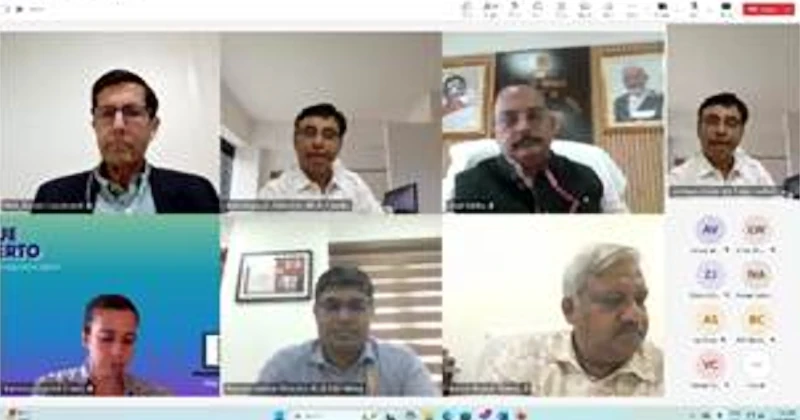
India has taken a leading role in fostering digital collaboration among BRICS nations, hosting a Virtual Capacity Building Session on Digital Transformation under the aegis of the BRICS Information and Communications Technology (ICT) Working Group. Organised by the Department of Telecommunications (DoT) through the National Communications Academy – Technology (NCA-T) in Ghaziabad, the event convened digital thought leaders from Brazil, Russia, India, China, and South Africa to address shared challenges, exchange best practices, and chart a path for robust ICT cooperation.
The session, held on May 23, 2025, was inaugurated by Daniel Cavalcanti, BRICS Chair, and Atul Sinha, Director General of NCA-T, India. In his opening address, Cavalcanti praised India’s leadership in orchestrating the event, emphasising its significance in advancing cooperation in critical areas such as mobile security, cyber resilience, digital infrastructure, and digital twin technologies. Sinha underscored India’s commitment to capacity building through collaboration, advocating for the co-creation of scalable, secure technologies and partnerships to empower citizens across BRICS nations. The event featured four thematic sessions, each addressing pressing challenges and opportunities in the digital domain.
Session I: Empowering Mobile Users through Sanchar Saathi
The first session highlighted India’s flagship Sanchar Saathi initiative, a citizen-centric program designed to protect mobile users from fraud, enhance transparency, and ensure equitable access to mobile services. Indian representatives showcased how Sanchar Saathi has strengthened trust in digital communications by implementing robust regulatory frameworks. The session emphasised the importance of inclusive policies that prioritise user empowerment and foster confidence in mobile ecosystems, setting a model for other BRICS nations to emulate.
Session II: Strengthening Cyber Resilience
The second session, co-led by India and Brazil, focused on national strategies for cyber resilience in the face of evolving digital threats. Presentations highlighted the need for preparedness, rapid response mechanisms, and cross-border cooperation to counter cyberattacks. Indian experts shared insights into the country’s proactive measures to safeguard digital infrastructure, while Brazil outlined its approach to building resilient cyber frameworks. The discussions underscored the importance of collaborative efforts to address global cybersecurity challenges.
Session III: Building Digital Public Infrastructure (DPI)
The third session explored the development of secure, inclusive, and interoperable Digital Public Infrastructure (DPI). India presented AADHAAR, its transformative identity-based platform, which has revolutionised public service delivery by enabling digital inclusion for millions. Chinese representatives shared their experiences in building digital infrastructure, highlighting parallels and unique approaches. The session positioned DPI as a cornerstone for improving governance efficiency and expanding service outreach, with BRICS nations recognising its potential to drive inclusive growth.
Session IV: Sangam Digital Twin – A Vision for Future Infrastructure
The final session introduced India’s ambitious Sangam Digital Twin initiative, a pioneering AI-native, federated platform designed to transform infrastructure planning and real-time governance. By leveraging predictive simulations and data-driven insights, Sangam aims to optimise public infrastructure management. China also shared its advancements in digital twin technology, sparking discussions on the role of predictive analytics in shaping future-ready governance models. The session highlighted the transformative potential of digital twins in addressing complex urban and infrastructural challenges.
Closing Remarks and Future Outlook
In the closing session, Avinash Agarwal, Deputy Director General of the International Relations Division, DoT, and Daniel Cavalcanti reaffirmed the BRICS nations’ commitment to mutual learning and collaborative digital development. They emphasised the importance of sharing national success stories to identify scalable solutions and strengthen strategic alliances.
The Virtual Capacity Building Session marked a significant milestone in BRICS’ digital cooperation, providing a platform for knowledge exchange and innovation. The outcomes are expected to lay the groundwork for resilient, inclusive, and future-ready digital societies across the BRICS bloc. India’s leadership in showcasing initiatives like Sanchar Saathi, AADHAAR, and Sangam Digital Twin has positioned it as a trailblazer in citizen-centric ICT innovation, setting a benchmark for global digital transformation efforts.
















Comments