





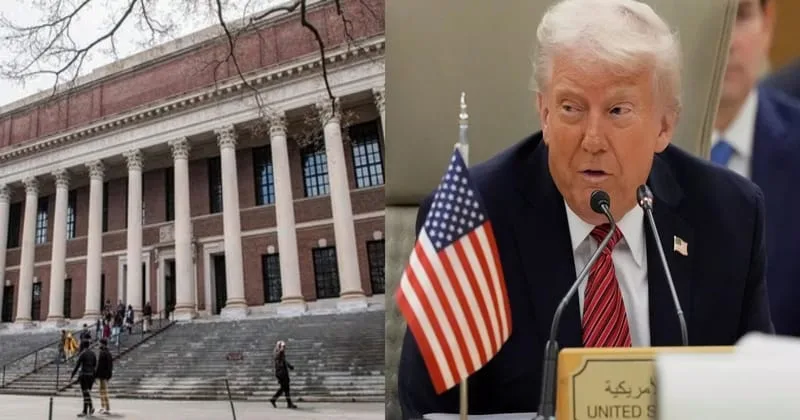
In a dramatic escalation of tensions between the Trump administration and one of America’s academic institutions, the Department of Homeland Security (DHS) has announced a ban on Harvard University enrolling foreign students for the 2025–26 academic year. The decision, effective immediately, stems from what the administration describes as Harvard’s failure to adequately address rising antisemitism and pro-Hamas sentiments on campus, which officials argue have compromised student safety.
The announcement was made by the Secretary of Homeland Security during a press briefing on May 22, where the official cited an ongoing DHS investigation into Harvard’s handling of campus safety and compliance with federal regulations.
“Harvard University has repeatedly failed to take decisive action to curb antisemitic activities and ensure a safe environment for all students,” the secretary stated. “This ban is a necessary measure to protect national interests and hold institutions accountable.”
72-Hour Ultimatum and Consequences
The Trump administration issued a 72-hour ultimatum to Harvard, demanding immediate steps to address the alleged issues of antisemitism and pro-Hamas sentiments. According to DHS officials, the university was warned that failure to comply would result in the loss of its ability to participate in the F-1 visa program, which allows international students to study in the United States.
Harvard’s response, described by administration sources as inadequate, led to the unprecedented decision to bar the university from enrolling new foreign students for the upcoming academic year.
Current international students at Harvard, numbering in the thousands, have been instructed to transfer to other US institutions to continue their studies. The DHS has emphasised that this directive is non-negotiable and has provided no timeline for when Harvard might regain its visa program eligibility. The ban effectively halts Harvard’s ability to admit new international students, a significant blow to the university’s global reputation and financial stability, given that international students often pay full tuition.
Broader Warning to Universities
The Trump administration has also issued a stern warning to other US colleges and universities, signalling that similar consequences await institutions that fail to comply with federal expectations regarding campus safety and the suppression of antisemitic activities. “This is not an isolated action,” the DHS secretary said.
“All universities are on notice: failure to address hate and ensure a secure environment will result in severe repercussions.”
The administration’s move is part of a broader policy agenda under President Donald Trump to crack down on what he has repeatedly called “unacceptable” levels of antisemitism in higher education. Sources within the administration indicate that the DHS investigation into Harvard is part of a larger review of multiple institutions, though no other universities have been publicly named as targets at this time.
Harvard has condemned the decision as “unlawful,” calling it a significant threat to its academic and research mission. The university warned that the action undermines not only its own standing but also the integrity of the entire US higher education system.
Here’s what you need to know:
What action did the Trump administration take against Harvard?
The administration revoked Harvard’s certification under the Student and Exchange Visitor Program (SEVP). According to the Department of Homeland Security, this means Harvard is no longer permitted to enroll international students, and current foreign students must either transfer to another institution or risk losing their legal status in the US.
Why did the government take this action?
Homeland Security Secretary Kristi Noem stated that the decision was made because Harvard failed to submit required records concerning its international students. She also accused the university of “fostering an unsafe campus environment,” claiming it is hostile to Jewish students, promotes pro-Hamas sentiment, and enforces what she described as racially biased diversity, equity, and inclusion (DEI) policies.
Can Harvard regain its ability to enroll international students?
Yes. Homeland Security Secretary Kristi Noem stated that Harvard can restore its SEVP certification if it complies within 72 hours by submitting extensive documentation. This includes disciplinary records of international students as well as any audio and video recordings related to protest activities on campus.
What happens to the international students currently enrolled at Harvard?
According to the government, students graduating this semester will be allowed to complete their studies. However, those who have not yet finished their degrees must transfer to another institution or risk losing their legal status to remain in the United States.
Has Harvard responded?
Yes. Harvard has denounced the decision as “unlawful” and stated that it “undermines Harvard’s academic and research mission.” The university also noted it is actively working to support and guide the affected international students.
Is this action part of a broader trend?
Yes. The move is the latest in a series of confrontations between the Trump administration and Harvard. Previous actions have included freezing $3 billion in federal research grants, cutting funding to various programs, and public attacks on the university’s leadership. Homeland Security Secretary Kristi Noem warned, “This should serve as a wake-up call to every other university—get your act together.”
What legal authority does the government have in this matter?
The Department of Homeland Security holds the authority to certify or revoke certification of universities under the Student and Exchange Visitor Program (SEVP). Institutions are required to meet specific legal and operational standards. Homeland Security Secretary Kristi Noem emphasised, “It is a privilege, not a right, for universities to enroll foreign students.”
What’s at stake for other universities?
Noem confirmed that other institutions could face similar action, citing Columbia University as a potential next target. “Absolutely, we are” considering this for others, she stated.
What happens next?
Harvard has previously taken legal action against similar government measures, and experts anticipate that this latest move will also be challenged in court. Legal analysts note that recent federal rulings have affirmed that any changes to student visa policies must adhere to established legal procedures, making the administration’s decision vulnerable to judicial review.
The DHS has confirmed that its investigation into Harvard remains active, with officials reviewing the university’s compliance with federal regulations and its handling of campus safety concerns. While no specific timeline for the investigation’s conclusion was provided, the administration has made clear that Harvard’s reinstatement into the visa program will depend on its ability to demonstrate “substantial and verifiable” improvements in addressing antisemitism and ensuring a safe campus environment.













Comments