





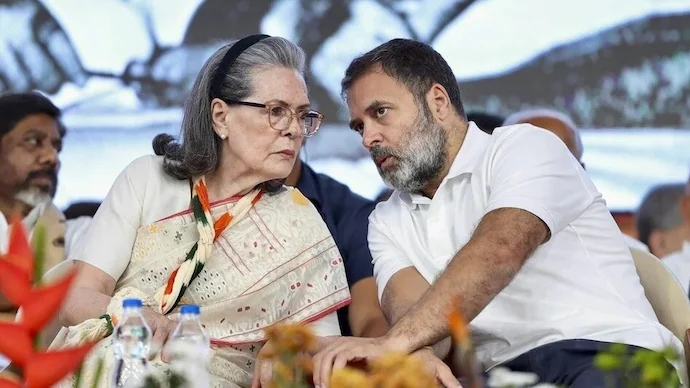
In the National Herald case, the Enforcement Directorate (ED) has levelled serious charges against former Congress president Sonia Gandhi, her son Rahul Gandhi, and others, alleging money laundering and the generation of proceeds of crime amounting to Rs 998 crore. The agency claims that the Gandhis, through their control of the company Young Indian, orchestrated a scheme to divert public funds for personal gain, defrauding shareholders of Associated Journals Ltd (AJL) and donors of the All India Congress Committee (AICC).
The case, which has sparked intense political debate, is set to be heard on a day-to-day basis from July 2 to July 8, 2025, as per the special court’s directive.
ED’s Allegations: A Web of Financial Misconduct
According to an exclusive report by India Today, the ED’s prosecution complaint, filed under Sections 44 and 45 of the Prevention of Money Laundering Act (PMLA), names seven accused individuals and entities, including Sonia Gandhi, Rahul Gandhi, Congress loyalist Sam Pitroda, Suman Dubey, and two firms, including Young Indian.
The agency alleges that Young Indian, in which Sonia and Rahul Gandhi hold a combined 76 per cent stake, was established as a “sham entity” and used as a special purpose vehicle to gain control over AJL’s assets, valued at approximately Rs 2,000 crore.
The ED contends that the Gandhis abused their positions within the Congress party to siphon off funds through Young Indian, describing the company as “a cloak to convert public money to personal use.”
The agency’s complaint highlights that Young Indian acquired control over AJL’s assets, including valuable real estate, by paying a mere Rs 50 lakh, while gaining access to Rs 90.25 crore in assets. The ED further alleges that the accused acted in “consortium with each other to achieve the said nefarious purpose,” generating proceeds of crime that included Rs 142 crore in rental income.
Key Allegations Against Sonia and Rahul Gandhi
The ED’s investigation points to several specific allegations against Sonia and Rahul Gandhi:
Diversion of Public Funds: The agency claims that Sonia Gandhi, as interim Congress president and a director of Young Indian, was complicit in the diversion of public funds through the company. Despite her claim of not being involved in Young Indian’s day-to-day affairs, the ED notes her simultaneous role as AICC president and her 38 per cent stake in the company.
Rahul Gandhi’s Active Role: The ED alleges that Rahul Gandhi, as the then-General Secretary of the AICC, was actively involved in the transactions, which could not have been executed without his knowledge and participation. The agency points out that no steps were taken by AICC office-bearers, including Rahul, to recover a loan extended to AJL, despite the latter’s ownership of valuable, income-generating assets.
Bogus Donations: According to the ED, Young Indian received approximately Rs 18.12 crore in donations and contributions during 2017–18, which the agency deems “not genuine.” These funds, the ED claims, were used to clear Young Indian’s income tax liabilities, effectively shielding Sonia and Rahul Gandhi, the company’s majority shareholders, from financial obligations.
Shifting Blame: The ED has accused the Gandhis of obstructing the investigation by repeatedly attributing all decisions to the late Motilal Vora, the former Congress treasurer. The agency views this as a deliberate attempt to evade accountability by shifting blame to a deceased individual.
Control Over Young Indian: The ED argues that the Gandhis’ dominance over Young Indian is evident from the fact that, even after the deaths of two shareholders in 2020 and 2021, their shares remain unallotted, reinforcing Sonia and Rahul’s control over the company.
AJL’s Role and Alleged Irregularities
The ED’s complaint also sheds light on AJL, the publisher of the National Herald newspaper, which is at the heart of the case. The agency alleges that AJL received Rs 29.45 crore in advertising revenue between 2017–18 and 2020–21, but investigations revealed that payments listed in AJL’s advertising ledgers were made under instructions from Congress leaders.
Some individuals reportedly claimed these payments were made to secure “protection” from party leaders in their business dealings.
Furthermore, the ED cites a letter from AJL to Motilal Vora, stating that the company could not repay its loan due to the suspension of its publication. Despite this, additional loans were sanctioned, raising questions about the financial management of AJL and the role of Congress leaders in these decisions. The ED’s evidence includes seized documents and Rs 51 lakh in cash, which it claims further substantiates its allegations.
Legal Proceedings and Court Observations
During a recent hearing, Additional Solicitor General (ASG) Raju, representing the ED, emphasised that the offence of money laundering is a “continuing activity.” He argued that the accused, including Sonia and Rahul Gandhi, continued to enjoy the proceeds of crime until the attachment of properties in November 2023. Raju also clarified that the complaint encompasses not only the properties obtained from the scheduled offence but also any criminal activity related to the proceeds of crime.
The special judge, presiding over the case in an MP/MLA court, scheduled day-to-day hearings from July 2 to July 8, 2025, to address the ED’s prosecution complaint.
The court noted the voluminous documentation, exceeding 5,000 pages, prompting defence counsel, including senior advocate Abhishek Manu Singhvi, to request a July hearing. The judge directed that the ED’s arguments would be heard first, followed by submissions from the defence.
When asked about the representation of Sam Pitroda, one of the accused, ASG Raju informed the court that proceedings would continue even in his absence if he was not represented.
Broader Implications
The National Herald case has long been a contentious issue, with significant political and legal ramifications. The ED’s allegations have intensified scrutiny on the Gandhi family, raising questions about the use of public funds and the transparency of Congress-affiliated entities.














Comments