





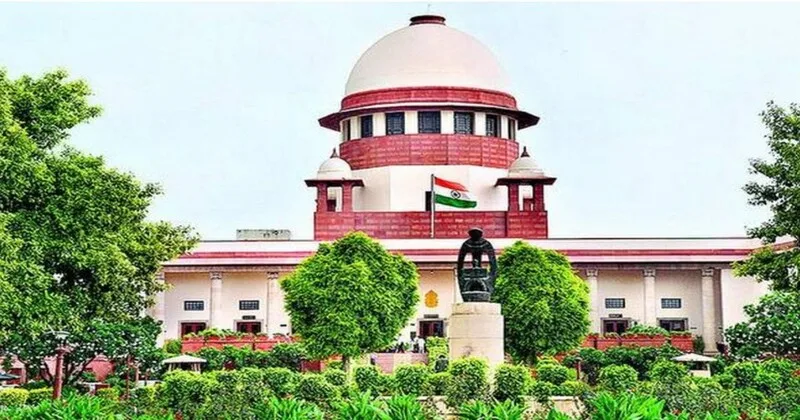
The Supreme Court on May 16 refused to stay the deportation of Rohingyas, pulling up the petitioners for making unverified and dramatic claims. A bench comprising Justices Surya Kant and N Kotiswar Singh sharply questioned the authenticity of the materials presented and accused the petitioners of concocting a “beautifully crafted story” without credible evidence.
The case, filed by petitioner Mohd Ismail and others, alleged that 43 Rohingya refugees — including women, children, the elderly, and those with serious health conditions — were forcibly deported by the Indian government. According to their counsel, Senior Advocate Colin Gonsalves, the refugees were taken to the Andaman Islands and then allegedly thrown into international waters near Myanmar, leaving them stranded in a war zone.
“This is a very fanciful story,” remarked Justice Kant. “Every day you come with a new narrative. Only because we adjourn one matter, you take full liberty. Please show us concrete material.”
When Gonsalves stated that the information came via a phone call from Myanmar and that a tape recording was available, Justice Kant shot back: “Who has verified this? There is a well-known law of evidence in this country.”
The Court further pressed Gonsalves to explain how the petitioner, who claimed his brother was deported, could establish facts about events that allegedly occurred mid-sea. “Unless a person is standing there and watching, who can verify this on earth? Unless this gentleman had satellite recording?” asked Justice Kant in disbelief.
The bench ultimately refused to stay further deportations, noting that similar relief had already been denied in previous hearings.
“Every day you keep collecting from social media…” Justice Kant remarked.
Gonsalves denied the claim, stating that the petitioners and their counsel were in direct contact with the Rohingya community. “We are in touch with the refugees. Today, there are 8,000 in the country with UNHCR cards. Are the 600 in Delhi going to be put in a war zone?” he asked.
A three-judge bench led by Justice Kant had earlier, on 8 May, observed that if the Rohingyas did not have a legal right to remain in India, they would have to be deported in accordance with the law.
“If they have a right to stay here, that should be acknowledged, and if they don’t, then they will follow the procedure and be deported as per law,” the judge had said.
On that date, it was brought to the Court’s notice that certain Rohingya refugees had been deported “overnight” by authorities on May 7.
Solicitor General Tushar Mehta, appearing for the Centre, reiterated that India is not a signatory to the UN Refugee Convention and emphasised that deportation decisions would be made in accordance with Indian law. He cited the Supreme Court’s order dated 8 April 2021, which held that while Articles 14 and 21 of the Constitution apply to all persons, the right against deportation is not guaranteed unless accompanied by the right to reside under Article 19(1)(e), which is restricted to citizens.
The Court reaffirmed that refugees who are found to be foreigners under Indian law must be dealt with under the Foreigners Act, irrespective of their possession of UNHCR identity cards.
Colin Gonsalves, a well-known human rights advocate and founder of the Human Rights Law Network (HRLN) linked to global organisations like the Open Society Foundation of George Soro who challenged to topple PM Narendra Modi.
Critics argue that advocates like Colin Gonsalves, Prashant Bhushan, and Kapil Sibal have repeatedly leveraged the judiciary in ways that appear to favour individuals or groups accused of acting against national interests, particularly in matters concerning national security. Furthermore, Colin Gonsalves is said to have close ties with the Open Society Foundation, a global network funded by George Soros.















Comments