





New Delhi: Pakistan’s duplicity in dealing with cross-border terrorism stands starkly exposed in the aftermath of India’s decisive retaliatory strikes under Operation Sindoor. Even as Islamabad issues hollow calls for a ceasefire, its military establishment—backed by the notorious ISI—continues to fuel aggression by infiltrating terrorists into Indian territory and killing the civilians. In a fresh provocation, Pakistan has also stepped-up attacks on civilian areas using drones, missiles, and even aerial intrusions involving Chinese jets and F-16s. However, every such attempt has been decisively foiled by India’s advanced air defence systems.
Now, having failed to breach Indian security through modern warfare tactics, Pakistan has once again turned to its long-standing proxy assets—terrorist outfits like Jaish-e-Mohammed and Lashkar-e-Taiba. This shift was clearly evident on the night of May 8–9, when the Border Security Force (BSF) successfully eliminated seven terrorists during a major infiltration attempt along the International Border in the Samba sector of Jammu and Kashmir.
Sources confirm that 10–12 heavily armed terrorists, aided by Pakistani cover fire, attempted to cross over into Indian territory. The BSF acted swiftly, neutralizing seven on the spot while the rest retreated across the border. The terrorists were reportedly affiliated with Jaish-e-Mohammed, confirming once again the deep nexus between the Pakistan Army, ISI, and terror groups.
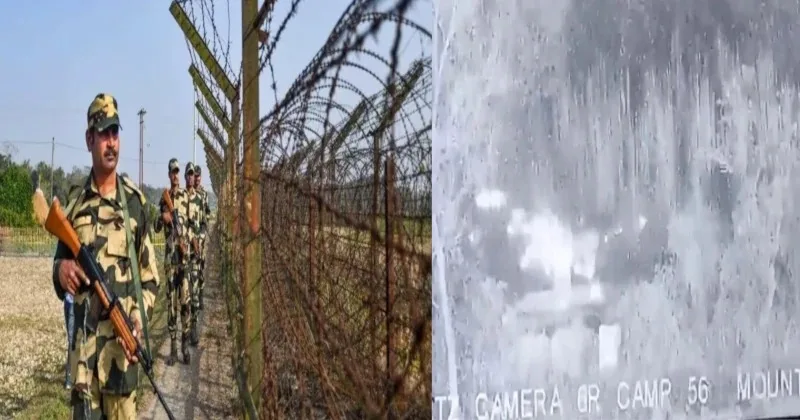
#WATCH | On 8-9 May 2025, BSF foiled a major infiltration bid at the International Boundary in Samba district, J&K by killing at least seven terrorists and causing extensive damage to the Pakistan Post Dhandhar, says BSF.
(Source: BSF) pic.twitter.com/c2MWOUuvQs
— ANI (@ANI) May 9, 2025
According to BSF, a large group of terrorists attempted to cross into Indian territory under the cover of fire provided by Pakistan Rangers from the Dhandhar post.
However, the force said, the attempt was promptly detected by the BSF’s advanced surveillance grid.
“Acting swiftly, alert BSF troops engaged the infiltrators in a fierce exchange of fire. In the ensuing gunfight, at least seven terrorists were neutralised,” said the BSF. Additionally, retaliatory action by BSF caused extensive damage to the Dhandhar post.
The BSF, which is mandated to guard the 3,323 km India-Pakistan border, also issued a Hand-Held Thermal Imager (HHTI) clip of the destruction of the Pakistani Post Dhandhar.
The action came a day after Union Home Minister Amit Shah held discussions with the Director Generals of all border guarding forces and reviewed the current security situation along India’s borders.
The meeting was aimed at assessing preparedness and operational readiness in light of recent developments, as Pakistan on Thursday night launched a significant missile and drone attack targeting India’s Jammu region and Rajasthan, including Satwari, Samba, RS Pura, Arnia, and Jaisalmer. However, all missiles were intercepted and blocked by air defence units, and no major damage was reported.
In a specific talk with the Border Security Force DG, the Home Minister had also taken stock of the situation in the border areas and the preparedness of the border guarding force. The BSF’s fresh action followed additional explosions reported on Thursday night in Jammu and Jaisalmer, prompting air-raid sirens and civilian evacuations in border areas.
The Pakistani attack followed India’s “Operation Sindoor” on May 7, wherein Indian forces conducted missile strikes on nine locations in Pakistan and Pakistan-Occupied Jammu and Kashmir. India said that these strikes targeted terrorist infrastructure linked to groups like Lashkar-e-Taiba and Jaish-e-Mohammed, in retaliation for an April 22 terrorist attack in Pahalgam that killed 26 civilians.
The timing of the infiltration attempt is significant. Just days before the Indian forces launched a precision strike on terror camps inside Pakistan-occupied areas under Operation Sindoor. In a stunning revelation, senior Pakistani army officers were seen attending the funeral of a family member of listed terrorist Masood Azhar in Punjab province. A wreath bearing the name of Pakistan’s army chief was reportedly placed on the coffin of one of the terrorists killed in the Indian strike—leaving no doubt about the official patronage of terrorism at the highest levels in Pakistan’s military establishment.
Offering state funerals to terrorists appears to be a standard practice in Pakistan, said Foreign Secretary Vikram Misri during a press briefing on May 8, the Day 2 of Operation Sindoor. Displaying images of funeral prayers attended by Pakistani military personnel for slain terrorists, Misri underlined how terrorists and armed forces in Pakistan often share the same platform — further exposing the deep links between the Pakistani state and terror outfits.
Security experts stated the failed infiltration bid in Samba is part of Pakistan’s desperate strategy to revive cross-border terrorism after the embarrassment suffered under Operation Sindoor. India’s firm stance and proactive counter-terror measures have forced Pakistan into a corner, where it is increasingly relying on old, discredited tactics to provoke instability.
Despite continuous provocations—from drone incursions and missile launches to sponsoring armed infiltrations—India’s armed forces have remained vigilant and resolute. The foiling of the Samba infiltration is yet another testament to India’s uncompromising stance on national security and its preparedness to counter every threat from across the border.
















Comments