





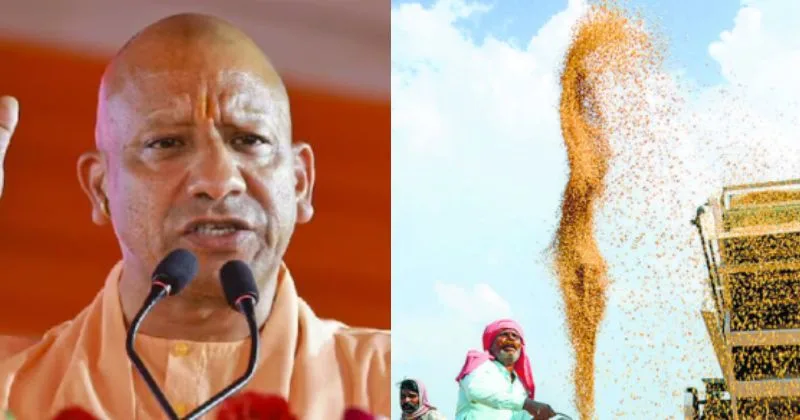
Uttar Pradesh has witnessed a significant increase in agricultural production, with food grain output growing from 557.46 lakh metric tonnes in 2016-17 to more than 725.12 lakh metric tonnes in 2024-25. UP Chief Minister Yogi Adityanath highlighted these figures during a high-level review meeting of the Agriculture Department, terming it a symbol of farmer dedication and effective governance.
Calling it a milestone in the state’s journey towards self-reliance, the chief minister emphasised that agriculture in the new Uttar Pradesh would not merely be a means of livelihood but a “foundation for prosperity and Atmanirbharta (self-reliance).” He stated that this transformation was a clear indicator of the hard work of the state’s farmers, supported by the government’s robust policies aimed at modernising and strengthening the agricultural ecosystem. The chief minister presented detailed data to showcase the rise in agricultural productivity. In 2016-17, Uttar Pradesh’s total food grain output stood at 557.46 lakh metric tonnes. Within eight years, this number has surged by over 167 lakh metric tonnes, reaching a record-breaking 725.12 lakh metric tonnes in 2024-25.
Notably, there has also been a twofold increase in the production of pulses and oilseeds during the same period. These crops, vital for both domestic consumption and nutritional security, have seen enhanced cultivation thanks to targeted government interventions, including seed distribution, farmer education, and crop diversification programs.
“This reflects not only the hard work of our farmers but also the effectiveness of the state government’s initiatives,” Yogi Adityanath remarked. In his address, the chief minister noted that Uttar Pradesh holds 11.41 per cent of India’s total agricultural land, yet it contributes a significant 20.89 per cent to the country’s overall food grain production. This disproportionate contribution, he said, is evidence of how strategically implemented reforms and farmer-centric approaches can yield transformative results.
Going beyond data, the chief minister also gave a clear direction for the future of farming in the state. Highlighting the need for innovation and adaptability in farming, Yogi Adityanath directed officials to prioritise the development of seed varieties tailored to different climatic conditions. He stressed the need for seeds that are suited for early and late sowing seasons, given the growing uncertainties caused by climate change.
“These seeds must be certified to ensure quality and should be made available to farmers at subsidised rates,” he said, adding that investment in research and development would further improve the state’s agricultural productivity and profitability.
Uttar Pradesh’s agricultural success story is backed by several state-run initiatives, including the PM-KISAN scheme, Kisan Credit Cards, soil health cards, crop insurance under PM Fasal Bima Yojana, and expanded irrigation infrastructure under the Har Khet Ko Pani program.
Moreover, the state has encouraged the adoption of natural farming, organic practices, and agri-tech integration. Training programs and farmer field schools have been actively promoting awareness about modern techniques and sustainable practices.
The CM reiterated that these policies aim to empower farmers not just economically but also socially, creating a dignified, tech-savvy, and environmentally-conscious farming community.
Agricultural experts have welcomed the CM’s announcement, citing Uttar Pradesh as a leading example of efficient resource use and farmer-centric planning. Farmers’ groups have also expressed hope that continued government support would help address challenges like market access, fair pricing, and sustainable practices. With policy backing, technological advancement, and farmer resilience at its core, the state is set to not only ensure food security but also lead India’s march towards agricultural excellence and rural prosperity. As the chief minister aptly put it, in the transformed Uttar Pradesh of a rising India, agriculture will serve not merely as a source of income but as a cornerstone for growth and self-dependence.
















Comments