Will Pakistan’s fragile economy survive the consequences of its proxy War with India?
December 5, 2025
  • Read Ecopy
  • Circulation
  • Advertise
  • Careers
  • About Us
  • Contact Us
Android AppiPhone AppArattai
Organiser
  • ‌
  • Bharat
    • Assam
    • Bihar
    • Chhattisgarh
    • Jharkhand
    • Maharashtra
    • View All States
  • World
    • Asia
    • Europe
    • North America
    • South America
    • Africa
    • Australia
  • Editorial
  • International
  • Opinion
  • RSS @ 100
  • More
    • Op Sindoor
    • Analysis
    • Sports
    • Defence
    • Politics
    • Business
    • Economy
    • Culture
    • Special Report
    • Sci & Tech
    • Entertainment
    • G20
    • Azadi Ka Amrit Mahotsav
    • Vocal4Local
    • Web Stories
    • Education
    • Employment
    • Books
    • Interviews
    • Travel
    • Law
    • Health
    • Obituary
  • Subscribe
    • Subscribe Print Edition
    • Subscribe Ecopy
    • Read Ecopy
  • ‌
  • Bharat
    • Assam
    • Bihar
    • Chhattisgarh
    • Jharkhand
    • Maharashtra
    • View All States
  • World
    • Asia
    • Europe
    • North America
    • South America
    • Africa
    • Australia
  • Editorial
  • International
  • Opinion
  • RSS @ 100
  • More
    • Op Sindoor
    • Analysis
    • Sports
    • Defence
    • Politics
    • Business
    • Economy
    • Culture
    • Special Report
    • Sci & Tech
    • Entertainment
    • G20
    • Azadi Ka Amrit Mahotsav
    • Vocal4Local
    • Web Stories
    • Education
    • Employment
    • Books
    • Interviews
    • Travel
    • Law
    • Health
    • Obituary
  • Subscribe
    • Subscribe Print Edition
    • Subscribe Ecopy
    • Read Ecopy
Organiser
  • Home
  • Bharat
  • World
  • Operation Sindoor
  • Editorial
  • Analysis
  • Opinion
  • Culture
  • Defence
  • International Edition
  • RSS @ 100
  • Magazine
  • Read Ecopy
Home Bharat

Will Pakistan’s fragile economy survive the consequences of its proxy War with India?

Amid rising tensions with India following the Pahalgam terror attack, Pakistan faces severe economic strain, compounded by the suspension of the Indus Waters Treaty and a collapsing stock market. As diplomatic measures tighten, the nation's fragile economy may struggle to survive escalating geopolitical risks

Shashank Kumar DwivediShashank Kumar Dwivedi
Apr 25, 2025, 09:15 pm IST
in Bharat, World, South Asia, Asia, Jammu and Kashmir
Follow on Google News
Pakistani people buying things (Picture is representation of economic collapse in Pakistan)

Pakistani people buying things (Picture is representation of economic collapse in Pakistan)

FacebookTwitterWhatsAppTelegramEmail

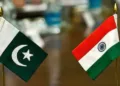
In the wake of the brutal Pahalgam terror attack on April 22 that killed 26 people, mostly Hindu tourists at Baisaran meadow in Jammu and Kashmir, India has responded with a series of diplomatic and strategic actions. Among the most significant is the suspension of the Indus Waters Treaty, a foundational agreement that has governed water sharing between India and Pakistan for over six decades.

Combined with a halt to the SAARC Visa Exemption Scheme for Pakistani nationals, expulsion of military attaches, reduction of diplomatic staff, and the closure of the Attari border check-post, these actions have not only escalated diplomatic tensions but also sent Pakistan’s economy into a downward spiral.

The Pakistan Stock Exchange (PSX) responded with panic. On April 24, the benchmark Karachi-100 index (KSE-100) plummeted by over 2,500 points, falling to 114,740.29 within just the first five minutes of trading. Though the market recovered some ground later in the day, it was still trading 1,532.42 points lower by 3 PM, reflecting continued nervousness among investors.

“The market opened lower amid fears of escalating tensions between Pakistan and India,” said Yousuf M. Farooq, Director of Research at Chase Securities, in a statement to Dawn.

“However, positive corporate earnings have supported a partial recovery.”

This marked the second consecutive session of losses for the Pakistani stock market. Just a day earlier, it had slipped by 1,204 points after the IMF cut Pakistan’s GDP growth forecast for FY25 to 2.6 per cent, citing heightened fiscal risks and enduring external vulnerabilities. The Asian Development Bank (ADB) echoed this view, lowering its 2025 forecast from 3 per cent to 2.5 per cent in its April update.

Indus Waters treaty suspension

India’s suspension of the Indus Waters Treaty has wide-ranging implications. Signed in 1960, the Treaty grants India control over the eastern rivers (Sutlej, Beas, and Ravi) and Pakistan the western rivers (Indus, Jhelum, and Chenab). Although there is no unilateral exit clause, India’s move to put the treaty “in abeyance” is a strategic signal with the potential to paralyse Pakistan’s agrarian economy.

According to Pakistan’s Economic Survey 2022-23, agriculture contributes 22.7 per cent to the country’s GDP and employs 37.4 per cent of the labor force. The World Bank has previously noted that the Indus river system irrigates 90 per cent of Pakistan’s food crops — wheat, rice, and cotton being the primary ones. In 2022, these agricultural exports brought in 4.8 billion dollars, as per the State Bank of Pakistan.

P K Saxena, former Indian Commissioner for Indus Waters, told think tank NatStrat that India should “respond strategically by accelerating development on the western rivers, engaging in proactive treaty renegotiations, and challenging Pakistan’s selective interpretations.”

How Pakistan went bankrupt

Pakistan’s current state of economic fragility has been years in the making. Chronic bad governance, military dictatorship, and a policy of state-sponsored terrorism have left the country teetering on the brink of bankruptcy.

In 2023, Planning Minister Ahsan Iqbal even urged citizens to cut down on tea, since Pakistan needed to borrow money to import it, a symbolic representation of the country’s deteriorating foreign exchange reserves. That year, inflation hit a record 38.5 per cent, growth turned negative, and foreign reserves dwindled to barely a few weeks of import cover, standing at just 3.7 billion dollars. Interest rates rose to 22 per cent, and the debt-to-GDP ratio reached a precarious 70 per cent.

The country also faced international scrutiny for terror financing, spending nearly five years on the Financial Action Task Force (FATF) grey list, which limited its access to global financing. According to Fitch Ratings, between 40 per cent and 50 per cent of Pakistan’s government revenue in 2023 went solely towards interest payments. Only Sri Lanka, Ghana, and Nigeria fared worse.

Despite a recent breakthrough in talks with the International Monetary Fund (IMF), Pakistan’s problems are far from over. The IMF agreed to a new 1.3 billion dollars climate resilience loan programme and also released 1 billion under its existing 7 billion dollars bailout programme, bringing the total to 2 billion dollars.

“Over the past 18 months, Pakistan has made significant progress in restoring macroeconomic stability and rebuilding confidence despite a challenging global environment,” the IMF said in a statement.

But Fitch Ratings in February noted that Pakistan’s external financing needs remain significant, with over 22 billion dollars in external debt due in FY2025, including 13 billion dollars in bilateral deposits.

“Securing sufficient external financing remains a challenge, considering large maturities and lenders’ existing exposures,” Fitch warned.

India Takes strong measures

In light of the attack, India has launched a series of retaliatory diplomatic and strategic measures:

Foreign Secretary Vikram Misri announced after the Cabinet Committee on Security (CCS) meeting that:

  • Indus Waters Treaty of 1960 will be held in abeyance with immediate effect.
  • Attari Integrated Checkpost will be closed indefinitely.
  • SAARC Visa Exemption Scheme will be suspended for Pakistani nationals.
  • Pakistani Defence Attachés in India declared persona non grata; to leave within a week.
  • India’s own military attachés will be withdrawn from Islamabad.

Pakistan scrambles for response

In response to India’s actions following the Pahalgam terror attack, Pakistan Prime Minister Shehbaz Sharif convened a National Security Committee (NSC) meeting on April 25.

According to Radio Pakistan, the meeting would “review response to India’s hastily taken, impulsive and impractical water measures.” The session reportedly included three service chiefs and key cabinet ministers.

Meanwhile, Defence Minister Rajnath Singh had already assured the Indian public of a “loud and clear” response to the Pahalgam massacre, signaling the possibility of military options on the table.

Amid all this, Pakistan issued a notice for a surface-to-surface missile test from Karachi’s coastline, to be conducted within its exclusive economic zone on April 24-25, raising fresh concerns about regional escalation.

Topics: Pahalgam AttackPakistan's economic condition. Proxy war on IndiaTerror attack in kashmirterrorismIndia-Pakistan
ShareTweetSendShareSend
✮ Subscribe Organiser YouTube Channel. ✮
✮ Join Organiser's WhatsApp channel for Nationalist views beyond the news. ✮
Previous News

Organiser Exclusive: Ajmer-style sex & blackmail racket busted in Bhopal — FIR details inside

Next News

Indus Waters Treaty: How Bharat’s water revolution could rewrite geopolitics & starve Pakistan’s strategy by 25%

Related News

From Maqbool Sherwani to Maqbool Butt: Jammu Kashmir dwindles Between Nationalism and Separatism

A representative image

Islamabad exposed again: Did India deny airspace clearance or Pakistani media peddle fake news?

IG BSF Jammu Frontier Shashank Anand

‘Pakistan treated it as war’: BSF reveals intense cross-border clash during Operation Sindoor

Maharashtra CM Devendra Fadnavis

India missed opportunity post-26/11; Immediate ‘Operation Sindoor’ would have deterred future terror: Fadnavis

Representative Image

Terrorism isn’t born out of poverty – it is born out of choices

Delhi Blast 2025(Representative Image)

Kashmir & Kashmiris are once again in the news for wrong reasons

Load More

Comments

The comments posted here/below/in the given space are not on behalf of Organiser. The person posting the comment will be in sole ownership of its responsibility. According to the central government's IT rules, obscene or offensive statement made against a person, religion, community or nation is a punishable offense, and legal action would be taken against people who indulge in such activities.

Latest News

Image for representational purpose only, Courtesy Vocal Media

Bihar to get ‘Special Economic Zones’ in Buxar and West Champaran

Thirupparankundram Karthigai Deepam utsav

Andhra Pradesh: AP Dy CM Pawan Kalyan reacts to Thirupparankundram row, flags concern over religious rights of Hindus

23rd India-Russia Annual Summit

India-Russia Summit heralds new chapter in time-tested ties: Inks MoUs in economic, defence, tourism & education

DGCA orders probe into IndiGo flight disruptions; Committee to report in 15 days

BJYM leader Shyamraj with Janaki

Kerala: Widow of BJP worker murdered in 1995 steps into electoral battle after three decades at Valancherry

Russian Sber bank has unveiled access to its retail investors to the Indian stock market by etching its mutual fund to Nifty50

Scripting economic bonhomie: Russian investors gain access to Indian stocks, Sber unveils Nifty50 pegged mutual funds

Petitioner S Vignesh Shishir speaking to the reporters about the Rahul Gandhi UK citizenship case outside the Raebareli court

Rahul Gandhi UK Citizenship Case: Congress supporters create ruckus in court; Foreign visit details shared with judge

(L) Kerala High Court (R) Bouncers in Trippoonithura temple

Kerala: HC slams CPM-controlled Kochi Devaswom Board for deploying bouncers for crowd management during festival

Fact Check: Rahul Gandhi false claim about govt blocking his meet with Russian President Putin exposed; MEA clears air

Union Minister for Road Transport and Highways Nitin Gadkari (Right)

India set for highway overhaul as Union Minister Nitin Gadkari unveils nationwide shift to MLFF electronic tolling

Load More
  • Privacy
  • Terms
  • Cookie Policy
  • Refund and Cancellation
  • Delivery and Shipping

© Bharat Prakashan (Delhi) Limited.
Tech-enabled by Ananthapuri Technologies

  • Home
  • Search Organiser
  • Bharat
    • Assam
    • Bihar
    • Chhattisgarh
    • Jharkhand
    • Maharashtra
    • View All States
  • World
    • Asia
    • Africa
    • North America
    • South America
    • Europe
    • Australia
  • Editorial
  • Operation Sindoor
  • Opinion
  • Analysis
  • Defence
  • Culture
  • Sports
  • Business
  • RSS @ 100
  • Entertainment
  • More ..
    • Sci & Tech
    • Vocal4Local
    • Special Report
    • Education
    • Employment
    • Books
    • Interviews
    • Travel
    • Health
    • Politics
    • Law
    • Economy
    • Obituary
  • Subscribe Magazine
  • Read Ecopy
  • Advertise
  • Circulation
  • Careers
  • About Us
  • Contact Us
  • Policies & Terms
    • Privacy Policy
    • Cookie Policy
    • Refund and Cancellation
    • Terms of Use

© Bharat Prakashan (Delhi) Limited.
Tech-enabled by Ananthapuri Technologies