





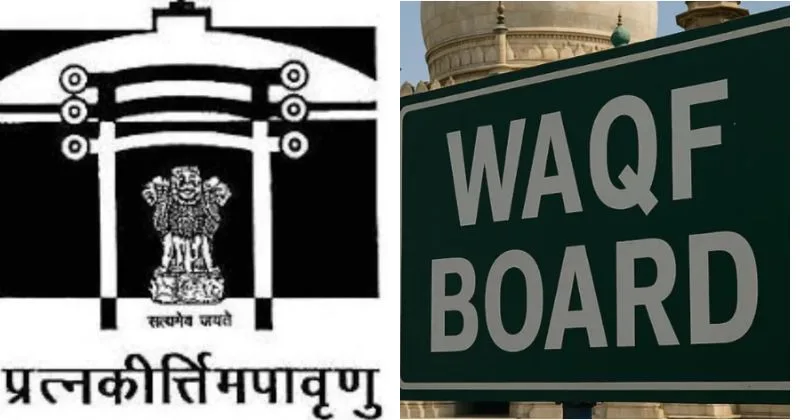
A significant shift in the ownership status of over 256 historic structures is on the horizon as the Waqf Amendment Act 2025 comes into force. These properties, many of which are already under the protection of the Archaeological Survey of India (ASI), may soon be formally transferred back to the agency, effectively nullifying longstanding illigale claims by Waqf Boards.
The crux of the matter lies in properties categorized under “Waqf by user”—assets historically used for religious purposes but lacking documentary proof of Waqf status. Under the revised law, Waqf Boards must upload valid ownership documents within six months on a centralized online portal. An extension of up to another six months may be granted.
Failure to comply would result in automatic forfeiture of claim, restoring full control to ASI—especially in the case of monuments already notified under heritage protection laws.
Iconic Sites Among Occupied Properties by WAQF
Prominent among the disputed properties are Delhi’s Purana Qila, Agrasen ki Baoli, Humayun’s Tomb, and Moti Masjid; Amer Jama Masjid in Rajasthan; Aurangzeb’s tomb in Maharashtra; and Pratapgarh Fort.
For example, Agrasen ki Baoli in Delhi, classified as a protected site by ASI, includes a small mosque on its western side, which became the basis for the Waqf Board’s ownership claim—an example of the complex dual-use arguments that have long fueled these disputes.
The legal aspect intensified when the matter reached the Supreme Court, which has not stayed the law but has advised the Centre to submit a response within seven days.
Chief Justice of India (CJI) remarked that no fresh appointments under the amended act should be made until further notice. However, the court clarified that existing Waqf registrations will not be canceled and called for maintaining status quo to prevent unilateral action. The court further urged the petitioners to narrow down the scope of arguments to five key issues for streamlined hearing.
Conflicts between the Waqf Boards and ASI are not new. Past attempts to classify monuments like the Taj Mahal as Waqf property have failed due to a lack of documentary evidence. In 2005, the Sunni Waqf Board declared the Taj Mahal a Waqf asset, but the Supreme Court dismissed the claim in 2010, questioning its credibility and legality.
The shift also aligns with the Ancient Monuments Preservation Act (1904) and the 1958 Amendment, which clearly establish that any monument notified as of national importance remains under ASI’s jurisdiction—regardless of any later religious or private claims.
















Comments