





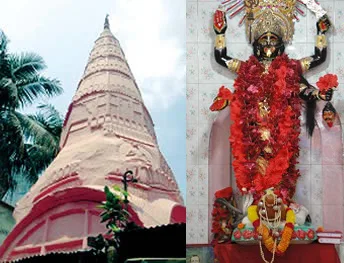
Jay Kali Mandir, also known as Joy Kali temple, is one of the ancient temples of Dhaka in Bangladesh. It is situated near Thatari Bazar. The road leading to the temple is named after the temple. It is dedicated to Ma Kali. This temple is about 400 years old, the temple gradually developed into a complex. It is now approximately 300.64 metres in area. Inside the boundary of this temple there are basically two temples. One of the temples is of Kali Devi, the other one is of Bhagwan Shiv. Shiv temple has a conical tower, 21 metres in height, over it. The roof of the tower is vertically divided into seven parts and those were decorated with various designs in terracotta art; and the temple of Kali is with a sloping and curved dome like that of a hut. The temple is square-shaped with columns.
The temple can be divided into three spaces. The walls are thick and made from terracotta. The temple has tiles on the walls all around, and the floor is made from mosaic. There are pictures of Hindu Gods and Goddesses printed on the tiled walls of the temple. Bengal roofs are sloping dome shaped roofs with drawn down corners like those of Mughal and Rajput architecture. This style is said to have been developed after the 16th century. The temple was taken by the Archaeology Department of the Government for reformation. Temples in Bangladesh and West Bengal normally display the Chala (hut-style) and Ratna (pinnacled) architectural styles, there are Do-Chala (twin hut), Jor-Bangla and Char-Chala (four-sided roof), reflecting local vernacular architecture and terracotta decorations. The style has a sloping and curved roof like the huts that are called Bangla in this region. Decorative carved or moulded plaques of terracotta are essential features of every traditional temple. The Ratna style also emerged later i.e. in the 15th-16th centuries, under the Mallabhum kingdom.
In Joy Kali Mandir, all these features are vividly present and thus this temple is one of the unique treasures of the place.

















Comments