





The MEA alert in Tripura on July 29, 2024, flagging the gravity and severity of infiltration from across the borders gained further political traction when Prime Minister Narendra Modi, addressing a political rally in Jharkhand in October 2024, reiterated that infiltration has assumed an alarming proportion occupying land, forest and water and demographic spaces of tribals across states. While the issue of illegal migration has perennially remained a pivotal issue in electoral discourse in Eastern States shaping political narratives and influencing voter sentiments for decades, unchecked, unabated and rampant unauthorised migration from neighbouring countries has resulted in exponential population explosion in States such as Assam, Tripura, West Bengal and pockets of Jharkhand resulting in tussle over resources, cultural existence, economic sustenance and political representation.
Menace of Rohingya Infiltrants
What adds to the enormity of the situation is the fact that their movement is not only confined to the border States of Jammu & Kashmir, West Bengal and North Eastern regions but can also be seen in cities across Haryana, Uttar Pradesh, Rajasthan and even in New Delhi and Hyderabad. In fact, according to recent reports, Hyderabad is home to the largest concentration of Rohingya Infiltrants in Bharat, with approximately 7,200 individuals residing in 32 urban areas, spread across the city. In a fresh operation, the National Investigation Agency (NIA) apprehended 44 human traffickers operating in cities such as Jaipur, Bengaluru, Chennai and Guwahati, seizing 200 Aadhaar and PAN cards in the process. These traffickers not only facilitate illegal foreign nationals in acquiring Bharatiya identity documents but also assist them in securing property, particularly in Muslim-majority areas across various urban centres. Notably, regions such as Nuh and Mewat in Haryana have witnessed the settlement of thousands of such unauthorised migrants, who continue to reside unlawfully yet conspicuously throughout these expanses.

Preserving Culture Is Vital
Back in Assam, a shrewd statesman and staunch loyalist of nationalistic sentiments, Dr Himanta Biswa Sarma vociferously blew the bugle for cultural preservation by the native denizens when he vehemently expressed concern over the exponentially exploding population of minority communities from Bangladesh transforming the demography of many States in Bharat with originally dominant indigenous tribal population. In January, this year, Assam Chief Minister pointed out a massive increase in infiltration from Bangladesh due to ‘collapse’ of their textile sector causing workers to seek employment in Bharat, incentivised by textile manufacturers seeking cheap labour. Dr Sarma, however, asserted that all those who have been intercepted at the border are Muslims, and not from the minority Hindu community residing in Bangladesh, adding more dimension to the elephant in the room.
Encroaching Vaishnavite Satras
Broadening complexities of the issue at hand, the severity of cultural aggression in Assam has reached an intense form wherein even the Vaishnavite Satras, which are the epicentres of religious-cultural discourses in Assam, have been trespassed. According to an interim Government report, approximately 1,898 hectares of land belonging to these Satras have been indiscriminately encroached upon in districts such as Nagaon, Lakhimpur and Barpeta. Further corroborating these concerns, a 2015 study conducted by the Asom Satra Mahasabha—an umbrella organisation overseeing Vaishnavite monasteries—revealed that nearly 7,000 bighas (2,804 acres), or a staggering 85 per cent of land belonging to 39 Satras, had been unlawfully occupied by illegal immigrants.
Rein In Illegal Migrants
The seriousness of the situation was further underscored by the findings of the Hari Shankar Brahma Committee Report, which sent shockwaves through Assamese society with its stark revelations. The report unequivocally highlighted the unchecked influx of land-hungry illegal Bangladeshi migrants, asserting that they had spread into every nook and corner of Assam. It exposed the egregious negligence of past political discourses in curbing this rampant and organised land usurpation, branding Assam as an “Encroachers’ Heaven.” The report emphasised that these large-scale encroachments were not haphazard but rather a well-orchestrated and systematically executed organised process. It further highlighted that the per capita availability of land in Assam was diminishing at an alarming rate due to the surging population in regions such as the Char areas and other migration-dominated zones. Among its many alarming disclosures, the report documented that approximately 63 lakh bighas (20.83 lakh acres) of Government land—including forests, grazing fields, and other public spaces—had been unlawfully seized by encroachers. It also revealed that around 90 per cent of indigenous Assamese lacked permanent land titles, while nearly 8 lakh native families were completely landless. Perhaps most concerning of all was the assertion that 15 out of the then 33 districts had already fallen under the demographic dominance of illegal Bangladeshi migrants. The report ultimately painted a dire picture of relentless, highly coordinated and systematic land encroachment by illegal immigrants crossing the Indo-Bangladesh international border, leading to an unrestrained consolidation of territorial control and associated rights at the expense of the indigenous population.
Threat Emanating from Bangladesh
To add on, the recent deployment of advanced drone technology by Bangladesh, coupled with the uncertainty surrounding the post-Sheikh Hasina political landscape, has significantly intensified Bharat’s security apprehensions. Perceiving the fact that the Indo-Bangladesh border is not just a geographical boundary but is a frontline of Bharat’s national security, political instability in the region exacerbates security challenges along these borders with vast and porous frontiers.
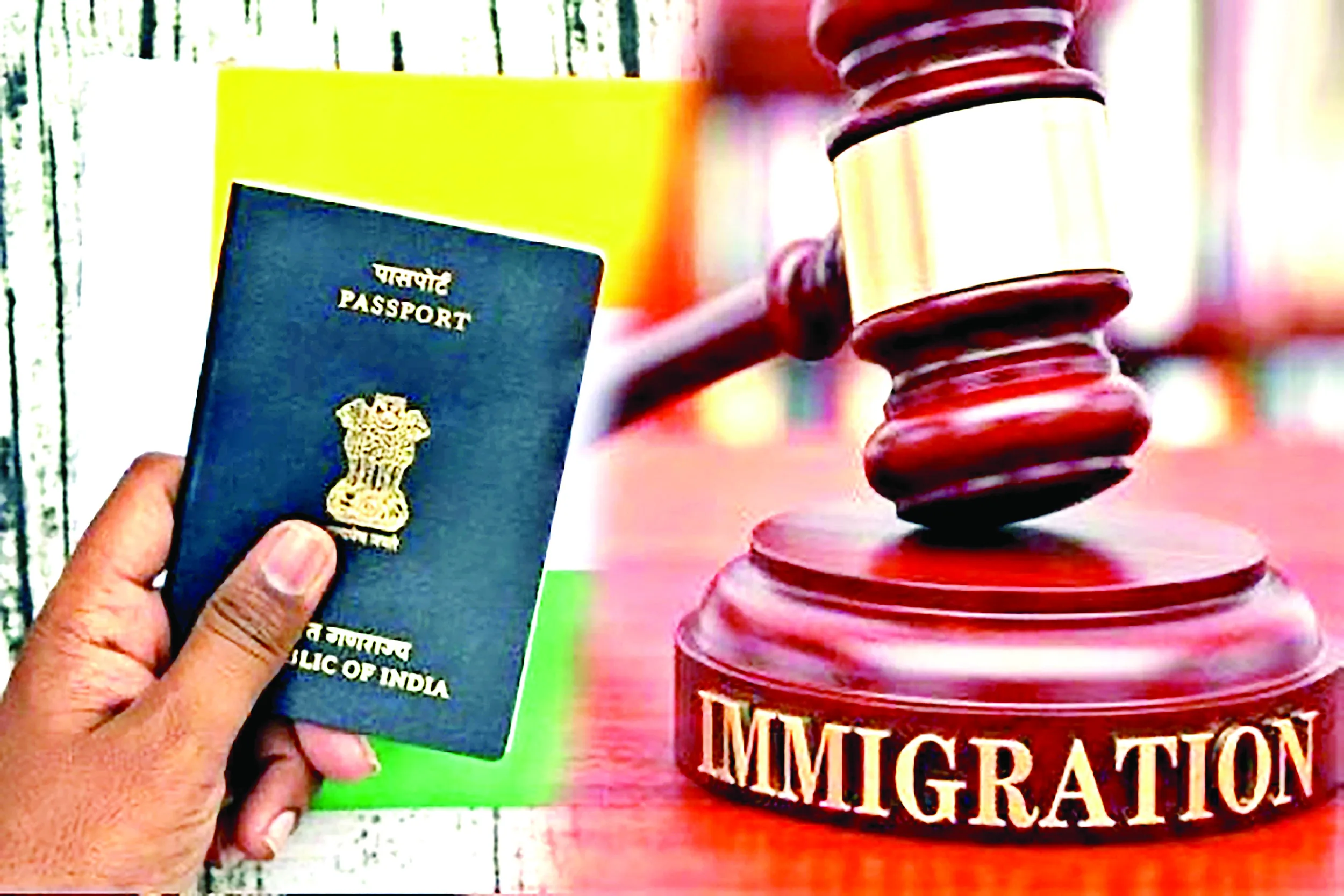
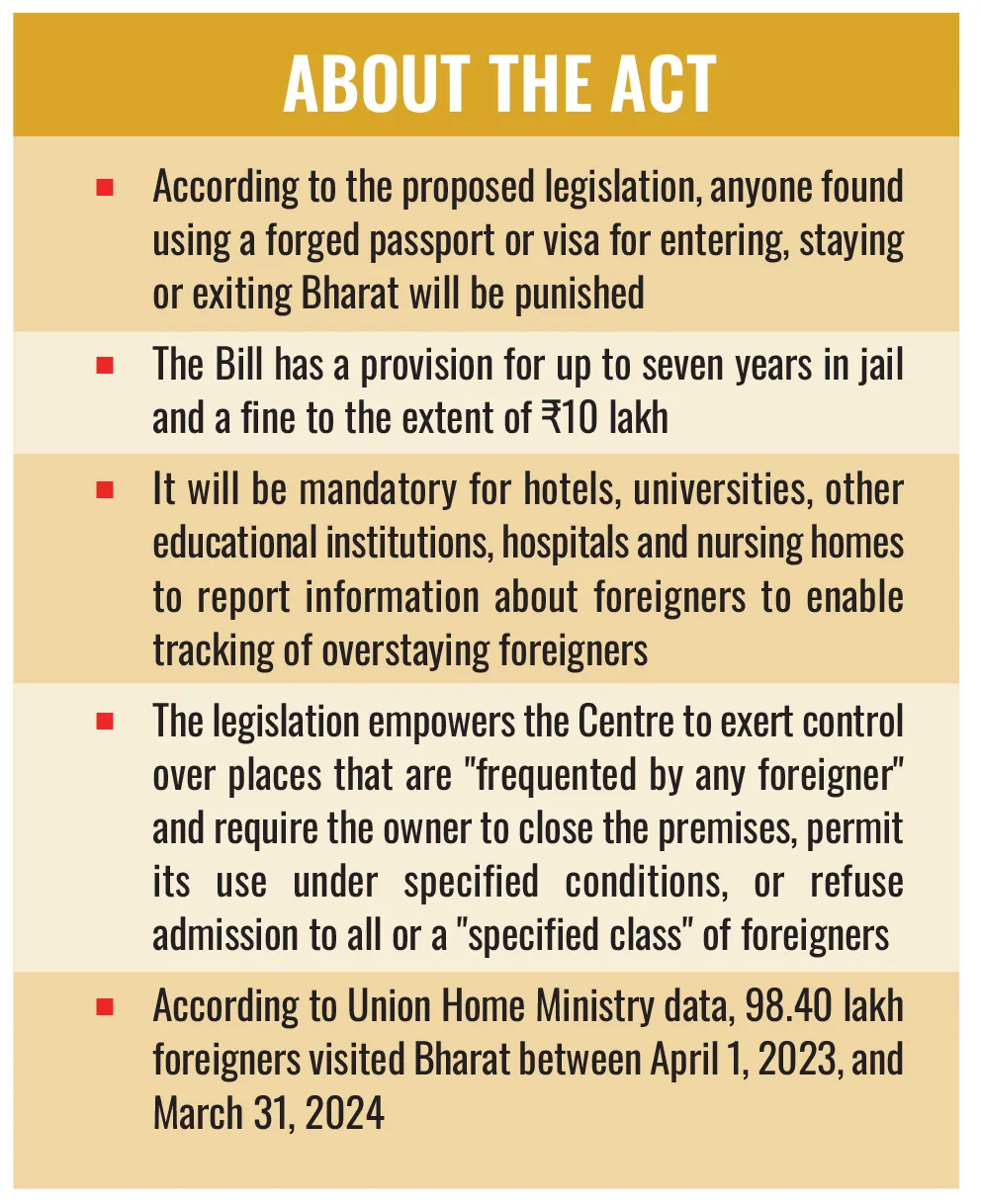
It is in direct alignment with these grave concerns that the Immigration and Foreigners Act, 2025, assumes profound significance. Introduced in the Bharatiya Parliament in March 2025, the Immigration and Foreigners Act, 2025, is a comprehensive legislative measure designed to overhaul the nation’s immigration framework. This Act aims to consolidate and modernise existing laws, enhance national security, and address the complexities arising from demographic shifts, particularly in the Eastern and North Eastern regions of Bharat. The necessity of this Act has been underscored by the demographic changes witnessed in these regions, which have long been characterised by their diverse ethnic compositions. The growing strain on infrastructure, livelihoods, and governance mechanisms has necessitated a robust immigration framework to regulate and manage these evolving challenges effectively. In sync with such objectives, the bill introduces several stringent measures aimed at controlling the entry, stay, and movement of foreign nationals within Bharat. Imposing severe penalties for illegal entry, the law stipulates that foreign nationals found entering Bharat without valid documentation may face imprisonment of up to five years and fines reaching Rs 5 lakh. Additionally, individuals utilising counterfeit travel documents could be subjected to imprisonment ranging from two to seven years, accompanied by fines between Rs 1 lakh and Rs 10 lakh. To curb visa violations and overstaying, the bill prescribes penalties of up to three years in prison, fines up to Rs 3 lakh, or both. Moreover, in an effort to improve monitoring and tracking, the legislation mandates that educational institutions, hospitals, and other establishments accommodating foreigners must report pertinent details to immigration authorities. Another significant provision is the introduction of carrier liability, under which transporters bringing in foreigners without valid documents could face fines of up to Rs 5 lakh, with provisions for the seizure or detention of transport vehicles upon non-payment of the penalties. These stringent measures reflect the government’s resolve to regulate unauthorised migration and ensure adherence to legal immigration protocols.
The Immigration and Foreigners Act, 2025, therefore represents a pivotal step in Bharat’s efforts to modernise its immigration laws and address the challenges posed by changing demographics, particularly in regions witnessing large-scale migration
Addressing Security Concerns
Experts and policy analysts have largely endorsed the bill, highlighting its potential to fortify national security and streamline immigration procedures. By consolidating archaic colonial-era laws into a single, modernised framework, the legislation is seen as a necessary and timely response to the contemporary challenges posed by illegal immigration. Analysts argue that the bill’s provisions, particularly the strict penalties for illegal entry and document forgery, act as strong deterrents against unauthorised migration, which has been a persistent issue, especially in border states. Furthermore, the mandatory reporting requirements for institutions hosting foreign individuals are viewed as a strategic move to improve oversight and accountability. This measure is expected to significantly reduce instances of overstaying and ensure strict compliance with visa regulations, thereby reinforcing the integrity of Bharat’s immigration system. The implementation of this legislation is expected to have far-reaching consequences for Rohingya and Bangladeshi migrants owing to the fact that Bharat has been construed as a key destination for these illegal migrants thronging various parts of the country along with pursuing concerted efforts to establish socio-economic as well as political hegemony. Parallelly, the government also aims to curb illegal entry through enhanced border vigilance and stricter penalties, which are expected to deter unauthorised migration and promote adherence to legal immigration pathways.
Modernising Immigration Laws
The Immigration and Foreigners Act, 2025, therefore represents a pivotal step in Bharat’s efforts to modernise its immigration laws and address the challenges posed by changing demographics, particularly in regions witnessing large-scale migration. By introducing stringent regulations against illegal entry and strengthening institutional accountability, the bill seeks to balance national security concerns with the complexities of migration. However, while it has garnered support from various legal and policy experts for its comprehensive approach, its real-world impact on vulnerable migrant communities remains a critical point of discussion.















Comments