





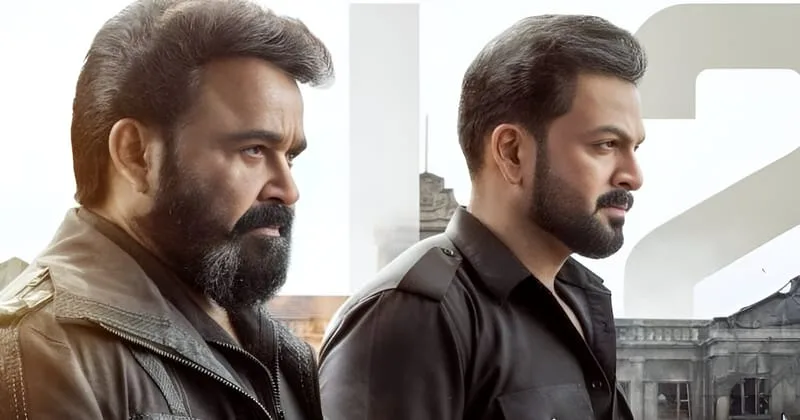
Mohanlal’s highly anticipated Pan India-based movie directed by Prithviraj Sukumaran, ‘Empuraan,’ had a thunderous welcome at Pre Sale Box Office bookings. However, after the first show, it became clear that the film is not just about entertainment but a platform to push an age-old political agenda. The film was widely marketed as a pan-India movie in all manners. Empuraan delves into the sensitive subject of the post-Godhra riots, but it does so with a clear and alarming bias. Rather than focusing on the historical true events, the film uses the backdrop of the 2002 Post-Godhra riots to push a divisive, anti-Hindu narrative that poses a serious threat to societal harmony.
Disturbing Portrayal Of Hindus As Cannibals
The film opens with a powerful and disturbing sequence depicting a Muslim village burning during the 2002 post-Godhra riots. What follows is a series of graphic and intense scenes which disturb every human mind. It includes Hindu men mercilessly beating a Muslim child and committing horrific violence against a pregnant Muslim woman. These scenes go beyond mere shock value; they are purposefully designed to reinforce the image of Hindus as the primary aggressors during the 2002 riots, perpetuating hatred between 2 communities and portraying Hindus as villains.
What makes this portrayal even more troubling is that it is not framed as a tragedy within a broader historical context, as would be expected in an objective retelling of events. Instead, the film uses violence to vilify an entire Hindu community, presenting Hindus as villains even in situations where they might otherwise be portrayed as saviours. This deliberate misrepresentation of an entire group crosses the line from storytelling to outright political manipulation. We must not forget that the culprits of the 2002 Godhra train tragedy have been found guilty by the court and punished, while the political agenda of Congress to use the riots as a tool has been rejected many times by the people of India. But it’s still a mystery why a seasoned actor like Mohanlal has chosen a propaganda story for his movie, which pushes only hatred among communities.
Prithviraj Sukumaran’s Political Agenda
Prithviraj Sukumaran has long been known for his political leanings, but in Empuraan, those leanings are presented with little subtlety. The film’s narrative not only vilifies Hindus but also specifically targets pro-Hindu political ideologies. The villain, representing a character that aligns with BJP supporters, is portrayed as a ruthless individual determined to disrupt Kerala’s culture. The film even goes as far as suggesting that Kerala’s coastline and airports could be used for illegal activities like drug logistics and drug trade without any check using a political iron fist. The organisation and people of the organisation have been portrayed here as a pro-Hindu faction, drawing a direct parallel to the BJP’s influence in the state. The Prithviraj Movie even shows that the pro- Hindu group, which draws parallel to BJP, is saying that if someone says anything against the party, let’s blast the dam and kill the entire population of 2 districts!
This overt political commentary is not disguised as fiction or creative liberty—it is blatant and unambiguous, leaving no room for misinterpretation. By presenting the BJP as a destabilising force and Hindu nationalism as inherently dangerous, Empuraan adds to the current political rhetoric, deepening divisions in an already polarised country. This dangerous portrayal risks inciting further social unrest and resentment among communities.
Mohanlal’s Role and The Betrayal of His Diehard Fans
Mohanlal, who has long been regarded as a neutral and unifying figure in Malayalam cinema, has earned the admiration of millions for his ability to transcend religious and political lines. However, his decision to star in a film that promotes such a divisive and politically charged narrative is a betrayal to his loyal fanbase. For fans who have admired him for his acting skills and commitment in portraying characters that represent unity, seeing him endorse a project that targets one community so explicitly is heartbreaking.
Mohanlal’s involvement in Empuraan raises important questions about the role of celebrities in shaping public discourse and social harmony. Should they not be held accountable for endorsing films with clear political motives? Are these people Influential in garnering thoughts in public minds?
Fans who have trusted Mohanlal to remain above political conflicts now face a difficult dilemma as they grapple with the reality of his participation in a project that promotes such an overtly biased agenda.
No doubt at all, Empuraan should be exposed on a national level as an anti Hindu, anti-India agenda movie. The portrayal of Hindus as aggressors and the demonisation of BJP supporters creates a dangerous precedent for the portrayal of sensitive historical events in Indian cinema. This is not a mere fictional retelling; it is a targeted political statement and a well-crafted propaganda that could have far-reaching consequences on national unity. I am not forgetting the writer of the movie here, Murali Gopi, who has committed a crime against the social harmony of the country by penning untrue events from his wonderland thoughts. Even the critics argue that the film deliberately distorts historical facts while ignoring the tragic murder of 59 innocent passengers—mostly Hindu pilgrims—who were burned alive when a compartment of the Sabarmati Express was set on fire by rioters in Godhra in 2002.
Prithviraj Sukumaran, as the director, must be called out for using his platform to further his own political agenda, regardless of the artistic cost. It is crucial that such content be critically examined, and its potential to stoke communal tensions and divisiveness must not be overlooked. In an already polarised environment, films with strong political overtones like Empuraan can exacerbate existing rifts and contribute to the fragmentation of Indian society.
Empuraan is not just another movie—it’s a medium for spreading an anti-Hindu, anti-BJP narrative that threatens to further divide an already fractured India. Mohanlal’s participation in the film is a betrayal to his fans, and Prithviraj Sukumaran’s political agenda is evident in every frame. The film should be exposed for what it is—an ideological weapon that uses cinema as a tool to push a divisive political ideology to harm social harmony. It is essential that the public, especially the millions who admire Mohanlal, critically engage with the content of the film and recognise its political overtones. Only then can we ensure that cinema remains a space for entertainment, not for the furthering of ideological divides.
Prithviraj Sukumaran Accused of Anti-Hindu and Anti-BJP Bias early also
In the past, he had announced a project on Variyamkunnan, a leader of the Jihadi Clan during 1921 Malabar Hindu Genocide in Malappuram, Kerala, who was responsible for the massacre and forced conversion of 1000s of Hindus during the Malabar Hindu Genocide in 1921. The announcement of that film also led to significant backlash from the common public to twist the history, leading to its shelving somehow.
Apart from his cinematic choices, Prithviraj has also been accused of taking anti-national stances. He has openly supported the idea of Islamic religious administration in Lakshadweep, challenging the Indian government’s authority over the Union Territory. We must remember that Lakshadweep, being an integral part of India, has 90 per cent Muslim population. The people of Lakshadweep organised a religious mob and protested against the installation of the Mahatma Gandhi statue on the Island as Islam is not in accordance with any kind of Idol worship. So, the Indian Constitution or Religious Text, which is applicable in India, a sovereign democratic state?
Furthermore, he actively campaigned against the Citizenship Amendment Act (CAA), aligning himself with protests that opposed a law meant to provide refuge to persecuted minorities from neighbouring Islamic countries.
With Empuraan now under fire, Hindu organisations have demanded a ban on the film, accusing Prithviraj of repeatedly indulging in narratives which push anti-India agenda and anti-Hindu sentiments while promoting divisive ideologies. Social media is witnessing a growing call for a boycott, with netizens questioning whether the film industry is being used to whitewash certain historical events while demonising others. Will he dare to do such a film portraying “Muslim Community as terrorists”?
Prithviraj’s Public Criticism of CAA
Prithviraj was one of the prominent figures from the Malayalam film industry who openly supported the anti-CAA movement. In multiple social media posts, he criticised the act, aligning himself with the protests that spread across the country. His statements were seen as an attempt to mobilise public opinion against the Indian government, despite the law being designed to help religious minorities escaping persecution.
During the peak of the protests, several young women emerged as prominent faces of the movement in India. Among them were student activists like Aisha Renna, Ladeeda Farzana, and Safoora Zargar, who led demonstrations in Delhi and other parts of the country. Some of these individuals were later linked to radical elements and were accused of inciting violence during the 2020 Delhi Riots, which resulted in significant loss of life and property.
Prithviraj extended his public support to these young activists, hailing their role in resisting the Indian government’s decision. His vocal endorsement further fueled criticism from right-wing groups, who accused him of glorifying individuals allegedly involved in anti-national activities. His stand on the issue was widely seen as part of a larger ideological pattern, where he consistently opposed policies introduced by the ruling government while siding with groups protesting against them.
Prithviraj’s Strong Statement Against the Government
Prithviraj was one of the most prominent voices from the Malayalam film industry to publicly support the protests. In an emotional social media post, he described Lakshadweep as a “paradise being robbed of its peace” and strongly condemned the government’s reforms. His statement, which was widely shared by activists and opposition leaders, painted the Indian government’s decisions as an attack on the local Muslim population’s way of life.
While Prithviraj framed his stance as a humanitarian concern, critics pointed out that his narrative ignored the necessity of reforms in Lakshadweep. Many argued that the region had long been used as a hub for illegal activities, including smuggling and extremist elements, and that the central government’s intervention was aimed at ensuring national security.
Not Artistic Liberty or Deliberate Provocation which is anti-national
While artistic freedom is often cited as a defense in such cases, it’s clear from Prithviraj’s consistent pattern of supporting controversial movements and figures suggests a deliberate provocation rather than a neutral creative endeavour. Whether this controversy will impact his career in the long run remains to be seen, but one thing is clear—his political stances continue to generate as much debate as his films.
Prithviraj’s consistent alignment with anti-government protests has made him a deeply polarising figure. His role in amplifying the Lakshadweep protests, just like his involvement in the anti-CAA movement, raises questions about whether his activism is truly driven by humanitarian concerns or if it is part of a larger ideological agenda or a motivated political propaganda.
With his film Empuraan now facing fresh controversy, Prithviraj’s political statements continue to spark debates across India, with many questioning whether the film industry is being used as a tool to push selective narratives under the guise of creative expression.
(With inputs from Centre for South Indian Studies)
















Comments