





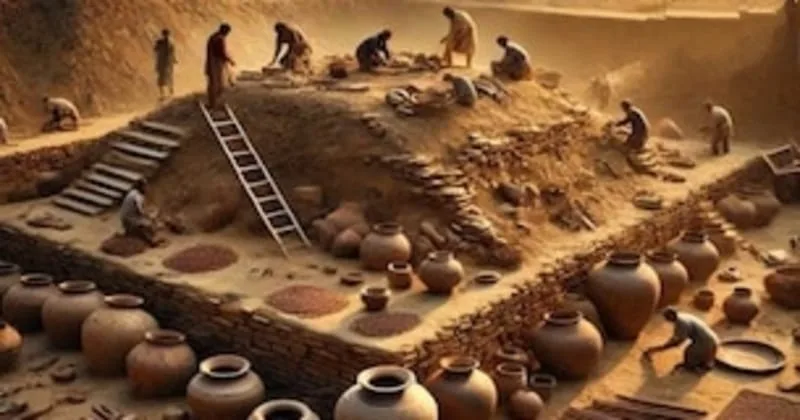
A sensational archaeological discovery has been made in Tilwara village, located in Baghpat district of Uttar Pradesh. A 4500-year-old treasure has been unearthed, attracting thousands of curious onlookers and sparking immense interest among historians and archaeologists. The excavation, conducted by the Archaeological Survey of India (ASI), has revealed significant historical objects linked to the Copper Age, shedding light on the social customs and funeral traditions of that era.
The excavation at Tilwara village has brought to light a remarkable collection of artefacts, including copper tools, ancient bricks, beads, and various types of pottery. These findings indicate the presence of a highly developed civilization that thrived thousands of years ago. Experts suggest that the site may contain the coffin of a royal figure, adding further historical significance to the discovery. The ongoing excavation, which started about 20 days ago, initially uncovered broken pitchers, large pots, bricks, and beads. However, in the past few days, copper artifacts related to funeral rites have also been found, strengthening the belief that this site holds crucial historical insights.
Historians believe that the people of the Copper Age were skilled craftsmen who had mastered the art of metalwork. The discovery of large copper plates, metal objects with intricate designs, and specially crafted bricks suggests a sophisticated society with advanced knowledge of metallurgy and construction. These findings indicate that the civilisation that existed in this region had developed funeral customs that involved the use of metal artifacts, a practice uncommon in many ancient cultures.
The discovery of metal tools, pottery, and decorated bricks points to a rich and technologically advanced society. The artistic engravings on the metal objects suggest that the people of this era had not only practical skills but also an appreciation for art and culture. The possibility of finding a coffin or a human skeleton at the site could provide new insights into the burial practices of the Copper Age.
Tilwara village is believed to be part of the Mahabharata-era region, adding another layer of historical significance to this discovery. In previous excavations conducted in Sinauli, also in Baghpat, during 2005, 2018, and 2019, archaeologists unearthed chariots, swords, shields, and other historical objects from the Copper Age. These discoveries provided crucial evidence of a warrior culture that existed in ancient India. The artefacts found in Tilwara bear a striking resemblance to those discovered in Sinauli, leading experts to speculate that this site may be linked to the same ancient civilization.
The presence of such historical artefacts in multiple locations in Baghpat district suggests that this area was a hub of a prosperous and advanced civilisation during the Copper Age. The similarities between the findings in Sinauli and Tilwara indicate a well-established society that had knowledge of warfare, craftsmanship, and ceremonial practices.
The findings at Tilwara could potentially reshape our understanding of ancient Indian history. The archaeological evidence suggests that the people of the Copper Age were not only skilled artisans but also possessed advanced knowledge of metallurgy and construction. If a coffin or a human skeleton is discovered at the site, it could provide unprecedented insights into the burial traditions and social hierarchy of that time.
Moreover, these discoveries challenge conventional historical narratives that primarily associate ancient civilisations with the Indus Valley Civilisation. The presence of such advanced artifacts in Uttar Pradesh indicates that multiple ancient civilisations flourished across different regions of India, contributing to the rich cultural and historical heritage of the subcontinent.
The discovery has generated immense public interest, with thousands of people gathering at the site to witness the excavation. The curiosity surrounding the find highlights the importance of preserving and studying India’s ancient heritage. Archaeologists and historians are meticulously analyzing the artifacts to determine their exact age, purpose, and cultural significance. The ASI is expected to conduct further research and scientific testing to establish a more precise timeline of the findings.
The excitement surrounding this discovery reflects a growing awareness and appreciation for India’s ancient history. Such findings not only add to our knowledge of the past but also emphasize the need for systematic exploration and conservation of historical sites.
The 4500-year-old treasure found in Tilwara village is a groundbreaking discovery that offers a rare glimpse into the Copper Age civilisation. The artifacts unearthed, including copper tools, pottery, and decorated bricks, indicate a highly developed society with advanced craftsmanship and metallurgy skills. The possibility of uncovering a coffin or human remains at the site could provide crucial insights into the social structure and burial customs of that era.
As historians and archaeologists continue their research, this discovery has the potential to reshape historical narratives and deepen our understanding of India’s ancient civilisations. The remarkable findings at Tilwara village stand as a testament to the rich cultural heritage of India and highlight the need for ongoing exploration and preservation of archaeological sites. Whether this discovery leads to new revelations about the Mahabharata period or rewrites our understanding of the Copper Age, one thing is certain, the past still has many secrets waiting to be uncovered.















Comments