





The right to free speech and expression is a cornerstone of democracy, enshrined in Article 19(1)(a) of the Indian Constitution. However, this right is not absolute and is subject to reasonable restrictions under Article 19(2), particularly concerning contempt of court, defamation, and public order.
In recent years, some cases have sparked debates over selective outrage and political bias in defending free speech. The response from political parties, highlights a stark contrast in their approach to free speech when it aligns with their ideological stance versus when it does not.
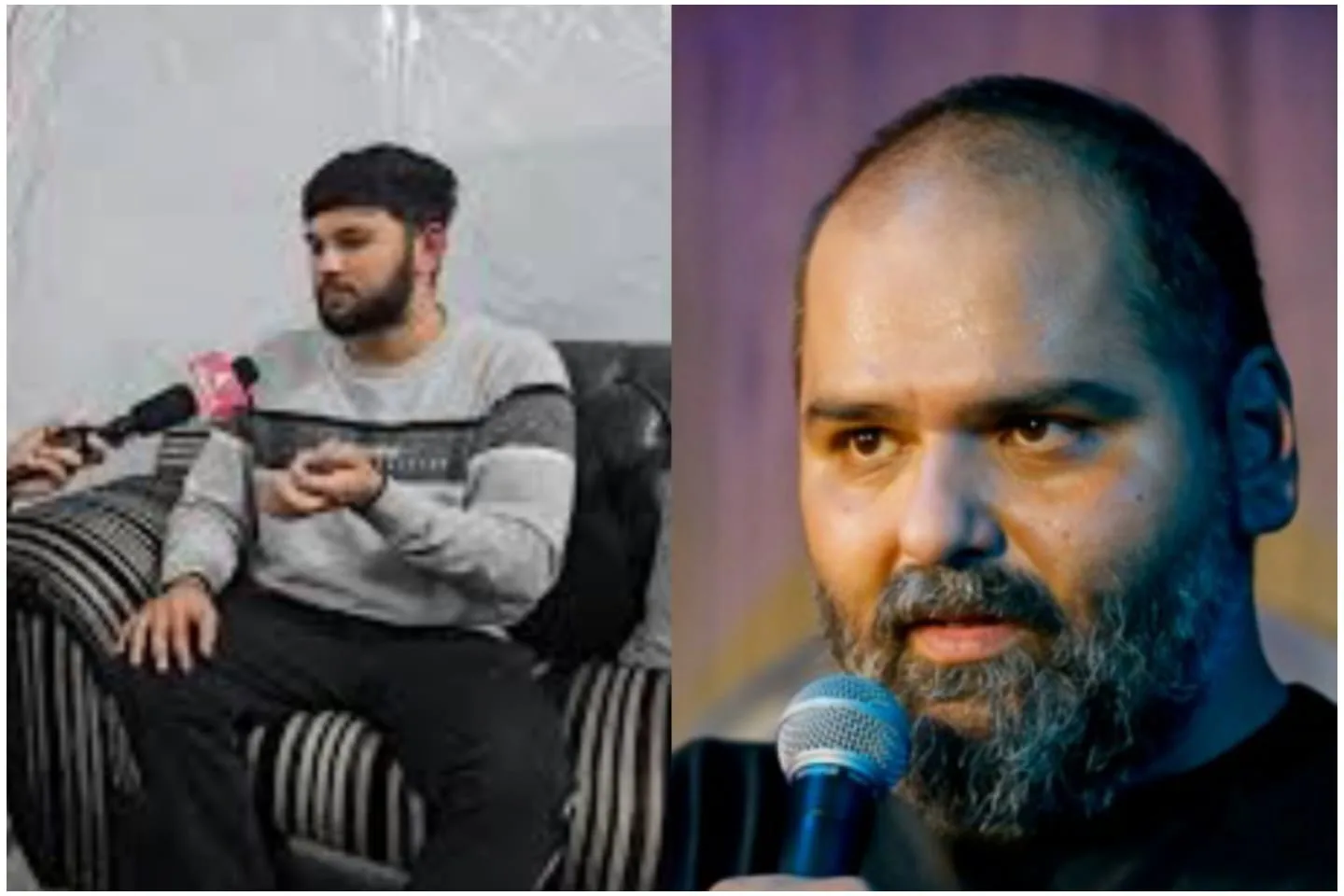
For instance, the contrast in how the likes of Kunal Kamra receive support, while people like YouTuber Nikhil Singh face legal repercussions, exposes the stark hypocrisy in selective enforcement of the law. In 2024, Nikhil Singh, conducted a sting operation exposing prostitution activities near the Lovely Professional University (LPU) campus and uploaded his findings on YouTube. However, instead of taking action against the culprits, Punjab Police arrested him, drawing attention to the stark differences in how different individuals are treated based on their political alignments and ideological leanings.
The case of Nikhil Singh
Nikhil Singh’s ordeal began in March 2024 when he uploaded a video detailing alleged prostitution and liquor shops operating near the Law Gate of LPU in Jalandhar, Punjab. The video raised concerns about the presence of anti-social elements around a major educational institution. However, rather than investigating the claims, the Punjab Police acted against the whistleblower.
Following the video’s release, a social media user under the handle @warlock_shabby amplified the concerns, urging the Punjab government to take action. This led to an FIR against the X user, accusing them of spreading false information and inciting disharmony. The Punjab Police arrested Nikhil Singh in Jammu & Kashmir and subjected his family to immense pressure and intimidation.
Singh was later granted bail by the Jammu & Kashmir and Ladakh High Court. However, the social media user who shared the video, @warlock_shabby, faced ongoing legal harassment. Despite securing bail on May 7, 2024, from the Kapurthala Sessions Court with the condition to join the investigation within seven days, they encountered bureaucratic hurdles. When they attempted to comply with the order, the investigating officer was suddenly unavailable, further complicating their legal battle.
Legal and political motivations behind the targeting of Nikhil Singh
The FIR against Nikhil Singh and @warlock_shabby included charges under Sections 295A, 153, and 153A of the Indian Penal Code (IPC), as well as Section 3 of the Indecent Representation of Women (Prohibition) Act, 1986. The complaint, filed by a person named Vipan Kumar, alleged that the video contained “derogatory language” against women and had the potential to incite riots.
The inclusion of Section 295A, which deals with “deliberate and malicious acts intended to outrage religious feelings,” raises concerns about the misuse of legal provisions to silence dissent. The X user had previously shared content related to the Manipur violence, highlighting attacks on Hindus. The Punjab government’s focus on these past posts, rather than addressing the allegations in Nikhil Singh’s video, indicates a politically motivated crackdown on voices critical of the administration.
Kunal Kamra and the shield of selective outrage
The case of Kunal Kamra provides a stark contrast. The self-proclaimed comedian has frequently courted controversy by targeting political figures and religious sentiments, often escaping legal consequences due to ideological backing from left-leaning intellectuals and media networks.
A recent incident in Mumbai underscored this double standard. In March 2024, Kamra performed a parody song mocking Maharashtra Chief Minister Eknath Shinde, calling him a “gaddar” (traitor). This provoked Shiv Sena workers, who vandalised the venue where Kamra had performed. In response, mainstream media figures and left-leaning activists quickly rallied to his defense, citing freedom of speech.
However, this very group had remained silent, or worse, justified, the violence in Nagpur, where Islamist mobs attacked Hindu protesters who had called for the removal of Aurangzeb’s tomb in Sambhaji Nagar. The same intellectuals who defended Kamra’s right to free speech did not extend the same argument to the Hindu groups who were met with violent retaliation in Nagpur.
Media’s role in shaping the narrative
The biased media coverage of both incidents highlights the complicity of left-leaning journalists in shaping public perception.
Veteran journalist Rajdeep Sardesai, for example, defended the Nagpur violence as a “reaction to provocation,” subtly shifting the blame onto the Hindu protesters. However, just days later, he championed Kamra’s right to free expression, condemning the Shiv Sena workers for their response.
His statement, “To unleash a hate-filled narrative where you want to demolish Aurangzeb’s tomb, you must be prepared for some reaction and a backlash,” implied that Hindu protesters invited the violence upon themselves. But when Kamra’s performance led to vandalism, Sardesai’s stance suddenly shifted to “Don’t like it, don’t watch it,” absolving the comedian of any responsibility for instigating a reaction.
Hypocrisy of selective free speech advocacy
The disparity in treatment between Nikhil Singh and Kunal Kamra exposes the ideological bias in how free speech is defended in India. If satire and criticism are protected for Kamra, why are they not extended to whistleblowers like Nikhil Singh?
Why does the state machinery come down hard on individuals exposing social evils but turn a blind eye when those aligned with a particular ideological faction engage in inflammatory rhetoric?
The Nagpur riots and the targeting of Nikhil Singh both stemmed from individuals exercising their freedom of expression. However, while Islamist mobs were defended for their violent backlash in Nagpur, the Punjab government pursued legal action against those who merely raised concerns about prostitution and liquor sales near an educational institution.
Need for a fair and consistent approach
If democracy is to function effectively, it must uphold free speech without ideological biases. The government, media, and civil society must apply legal standards uniformly, ensuring that all individuals, regardless of their political affiliations, receive equal protection under the law.
Selective outrage and biased legal actions erode public trust in institutions. By shielding individuals like Kunal Kamra while cracking down on whistleblowers like Nikhil Singh, the state sends a dangerous message, that freedom of speech is conditional upon one’s ideological alignment.
To restore credibility, it is imperative that:
The legal system should act against provocations and incitements consistently, irrespective of the individual’s ideological leaning.
Exposing social evils should not be a crime. Individuals like Nikhil Singh should be protected, not persecuted.
Journalistic integrity must be upheld, and media houses should be called out for their selective outrage and biased narratives.
If satire and criticism are defended in one case, they must be defended in all cases. The state must not selectively apply free speech protections based on political convenience.
The stark contrast between the treatment of Kunal Kamra and Nikhil Singh presents a disturbing trend of selective enforcement of laws and protection of free speech. While Kamra enjoys ideological backing, individuals exposing uncomfortable truths face legal persecution. This hypocrisy must be called out, and democracy must ensure that justice is not a privilege reserved for a select few but a right available to all.












Comments