





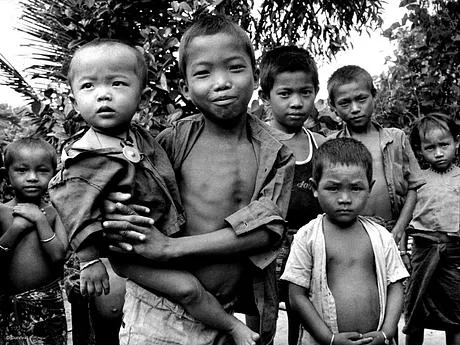
In the green forests of Chittagong Hill Tracts (CHT), the Jumma people—a group of 12 indigenous communities are struggling to survive. For generations, they have lived in these hills, preserving their unique culture and traditions. But now, their way of life is disappearing. Their land is being taken, their voices are being ignored, and they are living in fear as a slow-moving genocide threatens to wipe them out.
A home no longer their own
For centuries, the Chakma, Marma, Tripura, Tanchangya, Mro, and other Jumma tribes lived in harmony with the hills. Their traditions, languages, and faiths distinguished them from the Bengali Muslim majority. But since Bangladesh’s independence, they have faced relentless displacement and persecution.
It began with government-sanctioned settlements. Over 400,000 Bengali settlers were moved into the CHT without the consent of the indigenous people. “Our lands were taken, our homes burned,” recalls an elderly Chakma man in a detailed report. “They told us to leave or be buried beneath our own soil.”
The Bangladesh military soon followed, establishing a stronghold in the region in 1972. What was meant to be a homeland for the Jumma people became a battleground for survival. Reports of rape, torture, murder, and forced evictions mounted as settlers, often with military backing, targeted indigenous families.
Broken peace and unkept promises
Hope flickered in 1997 when the Parbatya Chattagram Jana Samhati Samiti (PCJSS), a political group representing the Jumma people, signed the CHT Peace Accord with the government. The accord promised governance rights, land dispute resolution, and military withdrawal. But more than two decades later, little has changed.
“The army is still here,” says a Jumma activist. “The settlers are still taking our land. And justice is still denied.”
Bengali settlers now outnumber the indigenous population. Those who remain, live under the constant threat of violence. Judicial harassment, arson, and sexual violence are rampant. Between 2017 and 2020, nearly 900 rapes of Jumma women and girls were reported. Many more, advocates believe, have gone uncounted.
Religious sites, once sacred spaces of peace, have also been burned to the ground. “Even our gods are not spared,” whispers a Marma elder, standing before the ruins of a Buddhist temple as quoted in the report.
The world watches in silence
Despite international reports and condemnation, impunity reigns. Indigenous advocates speaking against the oppression have been silenced, some through threats, others through assassination. The government has done little to investigate these crimes, leaving the perpetrators free to continue their campaign of terror.
Genocide Watch, a global human rights organisation, has now issued a Genocide Warning for the Jumma people. Their suffering aligns with multiple stages of genocide: discrimination, persecution, and denial. Without urgent intervention, their future hangs in the balance.
A Plea for Justice
As per the detailed report, Genocide Watch urges Bangladesh to:
Implement the 1997 CHT Peace Accord and protect the land rights of the Jumma people.
Prosecute sexual violence and other crimes against indigenous communities.
Ratify international agreements that safeguard indigenous rights.
End the ongoing genocide before an entire people and their culture are erased.
For now, the Jumma people endure in silence. But how long before there is no one left to speak?










Comments