





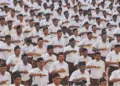
BanasKantha: The Rashtriya Swayamsevak Sangh (RSS) Gujarat Prant organised the Seema Sanghosh (Ghosh Vadan) event at the Bharat-Pakistan border in Nadabet, BanasKantha. The event, conducted by the Ghosh Vibhag of RSS Gujarat Prant, was held in collaboration with the Seema Jagaran Manch, the Border Security Force (BSF), and the Gujarat Tourism Department on March 16. The event was aimed at fostering a strong sense of nationalism, discipline, and unity while showcasing the rich musical tradition of RSS through Ghosh Vadan.
The grand gathering witnessed the participation of 239 Ghosh Vadak performing various traditional compositions on different musical instruments, captivating an audience of over 2,000 spectators. Among the attendees were locals, tourists, and dignitaries, all drawn to the patriotic fervor of the occasion.
Banaskantha, Gujarat: The Rashtriya Swayamsevak Sangh (RSS) organized a 'Seema Sanghosh' (ghosh vadan) program at the India-Pakistan border pic.twitter.com/OEqwt0b0bd
— IANS (@ians_india) March 16, 2025
In his address, special guest Dr Jayantibhai Bhadesia, Paschim Kshetra Sanghchalak and President of Seema Jagaran Manch-Gujarat, emphasized the vital role that border communities play in the nation’s security. He highlighted the need to strengthen ties between citizens living in the hinterland and those residing in border areas to ensure collective responsibility for national integrity.
The event was further elevated by the esteemed presence of Dr Bharat Patel, Prant Sanghchalak, and Kamleshbhai Radadiya, Saurashtra Prant Sah Pracharak, who highlighted the significance of the initiative. Several senior officers of the BSF were also present, underscoring the close collaboration between the RSS and security forces in promoting national consciousness.
The Seema Sanghosh event showcased the deep-rooted cultural and patriotic ethos of the RSS, reinforcing its role in societal transformation and nation-building. The disciplined and synchronized performances of Ghosh instilled a sense of enthusiasm, energy, and unity among the swayamsevaks and the audience alike.
As RSS approaches its centenary year, the event also underlined the qualitative expansion of Ghosh activities, aiming to enhance their impact in spreading cultural awareness and fostering a nationalistic spirit.
A key highlight of the event was the musical performances, where various traditional compositions were played using different instruments. These melodies, deeply rooted in India’s musical heritage, added a spiritual and patriotic dimension to the event:
Venu/Flute: Meera, Shivranjini, Tilak Kamod, Durga, Tilang, Hansadhvani, Kedar
Shrung/Clarinet: Janmabhumi, Jayostute, Shivranjini
Shankh/Bugle: Shri Ram, Chetak, Vinayak, Veerashri, Dashamesh, Ajey, Mangala
Madhurika: Govardhan
The event was held at the BSF Retreat Place, a symbolic location that further amplified the patriotic atmosphere. The grandeur of the performances, combined with the disciplined execution of the musical pieces, reflected the dedication and training of the RSS swayamsevaks. The sight of volunteers playing these powerful compositions against the backdrop of the border heightened the sense of nationalism and unity among the attendees.
The audience, comprising individuals from diverse backgrounds, resonated deeply with the program. Many tourists expressed admiration for the seamless coordination of the event and were inspired by the unwavering commitment of RSS volunteers to the cause of national service. Local residents, too, felt a renewed sense of pride in their association with India’s border security and cultural traditions.
Overall, the Seema Sanghosh event in Nadabet was a resounding success, serving as a beacon of inspiration for all present. It successfully reinforced the connection between the larger society and the border regions, emphasizing the crucial role of national security and unity. The event also set the stage for future initiatives that would continue to strengthen the bond between border communities and the rest of the nation, ensuring a shared commitment to India’s sovereignty and cultural heritage.











Comments