





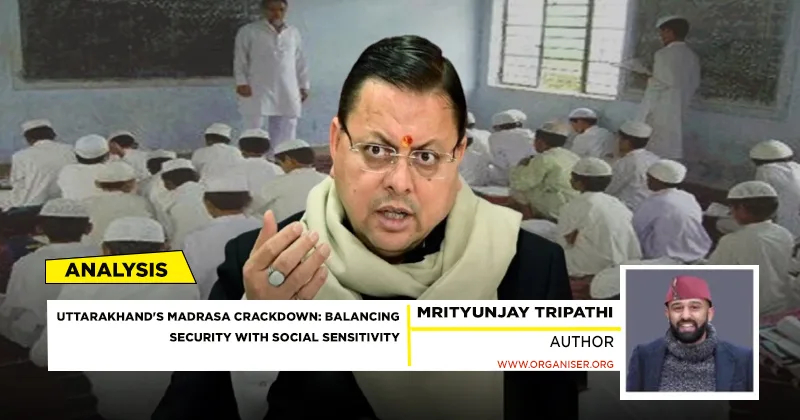
Under Chief Minister Pushkar Singh Dhami, the Uttarakhand government has launched a large-scale crackdown on unregistered madrasas operating within the state. This action, aimed at ensuring compliance with legal and regulatory requirements, has led to the closure of more than 52 madrasas over the past 15 days. Authorities cite concerns over security, lack of proper registration, and the potential to misuse these institutions as the primary reasons behind the enforcement drive.
Details of the crackdown
Sealing unregistered madrasas has been carried out in several phases across multiple districts. Notably:
- Dehradun District: 14 illegal madrasas were sealed, affecting around 150 students, most of whom come from financially disadvantaged backgrounds.
- Vikasnagar (Dehradun): On a single day, 12 madrasas were shut down following direct orders from the Chief Minister.
- Khatima (Udham Singh Nagar): Nine more madrasas were sealed.
According to government officials, identifying and closing these institutions is ongoing, with the police and district administrations actively verifying their legitimacy. Investigations have revealed the presence of over 500 unauthorized madrasas across Uttarakhand, raising concerns about their operations, funding sources, and student demographics.
Identification of unregistered Madrasas
A comprehensive survey conducted by the state’s police and intelligence departments revealed the existence of numerous unregistered madrasas. Notably:
- Udham Singh Nagar: 129 unregistered madrasas identified.
- Dehradun: 57 unregistered madrasas identified.
- Nainital: 26 unregistered madrasas identified.
These findings have prompted district-level committees, led by District Magistrates and senior police officials, to conduct thorough investigations into these institutions’ registration statuses, funding sources, and student demographics.
Government’s Justification
Chief Minister Pushkar Singh Dhami has emphasised that the crackdown is not targeted against any community but is a legal measure to ensure that all educational institutions operate within the framework of the law. He stated, “We will not allow any illegal activity in the state. Strict action will be taken against illegal madrasas and those running them. “In addition to identifying unregistered madrasas, the government has taken steps to cancel the recognition of institutions operating without proper authorisation. For instance, in Haridwar, the recognition of 30 madrasas was revoked due to their unregistered status.
Officials argue that:
- Many madrasas operate without registration or government oversight, making monitoring their curriculum and funding difficult.
- Some madrasas are located in insensitive areas near the Nepal border, which is raising security concerns.
- There is a need to integrate modern education with religious studies to provide a well-rounded curriculum to students.
The Uttarakhand Madrasa Education Board has also urged all unregistered institutions to apply for legal recognition. Out of 88 applications received, 51 have been approved for recognition, while others are under review.
The state government has mandated that district-level committees submit detailed reports within a month. These reports will guide further actions, including potential closures of non-compliant institutions and integration of registered madrasas into the mainstream educational framework.
This crackdown underscores the Uttarakhand government’s commitment to ensuring that all educational institutions, including madrasas, adhere to legal standards, promoting transparency and accountability in the state’s educational landscape.
Official response to allegations
Chief Minister Pushkar Singh Dhami has instructed the Home Department to comprehensively verify all madrasas in Uttarakhand. This directive encompasses an examination of each institution’s registration status, funding sources, and the demographics of their student populations. The Chief Minister emphasised that the crackdown targets only illegal madrasas and is not aimed at any specific community.
One of the significant concerns associated with unregistered madrasas is the lack of oversight regarding their funding sources and operational practices. The government’s initiative ensures that these institutions are not influenced by unauthorised or foreign entities that could pose a security threat. The state administration fosters a lawful and well-regulated system that aligns with national security objectives by implementing strict verification processes. This proactive governance helps prevent potential student exploitation while promoting an education system that is in sync with India’s broader developmental and security goals.
Additionally, the state government has established district-level committees to oversee madrasas’ verification and registration process. These committees, led by District Magistrates, police, and intelligence departments, are responsible for:
- Conducting background checks on madrasa management.
- Investigating funding sources to ensure no foreign or unauthorised financial influence.
- Reviewing the curriculum to ensure compliance with national education standards.
The Uttarakhand government’s crackdown on unregistered madrasas is part of its effort to regulate and standardise religious and educational institutions. While the government argues that these actions aim to maintain legal compliance and security, the move has triggered significant protests and opposition. The challenge remains in balancing law enforcement with the right to education and religious freedom, ensuring that students do not become collateral damage in this regulatory drive.
The Uttarakhand government’s crackdown on unregistered madrasas demonstrates a strong commitment to good governance by ensuring that all educational institutions operate within the legal framework. By identifying and taking action against over 200 unregistered madrasas, the state reinforces the principles of transparency, accountability, and the rule of law. The formation of district-level committees under the supervision of District Magistrates further highlights a structured and law-abiding approach to governance. This systematic verification process ensures compliance with educational regulations and addresses concerns related to funding and security, particularly in sensitive border regions. The government promotes inclusivity and quality education while maintaining public order by integrating these institutions into the mainstream education system through proper registration.
Additionally, the government’s clear stance that the crackdown targets only illegal institutions and not any specific community reflects a commitment to impartial governance. The assurance given to registered madrasas about their continued operation within legal bounds showcases a balanced approach to policymaking. Furthermore, the coordination between law enforcement, the Education Department, and local administrative bodies signifies an efficient and well-orchestrated governance mechanism. The government’s proactive measures protect students from potentially substandard or unregulated education and ensure that the state’s security and development objectives are met. This approach reinforces public trust in the administration’s ability to uphold legal and educational standards without bias, strengthening the state’s governance model.
Registered madrasas that comply with regulations will continue functioning without disruption, demonstrating that the initiative is focused on legality rather than religious identity.













Comments