




Gen Next Democracy Network Programme: Strengthening global democratic engagement
December 6, 2025
  • Read Ecopy
  • Circulation
  • Advertise
  • Careers
  • About Us
  • Contact Us
Android AppiPhone AppArattai
Organiser
  • ‌
  • Bharat
    • Assam
    • Bihar
    • Chhattisgarh
    • Jharkhand
    • Maharashtra
    • View All States
  • World
    • Asia
    • Europe
    • North America
    • South America
    • Africa
    • Australia
  • Editorial
  • International
  • Opinion
  • RSS @ 100
  • More
    • Op Sindoor
    • Analysis
    • Sports
    • Defence
    • Politics
    • Business
    • Economy
    • Culture
    • Special Report
    • Sci & Tech
    • Entertainment
    • G20
    • Azadi Ka Amrit Mahotsav
    • Vocal4Local
    • Web Stories
    • Education
    • Employment
    • Books
    • Interviews
    • Travel
    • Law
    • Health
    • Obituary
  • Subscribe
    • Subscribe Print Edition
    • Subscribe Ecopy
    • Read Ecopy
  • ‌
  • Bharat
    • Assam
    • Bihar
    • Chhattisgarh
    • Jharkhand
    • Maharashtra
    • View All States
  • World
    • Asia
    • Europe
    • North America
    • South America
    • Africa
    • Australia
  • Editorial
  • International
  • Opinion
  • RSS @ 100
  • More
    • Op Sindoor
    • Analysis
    • Sports
    • Defence
    • Politics
    • Business
    • Economy
    • Culture
    • Special Report
    • Sci & Tech
    • Entertainment
    • G20
    • Azadi Ka Amrit Mahotsav
    • Vocal4Local
    • Web Stories
    • Education
    • Employment
    • Books
    • Interviews
    • Travel
    • Law
    • Health
    • Obituary
  • Subscribe
    • Subscribe Print Edition
    • Subscribe Ecopy
    • Read Ecopy
Organiser
  • Home
  • Bharat
  • World
  • Operation Sindoor
  • Editorial
  • Analysis
  • Opinion
  • Culture
  • Defence
  • International Edition
  • RSS @ 100
  • Magazine
  • Read Ecopy
Home Bharat

Gen Next Democracy Network Programme: Strengthening global democratic engagement

India's Gen Next Democracy Network Programme, launched by ICCR, fosters global democratic cooperation by engaging young leaders from diverse nations through cultural diplomacy and knowledge exchange. The initiative strengthens India's soft power strategy and aims to institutionalise long-term democratic dialogue and collaboration

Dnyanashri KulkarniDnyanashri Kulkarni
Feb 21, 2025, 05:00 pm IST
in Bharat
Follow on Google News
FacebookTwitterWhatsAppTelegramEmail

For centuries, the discourse on democracy has largely centered around Western traditions, with ancient Greece often regarded as its birthplace. However, recent scholarship has revealed traces of democratic governance in ancient India, dating back to the Vedic period. Texts such as the Rigveda and Atharvaveda, along with Buddhist scriptures in Pali, highlight democratic governance like structures in regions like Vaishali as early as the fifth century BCE.

India, as the world’s largest democracy, has continuously evolved its democratic framework since gaining independence, solidifying its institutions and governance. Against this backdrop, India has recognized the importance of fostering global democratic cooperation, leading to the establishment of the Gen Next Democracy Network Programme by the Indian Council for Cultural Relations (ICCR), an autonomous body of the Ministry of External Affairs, Government of India.

What makes this initiative unique? How does it contribute to India’s role in global democratic discourse and soft power diplomacy?

Understanding the Gen next democracy network programme

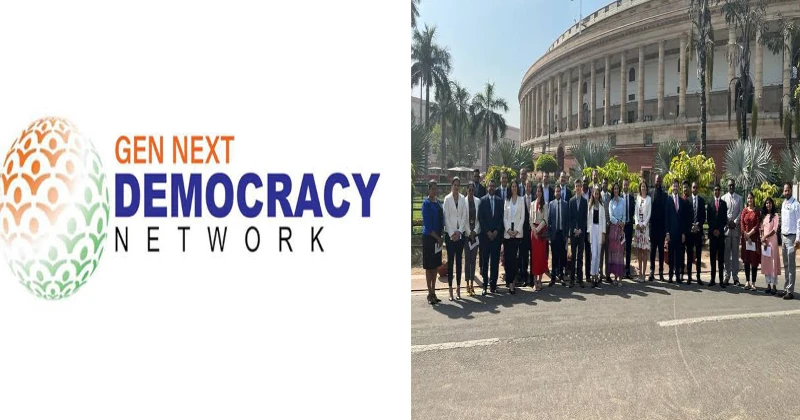
The Gen Next Democracy Network Programme was launched by ICCR as a part of the Azadi Ka Amrit Mahotsav celebrations. Between November 2021 and August 2023, the initiative successfully hosted 269 delegates from 77 countries, spanning 11 batches. Each batch was carefully composed to ensure diverse representation from almost every continent, encompassing Asia, Africa, Europe, North America, South America, and Oceania. This broad inclusion facilitated an enriching exchange of democratic values and governance models.

The participants, comprising 159 men and 110 women, included Members of Parliament, ministers, journalists, social workers, entrepreneurs, and civil servants. The nearly 41 percent female representation in the programme highlights India’s commitment to gender inclusivity in political leadership. Over the course of the programme, these young leaders explored various Indian states and union territories, covering 28 cities in 11 states and 2 UTs. Notably, Agra remained a common destination across all batches, providing delegates with a glimpse into India’s rich heritage.

Beyond cultural exposure, the initiative facilitated interactions with key Indian stakeholders, including government officials, academics, think tanks, entrepreneurs and NGOs. These engagements enabled foreign delegates to gain insights into India’s democratic governance, policy-making, and grassroots development initiatives. Each batch concluded with a debriefing session, allowing participants to share their experiences and recommendations for future improvements.

Global Parallels: Do other countries have similar initiatives?

Several nations have developed programmes that promote democratic cooperation and leadership exchange. The International Visitor Leadership Program (IVLP) of the United States has long served as a flagship initiative, aimed at fostering diplomatic ties through short-term visits of emerging global leaders. Similarly, Germany’s Konrad Adenauer Stiftung (KAS) and Friedrich Ebert Stiftung (FES) run fellowships and study tours for political leaders for promoting democratic values and governance best practices. While these programmes primarily focus on leadership development and international cooperation, the Gen Next Democracy Network Programme uniquely integrates cultural diplomacy with democratic engagement, setting it apart as a model for soft power projection.

The relevance of this initiative in India’s soft power strategy

India’s rise as a global democratic leader necessitates proactive engagement with young leaders from diverse backgrounds. The Gen Next Democracy Network Programme aligns with India’s broader soft power strategy, which emphasizes cultural diplomacy, knowledge exchange, and democratic cooperation. Unlike coercive power, soft power relies on attraction and persuasion. As Rhoda Crawford, Member of Parliament (2021) from Jamaica (a delegate from the first batch), aptly stated, “India needs to tell its own story.” Through this initiative, India ensures that its democratic legacy and governance model are effectively communicated to the world. While there is no official document stating what constitutes India’s cultural diplomacy or soft power, it is safe to say that India’s engagement with the rest of the world is based on two major principles- सर्वे भवन्तु सुखिनः। and वसुधैव कुटुंबकम.

Through this programme, India effectively showcases its inclusive governance, constitutional values, and grassroots democratic institutions. Additionally, by hosting delegates from countries with varied democratic structures, India offers a platform for global discussions on democratic development and challenges. This initiative also counters narratives that undermine democratic confidence, particularly in post-Soviet or transitional democracies where democratic governance has yet to yield tangible benefits for citizens.

The way forward

What started as a grand year-long initiative of hosting 75 democracies as a part of Azadi ka Amrit Mahotsav celebrations eventually became one of the biggest landmark events of ICCR. Its continued relevance and long-term impact further highlight the need to focus on institutionalizing the initiative by establishing a permanent forum for young democrats that ensures continuous dialogue, collaboration, and capacity-building.

Firstly, the exchange should be a continuous initiative and not a mere one time exchange of leaders. In addition, introducing a reciprocal exchange mechanism, where Indian scholars and young leaders visit participating countries, can deepen democratic cooperation. Furthermore, expanding its global reach to include more participants from Africa, Latin America, and small island nations will further ensure enhanced south-south partnerships. Similarly, developing thematic and regional cohorts, focusing on different but not limited to themes such as Sustainable Development Goals (SDGs), climate governance, digital democracy, and inclusive policy making, will further cement the programme’s relevance.

Additionally, hosting an annual Young Democrats Summit could provide a platform for policy innovation, best practice-sharing, and sustained engagement. By implementing such measures, the programme can evolve into a benchmark for global democratic engagement.
Topics: ICCRGen Next Democracy NetworkDemocracy Network Programme
ShareTweetSendShareSend
✮ Subscribe Organiser YouTube Channel. ✮
✮ Join Organiser's WhatsApp channel for Nationalist views beyond the news. ✮
Previous News

Maha Kumbh to bring more than Rs 3 lakh cr in UP’s economy: CM Yogi Adityanath

Next News

From expressways to AI city: UP Govt announces mega infra and digital push in 2025-26 Budget

Related News

External Affairs Minister S Jaishankar

“Bharat is a statement of independence,” says External Affairs Minister S Jaishankar

ICCR President Dr Vinay Sahasrabuddhe (6th from L), Acting Director General, Rajeev Kumar and DDG, Abhay Kumar with other dignitaries at India International Centre

ICCR Annapurna Certificate: Bharat shows the world how to celebrate Indian culture through its cuisine

International Conference on Vasudhaiva Kutumbakam celebrates Unity and Global Cooperation

“Vasudhaiva Kutumbakam an eternal mission of India”: ICCR President

Indian Ambassador Ruchira Kamboj and ICCR President Vinay Sahasrabuddhe unveil "Vasudhaiva Kutumbakam" plaque at Permanent Mission of India to UN in New York

Ruchira Kamboj, ICCR President, unveil “Vasudhaiva Kutumbakam” plaque at Permanent Mission of India to UN

Load More

Comments

The comments posted here/below/in the given space are not on behalf of Organiser. The person posting the comment will be in sole ownership of its responsibility. According to the central government's IT rules, obscene or offensive statement made against a person, religion, community or nation is a punishable offense, and legal action would be taken against people who indulge in such activities.

Latest News

PM Modi presents Putin with Bhagavad Gita, chess set, and silver horse

Cultural ties strengthened: PM Modi presents Putin with Bhagavad Gita, chess set, and silver horse

Image for representational purpose only, Courtesy Vocal Media

Bihar to get ‘Special Economic Zones’ in Buxar and West Champaran

Thirupparankundram Karthigai Deepam utsav

Andhra Pradesh: AP Dy CM Pawan Kalyan reacts to Thirupparankundram row, flags concern over religious rights of Hindus

23rd India-Russia Annual Summit

India-Russia Summit heralds new chapter in time-tested ties: Inks MoUs in economic, defence, tourism & education

DGCA orders probe into IndiGo flight disruptions; Committee to report in 15 days

BJYM leader Shyamraj with Janaki

Kerala: Widow of BJP worker murdered in 1995 steps into electoral battle after three decades at Valancherry

Russian Sber bank has unveiled access to its retail investors to the Indian stock market by etching its mutual fund to Nifty50

Scripting economic bonhomie: Russian investors gain access to Indian stocks, Sber unveils Nifty50 pegged mutual funds

Petitioner S Vignesh Shishir speaking to the reporters about the Rahul Gandhi UK citizenship case outside the Raebareli court

Rahul Gandhi UK Citizenship Case: Congress supporters create ruckus in court; Foreign visit details shared with judge

(L) Kerala High Court (R) Bouncers in Trippoonithura temple

Kerala: HC slams CPM-controlled Kochi Devaswom Board for deploying bouncers for crowd management during festival

Fact Check: Rahul Gandhi false claim about govt blocking his meet with Russian President Putin exposed; MEA clears air

Load More
  • Privacy
  • Terms
  • Cookie Policy
  • Refund and Cancellation
  • Delivery and Shipping

© Bharat Prakashan (Delhi) Limited.
Tech-enabled by Ananthapuri Technologies

  • Home
  • Search Organiser
  • Bharat
    • Assam
    • Bihar
    • Chhattisgarh
    • Jharkhand
    • Maharashtra
    • View All States
  • World
    • Asia
    • Africa
    • North America
    • South America
    • Europe
    • Australia
  • Editorial
  • Operation Sindoor
  • Opinion
  • Analysis
  • Defence
  • Culture
  • Sports
  • Business
  • RSS @ 100
  • Entertainment
  • More ..
    • Sci & Tech
    • Vocal4Local
    • Special Report
    • Education
    • Employment
    • Books
    • Interviews
    • Travel
    • Health
    • Politics
    • Law
    • Economy
    • Obituary
  • Subscribe Magazine
  • Read Ecopy
  • Advertise
  • Circulation
  • Careers
  • About Us
  • Contact Us
  • Policies & Terms
    • Privacy Policy
    • Cookie Policy
    • Refund and Cancellation
    • Terms of Use

© Bharat Prakashan (Delhi) Limited.
Tech-enabled by Ananthapuri Technologies








