


Congress moves Supreme Court over 'Places of Worship Act'; Balancing secularism or playing appeasement?
December 5, 2025
  • Read Ecopy
  • Circulation
  • Advertise
  • Careers
  • About Us
  • Contact Us
Android AppiPhone AppArattai
Organiser
  • ‌
  • Bharat
    • Assam
    • Bihar
    • Chhattisgarh
    • Jharkhand
    • Maharashtra
    • View All States
  • World
    • Asia
    • Europe
    • North America
    • South America
    • Africa
    • Australia
  • Editorial
  • International
  • Opinion
  • RSS @ 100
  • More
    • Op Sindoor
    • Analysis
    • Sports
    • Defence
    • Politics
    • Business
    • Economy
    • Culture
    • Special Report
    • Sci & Tech
    • Entertainment
    • G20
    • Azadi Ka Amrit Mahotsav
    • Vocal4Local
    • Web Stories
    • Education
    • Employment
    • Books
    • Interviews
    • Travel
    • Law
    • Health
    • Obituary
  • Subscribe
    • Subscribe Print Edition
    • Subscribe Ecopy
    • Read Ecopy
  • ‌
  • Bharat
    • Assam
    • Bihar
    • Chhattisgarh
    • Jharkhand
    • Maharashtra
    • View All States
  • World
    • Asia
    • Europe
    • North America
    • South America
    • Africa
    • Australia
  • Editorial
  • International
  • Opinion
  • RSS @ 100
  • More
    • Op Sindoor
    • Analysis
    • Sports
    • Defence
    • Politics
    • Business
    • Economy
    • Culture
    • Special Report
    • Sci & Tech
    • Entertainment
    • G20
    • Azadi Ka Amrit Mahotsav
    • Vocal4Local
    • Web Stories
    • Education
    • Employment
    • Books
    • Interviews
    • Travel
    • Law
    • Health
    • Obituary
  • Subscribe
    • Subscribe Print Edition
    • Subscribe Ecopy
    • Read Ecopy
Organiser
  • Home
  • Bharat
  • World
  • Operation Sindoor
  • Editorial
  • Analysis
  • Opinion
  • Culture
  • Defence
  • International Edition
  • RSS @ 100
  • Magazine
  • Read Ecopy
Home Bharat

Congress moves Supreme Court over ‘Places of Worship Act’; Balancing secularism or playing appeasement?

The Congress’s intervention has reignited debates around the Act’s implications, particularly in the context of India’s historical and cultural aspirations. Critics argue that the Act disregards the civilisational aspirations of Hindus to reclaim temples destroyed during centuries of invasions

WEBDESKWEBDESK
Jan 17, 2025, 06:00 pm IST
in Bharat, Delhi, Law
Follow on Google News
Congress moves Supreme Court in Places of Worship Act

Congress moves Supreme Court in Places of Worship Act

FacebookTwitterWhatsAppTelegramEmail

The Congress, which has historically shifted from a political alignment with Hindu interests to a path of caste division and Muslim appeasement, has approached the Supreme Court seeking to intervene in cases challenging the constitutional validity of the Places of Worship (Special Provisions) Act, 1991 (PoWA). This Act, enacted during the Congress-led government, claims to preserve the character of religious places as they existed on August 15, 1947. However, by barring Hindu petitioners from reclaiming historical religious sites, it has been seen as an obstacle to the delivery of justice in such cases.

In its intervention application, the Congress has argued that it held a parliamentary majority when the legislation was enacted, showcasing its commitment to fostering communal harmony and upholding the secular fabric of the nation. The party emphasised that the PoWA is a cornerstone for maintaining peace and preventing the rekindling of historical disputes over religious sites, which could potentially destabilise the country’s social equilibrium.

The party argues that the Act was not only a legislative milestone but also a manifestation of the commitments made in its election manifesto to uphold India’s communal harmony. It emphasises that the law’s primary objective is to maintain the religious character of places of worship as they existed on August 15, 1947, preventing the revival of historical disputes over religious sites. The only exception to this Act is the Ram Janmabhoomi-Babri Masjid site in Ayodhya, which had already been a subject of ongoing litigation.

The petitions challenging the Act include one filed by Ashwini Kumar Upadhyay, a BJP leader, who argues that the law discriminates against Hindu, Sikh, Jain, and Buddhist communities. According to Upadhyay, the Act prevents these communities from reclaiming places of worship allegedly desecrated or destroyed during historical invasions. The Congress, however, counters these claims, stating that the Act does not favour any religious group but promotes equality and applies uniformly to all communities.

The party’s application draws attention to the Supreme Court’s landmark 2019 Ayodhya verdict, where the bench recognised the Places of Worship Act as a critical safeguard for secularism and constitutional values. The Congress contends that the Act’s provisions are essential to prevent the rekindling of communal tensions that could jeopardise India’s sovereignty and integrity. It dismisses allegations of bias against certain religious groups, arguing that the law’s intent is to preserve the status quo and prevent disputes from escalating into larger conflicts.

Prominent challenges to the Act have also come from leaders like Subramanian Swamy and other Hindu litigants who argue that it infringes upon the fundamental rights of Hindus to reclaim temples desecrated during invasions.

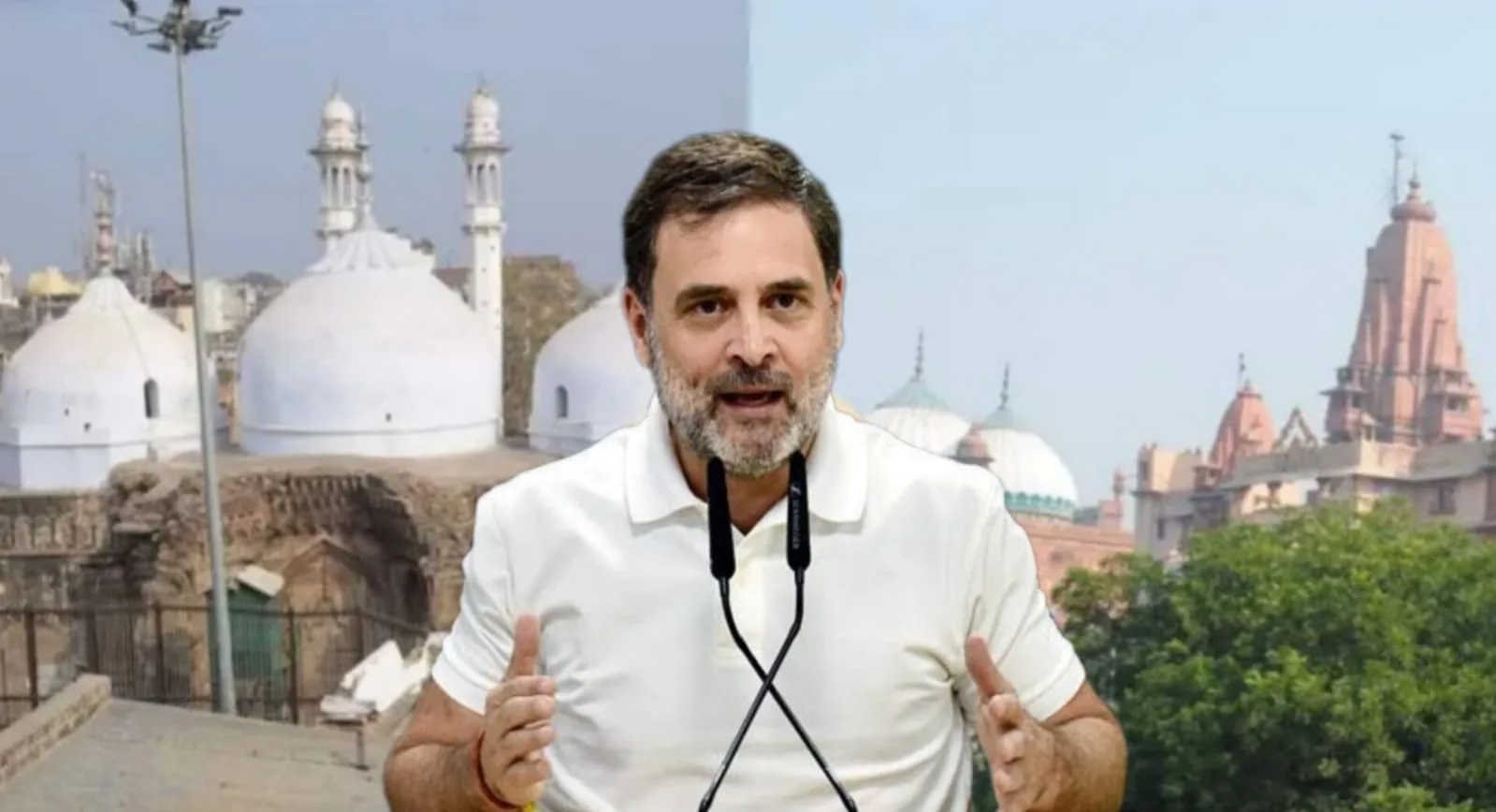
The Supreme Court has scheduled a hearing on these consolidated petitions for February 17 before a bench led by Chief Justice of India Sanjiv Khanna. Notably, the court has previously issued a directive barring lower courts from entertaining fresh suits or ordering surveys to determine the religious character of places of worship. This directive comes amid escalating litigation by Hindu groups seeking surveys of prominent mosques, such as the Gyanvapi mosque in Varanasi and the Shahi Idgah Masjid in Mathura.

The Congress’s intervention has reignited debates around the Act’s implications, particularly in the context of India’s historical and cultural aspirations. Critics argue that the Act disregards the civilisational aspirations of Hindus to reclaim temples destroyed during centuries of invasions. They contend that the law’s primary function is to protect structures built atop desecrated Hindu, Buddhist, and Jain sites, effectively prioritizing the preservation of certain religious structures over others.

The historical backdrop of this controversy cannot be ignored. The Places of Worship Act was crafted during a period when the Congress government sought to address communal tensions, but critics view it as a calculated move to appease certain communities at the expense of others.

Detractors also point to Congress’s track record, citing initiatives like the Communal Violence Bill of 2011, which was widely criticised for disproportionately targeting the Hindu majority. Additionally, statements by Congress leaders, such as Rahul Gandhi’s controversial remark in Parliament accusing Hindus of perpetuating violence, have fueled accusations of anti-Hindu bias.

The ongoing debate over the Places of Worship Act raises fundamental questions about secularism and justice in India. If Muslim leaders and organisations claim that no temples were destroyed during historical invasions, why do they fear litigation? Legal experts argue that any litigation against disputed sites would likely result in court orders to maintain the status quo until the matter is resolved, ensuring that no structural alterations are made during the legal process.

The real concern, critics suggest, lies in the potential unravelling of historical truths. If litigation is allowed, it could lead to the documentation of instances where temples were destroyed, women and girls were subjected to atrocities, and Hindus faced systemic oppression under foreign invaders. The revelations from such cases could challenge the carefully curated narratives of India’s past, exposing the scale of historical injustices faced by Hindus.

While the world is familiar with the prominent cases of Ayodhya, Kashi, and Mathura, there are likely numerous other sites awaiting reclamation. For the Congress, the fear is not just about legal battles but the broader cultural and historical awakening that could follow. The unravelling of suppressed histories would lay bare the party’s role in shaping post-independence policies that many believe marginalised Hindu aspirations.

The Places of Worship Act represents a flawed secularism that subjugates one religion to politically and socially benefit others. True secularism, critics contend, can only be achieved through a sense of justice for all religions, not by perpetuating historical inequities under the guise of preserving communal harmony. It is time to reevaluate whether laws like the Places of Worship Act genuinely uphold the principles of equality and justice or merely serve as tools for political appeasement and historical erasure.

Topics: CongressSupreme CourtMuslim appeasementplaces of worship act
ShareTweetSendShareSend
✮ Subscribe Organiser YouTube Channel. ✮
✮ Join Organiser's WhatsApp channel for Nationalist views beyond the news. ✮
Previous News

Army Day 2025: A tribute to valour, vision and strategic resolve in India’s journey towards Viksit Bharat

Next News

Kerala: CPM leaders files case against RSS swayamsevaks on fabricated charges following confrontation at Kumily

Related News

Fact Check: Rahul Gandhi false claim about govt blocking his meet with Russian President Putin exposed; MEA clears air

The Supreme Court of India

Supreme Court allows extra support for overburdened BLOs, says SIR duties are mandatory for government staff

West Bengal Chief Minister Mamata Banerjee

West Bengal: NCBC delists 35 Muslim castes wrongly included in OBC category; Mamata govt’s appeasement politics exposed

Representation image of a Muslim woman (Tribune)

Supreme Court secures property rights of divorced Muslim women in landmark verdict

Sanchar Saathi vs. Manufactured Panic: Why Congress’ ‘Snooping’ charge crumbles under facts

Delhi MCD Bypoll results: BJP emerges big winner, grabs 7 of 12 seats; AAP suffers setback, Congress wins one

Load More

Comments

The comments posted here/below/in the given space are not on behalf of Organiser. The person posting the comment will be in sole ownership of its responsibility. According to the central government's IT rules, obscene or offensive statement made against a person, religion, community or nation is a punishable offense, and legal action would be taken against people who indulge in such activities.

Latest News

PM Modi presents Putin with Bhagavad Gita, chess set, and silver horse

Cultural ties strengthened: PM Modi presents Putin with Bhagavad Gita, chess set, and silver horse

Image for representational purpose only, Courtesy Vocal Media

Bihar to get ‘Special Economic Zones’ in Buxar and West Champaran

Thirupparankundram Karthigai Deepam utsav

Andhra Pradesh: AP Dy CM Pawan Kalyan reacts to Thirupparankundram row, flags concern over religious rights of Hindus

23rd India-Russia Annual Summit

India-Russia Summit heralds new chapter in time-tested ties: Inks MoUs in economic, defence, tourism & education

DGCA orders probe into IndiGo flight disruptions; Committee to report in 15 days

BJYM leader Shyamraj with Janaki

Kerala: Widow of BJP worker murdered in 1995 steps into electoral battle after three decades at Valancherry

Russian Sber bank has unveiled access to its retail investors to the Indian stock market by etching its mutual fund to Nifty50

Scripting economic bonhomie: Russian investors gain access to Indian stocks, Sber unveils Nifty50 pegged mutual funds

Petitioner S Vignesh Shishir speaking to the reporters about the Rahul Gandhi UK citizenship case outside the Raebareli court

Rahul Gandhi UK Citizenship Case: Congress supporters create ruckus in court; Foreign visit details shared with judge

(L) Kerala High Court (R) Bouncers in Trippoonithura temple

Kerala: HC slams CPM-controlled Kochi Devaswom Board for deploying bouncers for crowd management during festival

Fact Check: Rahul Gandhi false claim about govt blocking his meet with Russian President Putin exposed; MEA clears air

Load More
  • Privacy
  • Terms
  • Cookie Policy
  • Refund and Cancellation
  • Delivery and Shipping

© Bharat Prakashan (Delhi) Limited.
Tech-enabled by Ananthapuri Technologies

  • Home
  • Search Organiser
  • Bharat
    • Assam
    • Bihar
    • Chhattisgarh
    • Jharkhand
    • Maharashtra
    • View All States
  • World
    • Asia
    • Africa
    • North America
    • South America
    • Europe
    • Australia
  • Editorial
  • Operation Sindoor
  • Opinion
  • Analysis
  • Defence
  • Culture
  • Sports
  • Business
  • RSS @ 100
  • Entertainment
  • More ..
    • Sci & Tech
    • Vocal4Local
    • Special Report
    • Education
    • Employment
    • Books
    • Interviews
    • Travel
    • Health
    • Politics
    • Law
    • Economy
    • Obituary
  • Subscribe Magazine
  • Read Ecopy
  • Advertise
  • Circulation
  • Careers
  • About Us
  • Contact Us
  • Policies & Terms
    • Privacy Policy
    • Cookie Policy
    • Refund and Cancellation
    • Terms of Use

© Bharat Prakashan (Delhi) Limited.
Tech-enabled by Ananthapuri Technologies