





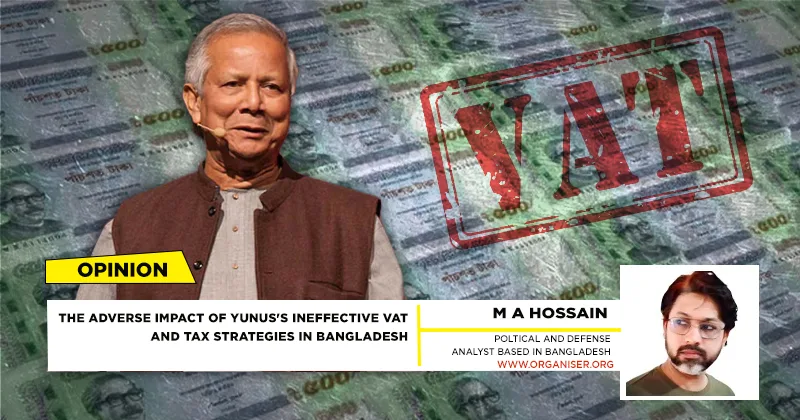
The recent decision to raise taxes on over a hundred products has sparked widespread concern among the general public. At a time when inflation is soaring and economic conditions are worsening, the introduction of these measures has further strained the financial capacity of ordinary citizens. This increase in taxation, which predominantly affects essential goods and services, will undoubtedly lead to higher market prices, making life more challenging for the poor and middle classes. The government’s reliance on indirect taxes as a primary source of revenue is a troubling trend that disproportionately burdens the population, as such taxes are directly linked to the cost of goods and services.
In an economy already grappling with declining purchasing power, the timing of these tax hikes raises serious questions about the government’s priorities. By shifting the tax burden onto the general population rather than the wealthy, the policy fails to address systemic inequalities. Wealthy individuals and corporations often evade taxes or benefit from various tax breaks, despite earning substantial incomes and accumulating significant wealth. This disparity in tax collection undermines social justice and economic stability. The government must adopt stricter measures to curb tax evasion and ensure that the wealthy contribute their fair share to the national exchequer. By doing so, the need for such harsh indirect taxes could be minimized, easing the burden on ordinary citizens.
The decision to suspend the Trading Corporation of Bangladesh (TCB) truck sales program has further compounded the hardships faced by the poor. This program, which provided essential goods at subsidized prices, was a lifeline for low-income families. In the context of high inflation and unstable incomes, its suspension reveals a disconnect between the government’s economic policies and the realities on the ground. The poor and middle classes, already grappling with the high cost of living, now face an even steeper uphill battle. The absence of such critical support mechanisms erodes public trust and exacerbates social inequities.
This series of decisions reflects a troubling lack of coordination between the government’s monetary, fiscal, and market policies. Instead of implementing measures to stabilize markets and provide relief to those most affected by inflation, the government has opted for actions that deepen economic disparities. Revising revenue policies to focus on direct taxation of the wealthy, rather than increasing the reliance on indirect taxes, would have been a more equitable approach. Such a shift could help balance the economy, promote social justice, and strengthen public confidence in the government’s ability to address pressing economic challenges.
The imposition of new taxes through a presidential ordinance in the middle of the fiscal year has further aggravated the situation. The increased value-added tax (VAT) and supplementary duties (SD) on nearly 100 products and services, including food, clothing, telecommunications, and transportation, have created widespread discontent. These measures come at a time when the economy is experiencing persistent double-digit inflation and growth rates have slowed to under two percent. The abrupt nature of these tax hikes raises fundamental questions about their necessity and potential consequences.
One of the primary drivers behind this decision appears to be pressure from the International Monetary Fund (IMF), which has tied the disbursement of $4.7 billion in loans to specific fiscal reforms. Among these is the requirement to increase the tax-to-GDP ratio by 0.2 percent by FY2025-26, translating to an additional Tk 12,000 crores in taxes. This is not the first time the IMF has imposed such manipulations.
Government officials have argued that the increased taxes will not exacerbate inflation, claiming that many of the affected products are not part of the Consumer Price Index (CPI) basket. However, this argument fails to consider the broader economic realities. For example, increasing VAT on clothing from 7.5 to 15 percent will disproportionately impact the poor and middle classes, who spend a significant portion of their income on such essentials. Similarly, higher taxes on sweets, telecommunications, and other commonly used services will further strain household budgets, reducing purchasing power and deepening economic woes.
The adverse effects of these measures extend beyond consumers to businesses, particularly small and medium enterprises. Many business owners have expressed concern over the impact of higher taxes on their operations. Small businesses, which rely heavily on telecommunications for their activities, will face higher costs due to increased taxes on mobile phones and internet services. Past experiences have shown that lowering VAT rates on certain goods and services can lead to increased revenue due to higher consumption. Doubling VAT on elastic goods and services risks reducing demand, thereby failing to achieve the intended revenue goals while further depressing economic growth.
While the government has claimed that reductions in duties on essential commodities such as rice, onions, and potatoes will offset the impact of tax hikes, the reality suggests otherwise. Despite the removal of duties on these items, prices have not significantly decreased. Additionally, the discontinuation of programs like TCB truck sales and the invalidation of millions of family cards have left low-income families without crucial support. With Ramadan approaching, a period historically marked by price increases for essential goods, the economic strain on consumers is expected to intensify.
Bangladesh’s tax structure is in dire need of reform. The country’s tax-to-GDP ratio is among the lowest in the region. This discrepancy highlights the urgent need to expand the direct tax base. Currently, nearly 68 percent of eligible taxpayers do not pay income tax, a glaring oversight that must be addressed. By bringing more people into the tax net and focusing on direct taxation, the government can achieve a more equitable and efficient revenue system.
Historically, Bangladesh has relied heavily on indirect taxes, which disproportionately affect the poor. In contrast, countries like India derive a significant portion of their tax revenue from direct taxes, creating a more balanced and fair system. Shifting the focus to direct taxes would not only increase government revenue but also reduce economic disparities. Tackling tax evasion and improving tax administration are essential steps in this process. Estimates suggest that tax evasion costs Bangladesh between Tk 56,000 crore and Tk 300,000 crore annually. Leveraging technology and strengthening enforcement mechanisms could help recover these lost revenues, reducing the need for regressive tax policies.
The current tax hikes will undoubtedly exacerbate economic pressures on consumers and businesses alike. To address these challenges, the government must undertake comprehensive reforms of the tax structure and collection systems. Prioritising direct taxation over indirect taxation, expanding the tax base, and improving enforcement are essential to achieving sustainable economic growth and reducing social inequalities.
In conclusion, the government’s reliance on indirect taxes and its failure to address systemic issues in revenue collection risk deepening economic hardships for ordinary citizens. By reforming its tax policies and adopting a more equitable approach to revenue generation, the government can create a fairer and more resilient economy. However, without immediate and decisive action, the current measures will only widen the gap between policy and reality, leaving the poor and middle classes to bear the brunt of economic mismanagement












Comments