




Raja Bikramjit Ghosh: The Sadgop ruler who resisted the Delhi Sultanate
December 5, 2025
  • Read Ecopy
  • Circulation
  • Advertise
  • Careers
  • About Us
  • Contact Us
Android AppiPhone AppArattai
Organiser
  • ‌
  • Bharat
    • Assam
    • Bihar
    • Chhattisgarh
    • Jharkhand
    • Maharashtra
    • View All States
  • World
    • Asia
    • Europe
    • North America
    • South America
    • Africa
    • Australia
  • Editorial
  • International
  • Opinion
  • RSS @ 100
  • More
    • Op Sindoor
    • Analysis
    • Sports
    • Defence
    • Politics
    • Business
    • Economy
    • Culture
    • Special Report
    • Sci & Tech
    • Entertainment
    • G20
    • Azadi Ka Amrit Mahotsav
    • Vocal4Local
    • Web Stories
    • Education
    • Employment
    • Books
    • Interviews
    • Travel
    • Law
    • Health
    • Obituary
  • Subscribe
    • Subscribe Print Edition
    • Subscribe Ecopy
    • Read Ecopy
  • ‌
  • Bharat
    • Assam
    • Bihar
    • Chhattisgarh
    • Jharkhand
    • Maharashtra
    • View All States
  • World
    • Asia
    • Europe
    • North America
    • South America
    • Africa
    • Australia
  • Editorial
  • International
  • Opinion
  • RSS @ 100
  • More
    • Op Sindoor
    • Analysis
    • Sports
    • Defence
    • Politics
    • Business
    • Economy
    • Culture
    • Special Report
    • Sci & Tech
    • Entertainment
    • G20
    • Azadi Ka Amrit Mahotsav
    • Vocal4Local
    • Web Stories
    • Education
    • Employment
    • Books
    • Interviews
    • Travel
    • Law
    • Health
    • Obituary
  • Subscribe
    • Subscribe Print Edition
    • Subscribe Ecopy
    • Read Ecopy
Organiser
  • Home
  • Bharat
  • World
  • Operation Sindoor
  • Editorial
  • Analysis
  • Opinion
  • Culture
  • Defence
  • International Edition
  • RSS @ 100
  • Magazine
  • Read Ecopy
Home Bharat

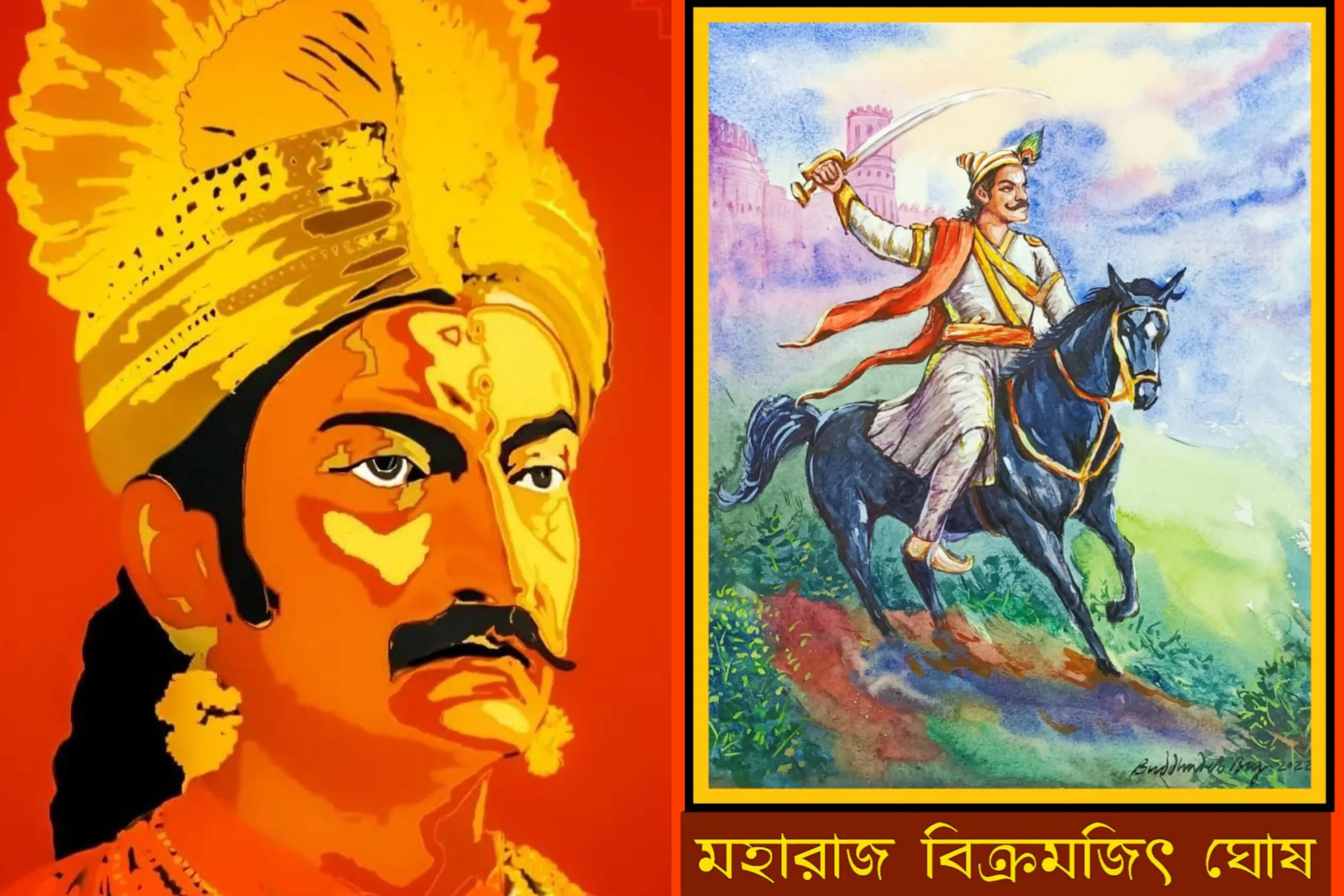
Raja Bikramjit Ghosh: The Sadgop ruler who resisted the Delhi Sultanate

Raja Bikramjit was not just a warrior; he was also a patron of culture and religion. His court celebrated the Gaudiya Vaishnav tradition, with the Gita Govinda being a central text of devotion. He is remembered for his dedication to preserving the cultural and religious heritage of Bengal amidst the threat of foreign domination

Pallab MondalPallab Mondal
Dec 20, 2024, 10:30 am IST
in Bharat, Culture, West Bengal
Follow on Google News
Raja Bikramjit Ghosh

Raja Bikramjit Ghosh

FacebookTwitterWhatsAppTelegramEmail

The history of medieval India is replete with tales of valour and resistance against foreign invaders. Among these stories, the saga of Raja Bikramjit Ghosh, a Sadgop ruler of Mangalkot in Central Bengal, stands out as a beacon of courage and determination. Hailed as “Bikram Keshari,” this fourteenth-century ruler successfully repelled multiple invasions by the Delhi Sultanate, earning a place of honour among the warriors of Bengal.

Following the decline of the Sena and Deva dynasties, Bengal faced repeated invasions from the north. The death of the last Sena king, Madhu Sena, and the Deva king, Danuj Rai, left a leadership vacuum in the region. It was during this period of uncertainty that Raja Bikramjit Ghosh emerged as a formidable leader.

Mangalkot Realm and Its Legacy 

Mangalkot was located in the Gopbhum region of Bengal. It was a prosperous and strategically important city during Raja Bikramjit’s reign. Historically an important trading hub, it facilitated commerce with regions as distant as Lanka, Burma, Thailand and Bali.

Raja Bikramjit Ghosh was Sadgop (clan of Yadavs) by caste. Historically, these Sadgops held significant influence in Bengal, controlling prominent estates such as Midnapore Raj, Narayangarh Raj, Balarampur Raj, Narajole Estate, and several other zamindari territories across the region. Sadgop ruling family of Mangalkot was deeply rooted in Gaudiya Vaishnav traditions, with Mother Abhaya Chandi as their Kuldevi (family deity).

Threat from the Delhi Sultanate

In the late 13th and early 14th centuries, the Delhi Sultans tried to extend their influence into Bengal. Bengal was repeatedly plundered by Uzbek tribal raiders supported by the Delhi Sultanate who called themselves Ghazis. However, Bengal remained a stronghold of Hindu resistance. Mangalkot’s ruler, Raja Bikramjit Ghosh, played a pivotal role in defending the region during this turbulent period.

The first major assault on Mangalkot occurred in 1303, led by Uzbek Ghazi invaders. These forces camped in the western forests of Mangalkot, preparing to attack. Raja Bikramjit, a devout follower of Mother Abhaya Chandi, rallied his Sadgop warriors and launched a counter-offensive. The fierce battle ended with the annihilation of the invading forces, whose bodies were unceremoniously thrown into the Ajay River at the Raja’s command.

Repeated Invasions and Victories

Between 1303 and 1327, the Delhi Sultanate launched at least 17 invasions targeting Mangalkot. Each time, Raja Bikramjit rose to the occasion, leading his Sadgop army to victory. Of these, the names of seven prominent Ghazis are known as Muhammad, Hazi Feroze, Ghulam Pathan, Mohammad Ismail Ghazi, Abdunnah Gujarati Makchum Bilaye and Ghaznavi. These battles not only demonstrated the military skill of the Sadgop warriors but also underscored Raja Bikramjit’s strategic acumen.

The ruler’s valour earned him the title of “Bikram Keshari” from the elite Radhi Brahmins, a testament to his heroic deeds. Despite the Delhi Sultanate’s formidable resources and relentless attempts, they failed to subjugate Mangalkot during Raja Bikramjit’s reign.

Cultural and Political Contributions

Raja Bikramjit was not just a warrior; he was also a patron of culture and religion. His court celebrated the Gaudiya Vaishnav tradition, with the Gita Govinda being a central text of devotion. He is remembered for his dedication to preserving the cultural and religious heritage of Bengal amidst the threat of foreign domination.

The Fall of Mangalkot 

After Raja Bikramjit’s death, Mangalkot faced renewed challenges. Ottoman invaders temporarily occupied the region, constructing tombs for the slain Ghazi generals as symbols of their brief triumph. These tombs, still present today, serve as silent witnesses to the ferocious battles fought on the land of Mangalkot.

Topics: Delhi SultanateRaja Bikramjit GhoshSadgop ruler
Share1TweetSendShareSend
✮ Subscribe Organiser YouTube Channel. ✮
✮ Join Organiser's WhatsApp channel for Nationalist views beyond the news. ✮
Previous News

Uttar Pradesh: Amidst heavy security ‘Arti’ performed at Shiv-Hanuman mandir in Sambhal opened after 46-years

Next News

Karnataka: BJP leader CT Ravi files counter-complaint alleging assassination attempt at Suvarna Soudha

Related News

NCERT Overhauls its syllabus

NCERT’s new curriculum focusses on Indian Heritage & govt initatives; Mughals & Delhi Sultanate excluded, Mahakumbh in

“Save Skanda’s Mountain”: Why Thiruparankundram is sacred to Hindus – Here’s all you need to know

Load More

Comments

The comments posted here/below/in the given space are not on behalf of Organiser. The person posting the comment will be in sole ownership of its responsibility. According to the central government's IT rules, obscene or offensive statement made against a person, religion, community or nation is a punishable offense, and legal action would be taken against people who indulge in such activities.

Latest News

Image for representational purpose only, Courtesy Vocal Media

Bihar to get ‘Special Economic Zones’ in Buxar and West Champaran

Thirupparankundram Karthigai Deepam utsav

Andhra Pradesh: AP Dy CM Pawan Kalyan reacts to Thirupparankundram row, flags concern over religious rights of Hindus

23rd India-Russia Annual Summit

India-Russia Summit heralds new chapter in time-tested ties: Inks MoUs in economic, defence, tourism & education

DGCA orders probe into IndiGo flight disruptions; Committee to report in 15 days

BJYM leader Shyamraj with Janaki

Kerala: Widow of BJP worker murdered in 1995 steps into electoral battle after three decades at Valancherry

Russian Sber bank has unveiled access to its retail investors to the Indian stock market by etching its mutual fund to Nifty50

Scripting economic bonhomie: Russian investors gain access to Indian stocks, Sber unveils Nifty50 pegged mutual funds

Petitioner S Vignesh Shishir speaking to the reporters about the Rahul Gandhi UK citizenship case outside the Raebareli court

Rahul Gandhi UK Citizenship Case: Congress supporters create ruckus in court; Foreign visit details shared with judge

(L) Kerala High Court (R) Bouncers in Trippoonithura temple

Kerala: HC slams CPM-controlled Kochi Devaswom Board for deploying bouncers for crowd management during festival

Fact Check: Rahul Gandhi false claim about govt blocking his meet with Russian President Putin exposed; MEA clears air

Union Minister for Road Transport and Highways Nitin Gadkari (Right)

India set for highway overhaul as Union Minister Nitin Gadkari unveils nationwide shift to MLFF electronic tolling

Load More
  • Privacy
  • Terms
  • Cookie Policy
  • Refund and Cancellation
  • Delivery and Shipping

© Bharat Prakashan (Delhi) Limited.
Tech-enabled by Ananthapuri Technologies

  • Home
  • Search Organiser
  • Bharat
    • Assam
    • Bihar
    • Chhattisgarh
    • Jharkhand
    • Maharashtra
    • View All States
  • World
    • Asia
    • Africa
    • North America
    • South America
    • Europe
    • Australia
  • Editorial
  • Operation Sindoor
  • Opinion
  • Analysis
  • Defence
  • Culture
  • Sports
  • Business
  • RSS @ 100
  • Entertainment
  • More ..
    • Sci & Tech
    • Vocal4Local
    • Special Report
    • Education
    • Employment
    • Books
    • Interviews
    • Travel
    • Health
    • Politics
    • Law
    • Economy
    • Obituary
  • Subscribe Magazine
  • Read Ecopy
  • Advertise
  • Circulation
  • Careers
  • About Us
  • Contact Us
  • Policies & Terms
    • Privacy Policy
    • Cookie Policy
    • Refund and Cancellation
    • Terms of Use

© Bharat Prakashan (Delhi) Limited.
Tech-enabled by Ananthapuri Technologies








